社区零售

Search documents
万亿巨头在中国市场开启“科技巷战”
Guan Cha Zhe Wang· 2026-02-24 10:12
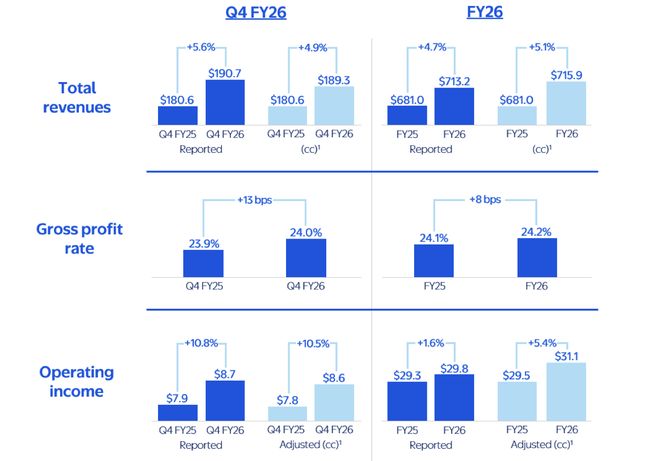
Core Insights - Walmart reported strong financial results for fiscal year 2026 and Q4, with total revenue reaching $713.2 billion, a 4.7% year-over-year increase, and adjusted operating income of $31.1 billion, up 10.5% [1][3] - The company is successfully transforming from a traditional retailer to a technology-driven enterprise, with significant investments in automation and AI [3][21] Financial Performance - For fiscal year 2026, Walmart's total revenue was $713.2 billion, a 4.7% increase year-over-year, and adjusted operating income was $31.1 billion, reflecting a 10.5% growth [1] - In Q4, total revenue reached $190.7 billion, a 5.6% increase year-over-year, with adjusted operating income of $8.6 billion, also up 10.5% [1] Strategic Transformation - Walmart's new CEO, John Furner, highlighted the effectiveness of technology investments, particularly in automation, which is reducing labor costs and improving delivery speed [3] - The company plans to shift its stock listing from the NYSE to NASDAQ by the end of 2025 to attract global tech capital for its AI transformation [3] Growth in China - Walmart China emerged as a significant growth driver, with net sales of approximately $24.7 billion for fiscal year 2026, a 21.67% increase from $20.3 billion in fiscal year 2025 [5] - In Q4, Walmart China achieved net sales of $6.1 billion, a 19.3% year-over-year growth [6] Membership and Community Store Expansion - The explosive growth of Sam's Club in China is a key factor in driving performance, with 10 new stores added in 2025, including 6 in Q4, marking a historic expansion rate [12] - Walmart is shifting focus to community stores, characterized by smaller formats and a curated selection of products, to better serve urban families [15][16] Collaboration and Innovation - Walmart's partnership with Xiaohongshu (Little Red Book) aims to enhance product development and align with consumer trends, particularly to attract Gen Z customers [19] - The collaboration is seen as a strategic move to bridge online consumer interests with offline shopping experiences [21]

社区购物新选择!国科优选:溯源保真+无忧售后,把安心送到家门口
Xin Lang Cai Jing· 2026-02-20 15:34
Core Insights - The new retail industry has transitioned from a focus on traffic to a more refined approach, with community scenarios becoming the core battleground for major players [1] - Guokeyouxuan positions itself as the "Chinese community version of Costco," differentiating itself through quality and service, aiming to redefine the quality of life for community residents [1][3] Supply Chain Innovation - Guokeyouxuan emphasizes a high-efficiency supply chain system, breaking traditional distribution barriers and focusing on local direct sourcing [3] - The company collaborates with over 200 organic certified bases across China, ensuring products meet strict standards for origin and quality [3] - All products undergo SGS testing for key indicators such as pesticide residues and heavy metals, maintaining a commitment to "zero residues, zero additives, and zero cold chain breaks" [3][4] Traceability and Consumer Assurance - A full-process traceability system is implemented using blockchain and big data technology, allowing consumers to verify product origins and safety [4] - The partnership with JD Logistics enables a hassle-free return and exchange policy, enhancing consumer confidence in product quality [4] Community Ecosystem - Guokeyouxuan transforms its stores into "community living rooms," fostering emotional connections and comprehensive services beyond mere shopping [5] - The company has established a "neighborhood steward" service team to enhance customer service and engagement [5] - A unique shopping experience is promoted through product trials and tastings, encouraging informed purchasing decisions [5] Online and Offline Integration - The company utilizes online community group buying and live streaming to facilitate convenient ordering from home [5] - With over 5,000 community stores, Guokeyouxuan supports a "10-minute convenient living circle," bridging the last mile of community services [5] Social Responsibility and Corporate Culture - Guokeyouxuan integrates its values into every aspect of its operations, guided by a "Six Hearts Culture" that emphasizes love, sincerity, and gratitude [6] - The company aims to combine Costco's quality with the warmth of Chinese community needs, establishing a unique development path [6] - Future plans include continuous upgrades to supply chain and digital capabilities, enriching community service scenarios [6]
履职仅约两个月,高鑫零售CEO李卫平失联!转型关键期再遭变数
Hua Xia Shi Bao· 2026-02-05 03:26
Core Viewpoint - The unexpected disappearance of Li Weiping, CEO of Gao Xin Retail, poses new uncertainties for the company's ongoing transformation towards community retail amidst a challenging traditional supermarket industry landscape [3][4]. Company Situation - Gao Xin Retail announced on February 4 that the board was unable to contact CEO Li Weiping, who had only joined the company on December 1, 2025, and had been in the role for approximately two months [3][5]. - Li Weiping's disappearance comes at a critical time as Gao Xin Retail is facing significant operational challenges, including a reported net loss of 123 million yuan for the first half of the 2025 fiscal year, compared to a profit of 206 million yuan in the same period the previous year [5]. - The company is currently being managed by Chairman Hua Youneng, with assurances that business operations remain normal and that the annual sales season is progressing smoothly [5][8]. Industry Context - The traditional supermarket industry has been struggling, with Gao Xin Retail's revenue declining by 12.1% year-on-year to 30.502 billion yuan for the first half of the 2025 fiscal year [5]. - The year 2025 has seen a significant reform wave in the supermarket sector, with major players like Yonghui Superstores and Wumart Supermarket adopting new transformation models [7]. - Gao Xin Retail is shifting its strategy towards community retail, aiming to create a retail model that balances experience and efficiency within a three-kilometer radius of customers [7][8]. Transformation Efforts - Gao Xin Retail has introduced a three-year strategic plan focusing on transforming stores into community life centers and eliminating inefficient locations [7]. - The company is also incorporating a "front warehouse" model, which is crucial for rapid delivery of fresh and fast-moving consumer goods, a strategy that Li Weiping was expected to influence significantly due to his prior experience at Hema [8]. - Despite the uncertainties surrounding Li Weiping's disappearance, industry experts believe that the company will continue to find a viable direction for its transformation efforts [8].

业绩扭亏路上CEO失联,高鑫零售转型关键期再遭变数
Hua Xia Shi Bao· 2026-02-04 08:54
Core Viewpoint - The unexpected disappearance of CEO Li Weiping poses new uncertainties for the transformation of Gao Xin Retail, which is currently seeking to shift towards community retail amidst ongoing losses in the traditional supermarket sector [2][3]. Company Situation - Gao Xin Retail's board announced that they could not contact CEO Li Weiping, who had only been with the company for about two months since joining on December 1, 2025 [2]. - Li Weiping's previous experience at Hema, where he held several key positions, was expected to contribute positively to Gao Xin Retail's strategic planning and business development [3]. - The company reported a revenue of 30.502 billion yuan for the first half of the 2025 fiscal year, a decrease of 12.1% year-on-year, and a net loss of 123 million yuan, compared to a profit of 206 million yuan in the same period the previous year [3]. Transformation Strategy - Gao Xin Retail is undergoing a significant transformation, focusing on community retail as part of a broader industry trend initiated by competitors like Yonghui Supermarket and Wumart [5]. - The company aims to create a retail model that balances experience and efficiency within a three-kilometer radius, planning to eliminate inefficient stores and transition to community life centers [5]. - The introduction of "front warehouses" as a key development area marks a shift in strategy, allowing for rapid delivery of fresh and fast-moving consumer goods [5]. Operational Impact - Despite Li Weiping's disappearance, Gao Xin Retail stated that its operations remain normal and that the chairman, Hua Yuneng, is overseeing management to ensure stability [4]. - New retail expert Bao Yuezhong believes that the impact of Li Weiping's absence will be minimal, as the company is a leading player in the supermarket sector [4][7]. - The recent opening of a new Dailunfa Supermarket in Dongying, which features a modern retail approach, has received positive market feedback, indicating that the transformation efforts are still progressing [6][7].

三只松鼠:预计2025年归母净利润为1.35亿元至1.75亿元
Bei Jing Shang Bao· 2026-01-29 11:36
Core Viewpoint - The company Squirrel has announced an expected decline in net profit for the fiscal year 2025, projecting a range of 135 million to 175 million yuan, which represents a year-on-year decrease of 57.08% to 66.89% [1] Group 1: Financial Performance - The projected net profit for 2025 is significantly lower compared to previous years, indicating a challenging financial outlook for the company [1] - The decline in profit is attributed to several factors, including structural misalignment during the sales peak season, a substantial increase in nut raw material prices, and proactive adjustments in sales structure [1] Group 2: Strategic Initiatives - The company is committed to its "high-end cost-performance" strategy and is focusing on quality and differentiation in its product offerings [1] - Squirrel is actively exploring new opportunities in community retail, launching a comprehensive self-owned brand "Life Hall" store model, which includes a central kitchen focused on fresh and made-to-order products [1] Group 3: Store Expansion - As of now, Squirrel has established 22 stores in the core regions of Anhui and Jiangsu, including 1 flagship store, 15 standard stores, and 6 mini stores [1] - The first "Life Hall" model store opened in June 2025, achieving sales of over 1 million yuan within three days, followed by a flagship store in Wuhu that generated over 1.26 million yuan in sales in the same timeframe [1]
鸣鸣很忙的启示:在「富饶的贫困」中,如何找到真需求?
36氪· 2026-01-19 13:47
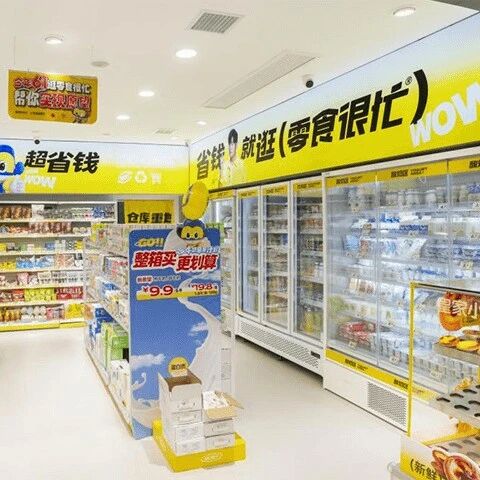
Core Viewpoint - The article highlights the significance of Mingming Hen Mang's upcoming listing on the Hong Kong Stock Exchange, marking a milestone for the bulk snack industry and establishing a new paradigm for its development [1][2]. Group 1: Industry Transformation - The bulk snack industry has historically been dominated by traditional thinking, leading to a misalignment between supply and consumer demand, characterized by a plethora of products that fail to meet true consumer desires [6][7]. - Traditional retail has been governed by "shelf thinking" and "traffic thinking," which limits the ability to cater to diverse consumer needs and preferences, especially among younger generations who seek new experiences and personalized offerings [8][10]. Group 2: Mingming Hen Mang's Strategy - Mingming Hen Mang has shifted from a "seller's mindset" to a "user's mindset," actively identifying and meeting consumer needs rather than merely responding to market demands [10]. - The company has introduced a flexible packaging strategy, with 38% of its SKUs available for bulk purchase, allowing consumers to buy as needed, thus breaking free from traditional large packaging constraints [11]. - 34% of Mingming Hen Mang's SKUs are customized products, reflecting a commitment to producing what consumers want rather than what is readily available [13]. Group 3: Market Validation and Consumer Engagement - The company employs a "small-scale trial and rapid iteration" market validation mechanism, testing new products in select stores before a nationwide rollout, which minimizes market risks and gathers authentic consumer feedback [16]. - Consumer feedback directly influences product adjustments, such as packaging improvements and flavor modifications, enhancing the overall user experience [17]. Group 4: Community and Future Expansion - With over 20,000 stores across 1,341 counties, Mingming Hen Mang aims to evolve beyond a snack retailer into a community-centric service provider, addressing various consumer needs [19][20]. - The "snack+" strategy seeks to explore new possibilities in community retail, drawing inspiration from global retail giants like Costco and Trader Joe's, focusing on consumer needs and breaking category boundaries [22][23]. - The company plans to expand its product offerings to include daily necessities, transforming stores into community convenience hubs, thereby enhancing customer loyalty and store efficiency [28][29].
商品力 + 全渠道驱动 沃尔玛四店同开破解社区零售同质化
21世纪经济报道· 2025-12-31 11:44
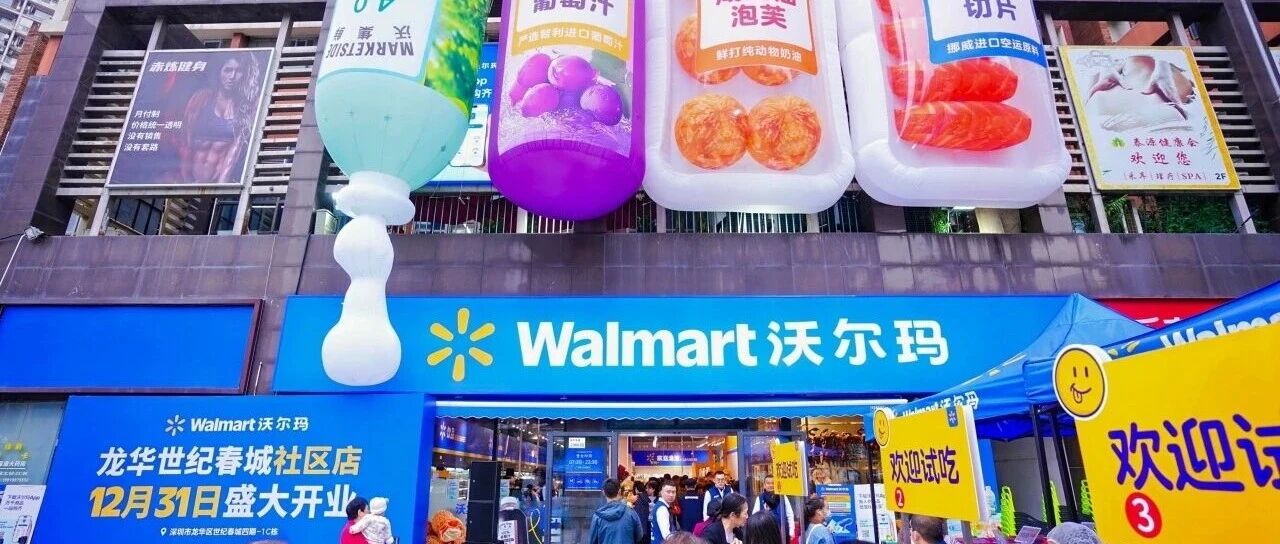
Core Insights - The community retail sector in China is undergoing significant restructuring, with the market size approaching 5.2 trillion yuan, attracting numerous players. However, many participants overlook the core demands for "quality certainty" and "scene adaptability," leading to a homogenized low-price competition [1] Group 1: Walmart's Community Store Strategy - Walmart has opened four community stores in Shenzhen and upgraded its app, marking the validation of its "small, refined, and close" community store model and entering a phase of replication and expansion [3] - The community store layout focuses on addressing industry pain points, featuring a "small and refined" model with approximately 500 square meters and 2000 selected products, catering to high-frequency daily needs [5] - Walmart's private label "Wojixian" has been upgraded to emphasize quality, with a focus on simple ingredients and stable quality-price ratios, differentiating itself in a price-driven market [5][7] Group 2: Product Quality and Consumer Focus - Walmart has established a high-standard food safety and quality control management system, ensuring end-to-end quality management through strict supplier and product controls [7] - The "Wojixian" brand emphasizes low-sugar and health-oriented products, responding to consumer demands for both health and trendiness, with innovative offerings quickly gaining popularity [9] - The company does not use private label sales as a performance metric, instead prioritizing customer feedback to drive product development, which is crucial for avoiding homogenization [9] Group 3: Omnichannel Integration - Walmart's community stores target immediate high-frequency needs within a 3-kilometer radius, while its app serves as a primary choice for daily replenishment, demonstrating the effectiveness of its omnichannel strategy [12] - The integration of online and offline channels creates a "collaborative closed loop," where online consumer data informs offline product optimization, enhancing overall retail efficiency [10][12] - Walmart's commitment to a "customer-first" philosophy underpins its operational strategy, ensuring that every action taken is aimed at enhancing consumer value [13] Group 4: Strategic Direction - Walmart's approach focuses on "product strength" and "omnichannel support," avoiding the pitfalls of low-price competition and instead building a differentiated advantage by addressing core customer needs [15] - The company's future development logic emphasizes "customer first, quality core, channel collaboration, and long-termism," guiding the industry towards a new phase of competition based on quality, efficiency, and value [15]

三只松鼠生活馆7店同开,探索社区零售新路径
Zhong Guo Zhi Liang Xin Wen Wang· 2025-12-26 07:40
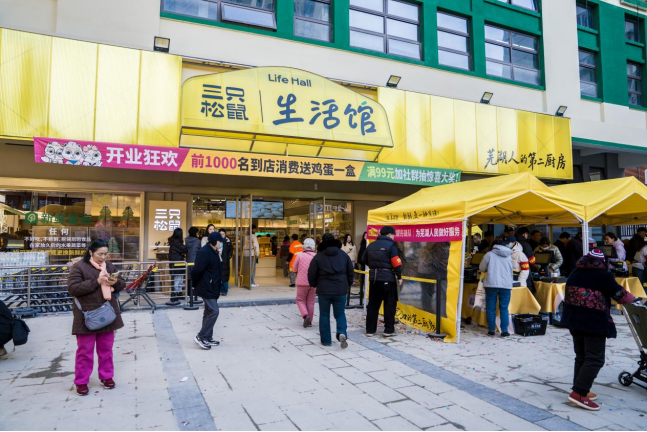
Core Insights - The community instant retail sector is experiencing explosive growth, with an expected market size exceeding 5.2 trillion yuan by 2025, driven by consumer demand for quality and experience [1] - Three squirrels are transforming from a snack-focused retailer to a comprehensive self-owned brand retailer, launching new lifestyle stores to align with changing consumer trends [1][12] Group 1: Store Launch and Strategy - Three squirrels opened seven standard lifestyle stores in December, marking a significant step in their strategy to become a full-category self-owned brand retailer [1][5] - The stores are strategically located in the Anhui region, targeting the underserved instant retail market and emphasizing convenience for local residents [3][5] Group 2: Product Offering and Consumer Engagement - The new stores feature a diverse product range, including over 1,500 essential items, with more than 90% being self-owned brands and 70% being new products [5][10] - The stores aim to meet the daily needs of families, offering products that appeal to all age groups, from fresh produce to snacks [8][10] Group 3: Quality Assurance and Pricing Strategy - Three squirrels emphasize product quality through their "True Fresh, True Value, True Good" branding, ensuring fresh products are delivered within 24 hours [10][12] - Competitive pricing strategies are implemented, with significant reductions in prices compared to traditional channels, enhancing consumer perception of value [8][10] Group 4: Operational Efficiency and Supply Chain - The company is building three core capabilities: direct sourcing from producers, regional cold chain logistics, and a focus on self-owned brands to enhance supply chain transparency and efficiency [12][15] - A central kitchen has been established to support the operational needs of the lifestyle stores, ensuring fresh and efficient product delivery [13][15] Group 5: Future Expansion Plans - Three squirrels plan to accelerate store openings, with 20 new stores set to launch in early 2026, indicating a strategy of rapid market penetration [15]
快消巨头勇闯白酒赛道 锅圈能否用“社区零售”重塑宋河酒?
Nan Fang Du Shi Bao· 2025-12-26 05:24
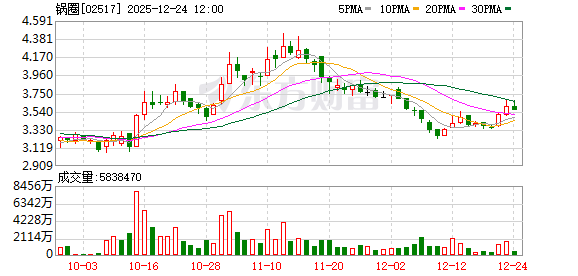
Core Viewpoint - Songhe Liquor Industry, once awarded the title of "Chinese Famous Liquor," is undergoing a significant transformation with the opening of its first "Songhe Liquor Home Delivery" store, aiming to create a "community lifestyle platform" beyond traditional liquor sales [2][6] Group 1: Company History and Challenges - Songhe Liquor Industry has a history dating back to 1968, achieving peak brand reputation in 1988 when it was awarded "Chinese Famous Liquor" alongside Moutai and Wuliangye [2][3] - The company faced a severe debt crisis after its major shareholder, Furen Pharmaceutical, encountered financial issues in 2019, leading to Songhe's operational difficulties [3] - In June 2023, the court officially accepted Songhe's bankruptcy reorganization application, marking a critical point in its financial struggles [3] Group 2: New Ownership and Strategic Shift - Guoquan Food, a rapidly growing community food retail brand, became the sole investor in Songhe's reorganization in August 2023, indicating a new direction for the company [4][3] - The new management aims to reshape Songhe's brand and distribution channels using fast-moving consumer goods (FMCG) strategies, moving away from traditional distribution models [6] Group 3: Market Position and Competitive Landscape - The liquor industry is experiencing intensified competition, with leading brands like Moutai and Wuliangye expanding their market share, posing challenges for regional players like Songhe [7][8] - The current market dynamics include a shift towards digital transformation and the rise of new consumer preferences, which present both opportunities and challenges for Songhe's transformation [7][8] Group 4: Innovative Retail Model - The opening of the "Songhe Liquor Home Delivery" store reflects a strategy to simplify distribution by directly engaging consumers, reducing reliance on multi-tiered distribution systems [6] - The store's diverse product offerings, including beverages and baked goods, aim to enhance customer traffic and create new consumption scenarios for liquor [6][7] Group 5: Industry Challenges and Considerations - There are concerns regarding the effectiveness of the new retail model in promoting mid-to-high-end liquor sales, given the unique consumption characteristics of liquor compared to fast-moving consumer goods [7][8] - The complexity of consumer decision-making in liquor purchases poses a significant barrier for cross-industry entrants like Guoquan, highlighting the challenges of integrating traditional liquor production with modern retail demands [8]
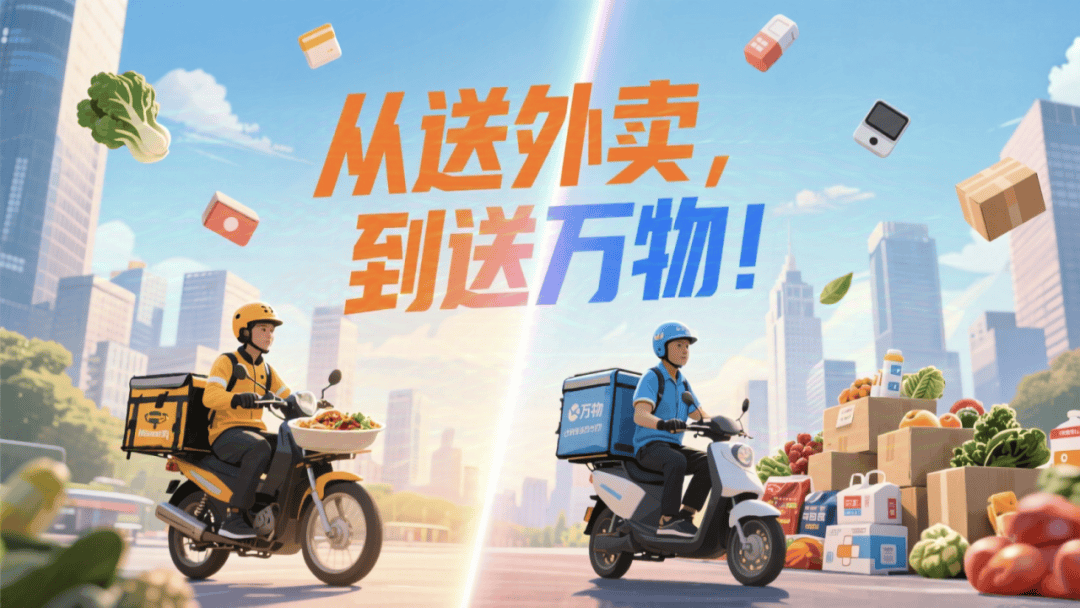
从送餐到送万物,外卖早已不仅仅只是外卖
Sou Hu Cai Jing· 2025-12-25 01:51
Core Insights - The takeaway from the articles is that the food delivery market is evolving beyond its traditional role, becoming a platform for new business models and strategies, rather than just a service for delivering food [2][4][9] Group 1: Market Evolution - The competition in the food delivery market is shifting from price wars to differentiation strategies aimed at achieving broader strategic goals [2][3] - The food delivery market is seen as a breeding ground for new business models and commercial innovations, rather than just a standalone service [2][4] - As the market enters a new phase, it is essential to recognize the emerging trends and strategies that are reshaping the industry [2][3][9] Group 2: New Business Models - The food delivery market is transitioning into a new commercial form that integrates both virtual and physical economies, creating a hybrid business model [5][6] - Players in the market are leveraging their online experience while also investing in offline retail and supply chains, indicating a shift towards a more integrated approach [5][6] - The current food delivery landscape is characterized by a combination of digital and physical elements, reflecting a new paradigm in business operations [6][8] Group 3: Technological Integration - The food delivery market is becoming a testing ground for new technologies and business models, such as big data, drones, and AI [8] - Companies are increasingly focusing on supply chain and industry collaborations, indicating a shift towards a more interconnected operational framework [8] - The competition is now centered around the adoption of innovative technologies and finding new balance points between supply and demand [8][9]