
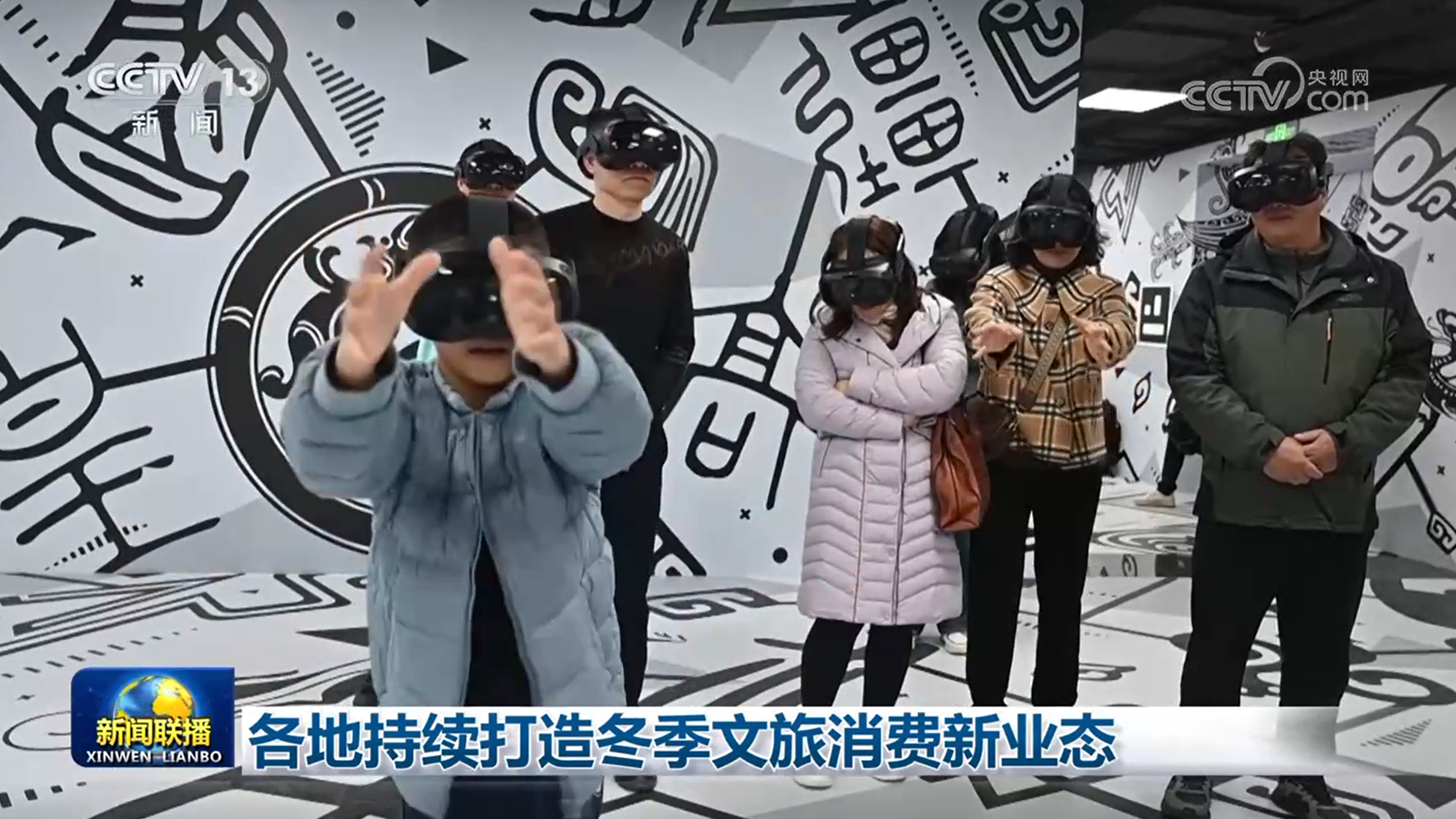
秦始皇陵全真XR体验空间

Search documents
各地持续打造冬季文旅消费新业态
Yang Shi Wang· 2025-12-20 12:25
Group 1 - A series of technology-driven experiential projects in Xi'an, Shaanxi, are gaining popularity, allowing visitors to engage with historical sites like the Terracotta Army through XR technology [2] - In Yunnan's Pu'er, coffee-themed rural tourism is on the rise, with every production stage from picking to roasting being transformed into an interactive experience for tourists [2] Group 2 - New business models combining culture and experience are transforming travel from mere visits to immersive experiences, as seen in Kaifeng, Henan, where tourists can engage with Song Dynasty folk culture [3] - In Zhangzhou, Fujian, intangible cultural heritage exhibitions are creating new spaces for experiencing Minnan culture [3] - In Shexian, Anhui, tourists can participate in the creation of traditional crafts like fish lanterns, paper-cutting, and inkstone making [3] Group 3 - Various regions are launching winter cultural tourism consumption seasons, with Zhejiang focusing on food, sports, cultural heritage, and educational tourism, offering over 400 policies for public benefit [4] - Sichuan is initiating a new winter tourism season, collaborating with multiple ski resorts and ice attractions in Chongqing to provide ticket discounts and accommodation offers [4] - The 29th Changchun Ice and Snow Festival has commenced, featuring unique ice sculptures and winter sports for an immersive seasonal experience [4] - The opening of the Shenbai High-speed Railway enhances travel convenience in Jilin, enriching winter tourism offerings such as frost viewing and winter fishing experiences [4]

新业态、新场景带来高质量、多样化供给 文旅产业跃动蓬勃发展生机
Ren Min Ri Bao Hai Wai Ban· 2025-12-19 00:51
Group 1 - The core viewpoint of the articles highlights the growth and innovation in China's cultural and tourism industry, with a focus on enhancing consumer experiences and expanding service offerings [1][2][3][4][5][6] - In the first eleven months of this year, China's service retail sales increased by 5.4% year-on-year, with cultural and leisure services showing a growth rate exceeding 10% [1] - The introduction of new business models and immersive experiences in tourism, such as XR technology and innovative project offerings, is reshaping consumer engagement and driving demand [2][3] Group 2 - Zhejiang Province has showcased 15 cases of innovative practices in the cultural and tourism sector, demonstrating significant achievements in expanding consumption scenarios and optimizing the consumer environment [3] - The development of new tourism formats, such as performance economies and themed food streets, has led to substantial increases in visitor numbers and revenue, contributing to local economic growth [3][4] - The cultural and tourism industry is becoming a new highlight for driving domestic demand, promoting employment, and revitalizing the market [3][4] Group 3 - Innovative operational models in the tourism sector are reducing reliance on single ticket sales, broadening revenue streams through market-oriented approaches [4][5] - The integration of cultural heritage and entrepreneurial initiatives in rural areas is creating sustainable economic benefits for local communities, with significant increases in individual incomes [5] - The rise of cultural products reflecting Chinese heritage is driving consumer demand and enhancing cultural identity, contributing to a vibrant market landscape [6]
文旅产业跃动蓬勃发展生机
Ren Min Ri Bao· 2025-12-18 22:49
Core Insights - The Chinese service retail sector has shown a year-on-year growth of 5.4% from January to November, with cultural and leisure services experiencing a growth rate exceeding 10% [1] - The vitality of cultural and tourism consumption is driven by high-quality and diverse supply, leading to the creation of new business models and experiences that cater to various consumer needs [1][2] Group 1: Industry Growth and Trends - The cultural tourism industry in China is evolving with innovative business models, enhancing consumer experiences and driving demand [2][3] - In Zhejiang Province, innovative practices in the cultural tourism sector have led to significant economic impacts, such as 87 large-scale concerts generating ticket revenues of 1.18 billion yuan and driving comprehensive consumption of approximately 7.1 billion yuan [3] - The introduction of immersive experiences, such as XR technology in tourism, is reshaping visitor engagement and promoting higher spending in the sector [2] Group 2: Economic Impact and Employment - The shift from traditional ticket-based revenue models to diversified income streams is benefiting tourism operators, as seen in Ningxia's Lianshan Park, which has transformed into a vibrant cultural hub with over 3 million annual visitors [4] - In rural areas, cultural tourism innovations are creating sustainable economic growth, with initiatives like e-commerce training for locals leading to increased incomes [5][6] - The development of tourism projects in remote areas, such as Chongqing's Pinghe Township, has generated significant local employment opportunities and increased household incomes [6] Group 3: Consumer Preferences and Market Dynamics - The demand for culturally resonant products, such as domestic goods infused with Chinese cultural elements, is driving new consumption trends and enhancing cultural identity [7] - The government aims to optimize the supply structure of consumer goods by 2027, focusing on creating new consumption hotspots in the cultural tourism sector [7] - The evolution of consumer preferences towards more tailored and experiential offerings is expected to foster a virtuous cycle of consumption and industry upgrades [7]