第七代L4自动驾驶软硬件系统

Search documents
文远知行一自动驾驶车辆意外撞损,Robotaxi L4“双子星”之争再生变数?
Zhong Jin Zai Xian· 2025-11-17 12:22
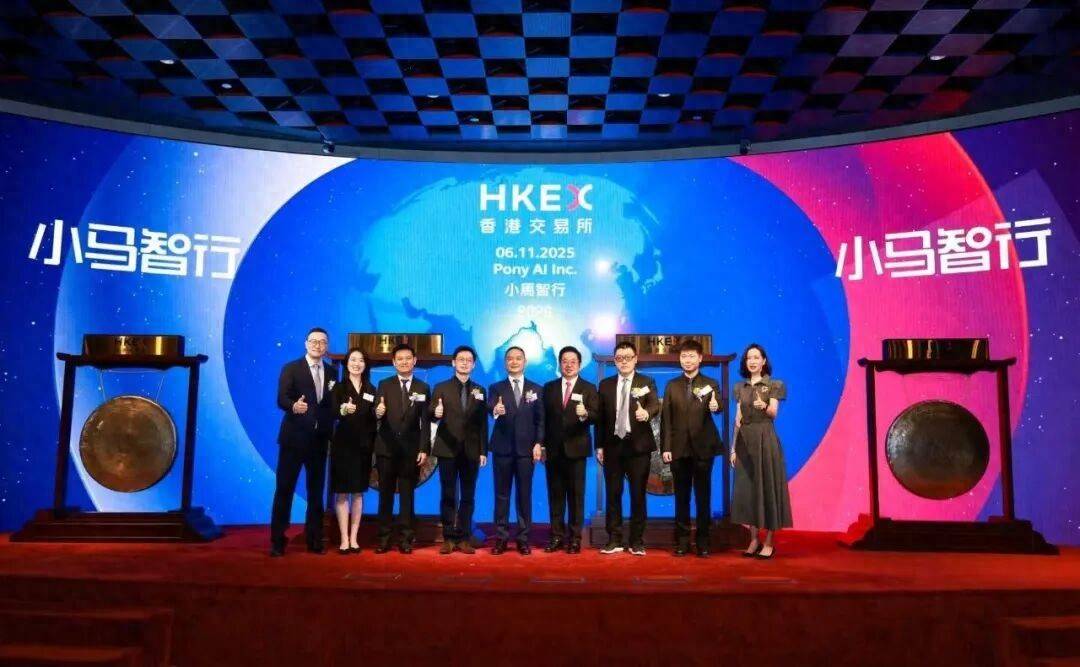
Core Insights - The Robotaxi industry saw both Pony.ai and WeRide go public on the Hong Kong Stock Exchange on November 6, but both companies' stock prices have declined significantly since their debut [1][2] - WeRide's stock price fell by 26.93% from its IPO price of 27.1 HKD to 19.8 HKD, while Pony.ai's stock dropped by 33.09% from 139 HKD to 93 HKD [1] - WeRide's situation is more precarious, as it raised significantly less capital than Pony.ai, with 23.9 billion HKD compared to Pony.ai's 77 billion HKD [3][4] Market Performance - Both companies faced challenges in gaining investor confidence, with Pony.ai attracting major cornerstone investors, while WeRide had none [3][4] - The absence of cornerstone investors for WeRide raised questions about its market acceptance and future prospects [3][4] - The recent accident involving WeRide's autonomous vehicle in Abu Dhabi has further fueled public skepticism regarding its technology's safety [1][2] Business Strategies - Pony.ai focuses on high-end Robotaxi services in major Chinese cities, while WeRide emphasizes product diversification and cost control, operating in multiple global markets [5][6] - As of Q2 2025, Pony.ai reported revenues of 1.54 billion CNY, while WeRide reported 1.27 billion CNY, with WeRide's Robotaxi business experiencing a significant year-on-year growth of 836.7% [6][8] - WeRide has not disclosed passenger fare revenue or user registration numbers, making it difficult to compare growth rates with Pony.ai [7] Financial Health - Both companies are in a "burning cash" phase, with cumulative losses of 4.58 billion USD for Pony.ai and 6.557 billion USD for WeRide as of Q2 2025 [8][9] - The key to achieving profitability lies in reducing core component costs, which both companies are actively pursuing through technological advancements [8][9] - Pony.ai aims to reach a breakeven point by deploying 1,000 Robotaxis in major cities, while WeRide has already deployed over 1,500 autonomous vehicles globally [9][10]
小马、文远同天上市同遭破发:资本市场开绿灯还是亮黄灯?
Sou Hu Cai Jing· 2025-11-08 14:45
Core Insights - The dual listing of two leading domestic autonomous driving companies on the same day, both experiencing a drop in share price, reflects the capital market's complex attitude towards the autonomous driving industry, offering both hope and skepticism [1][3]. Group 1: Capital Market Dynamics - Xiaoma Zhixing's IPO on November 6 raised a total of 7.7 billion HKD, marking it as the largest IPO in the global autonomous driving sector for 2025 [3]. - The dual listing of Xiaoma Zhixing and another company, WeRide, indicates a significant moment for the autonomous driving industry, yet both companies faced a cautious market response with their shares falling on the first day [3][6]. - Xiaoma Zhixing's strategic plan allocates 50% of the raised funds for large-scale commercialization of L4 autonomous driving technology, 40% for R&D, and 10% for operational funds [6][8]. Group 2: Business Performance - Xiaoma Zhixing reported a revenue of 35.43 million USD (approximately 254 million RMB) in the first half of 2025, a year-on-year increase of 43.3%, with Q2 revenue reaching 154 million RMB, a 75.9% increase year-on-year [10]. - The core business, Robotaxi, generated 3.26 million USD (approximately 23.32 million RMB) in revenue during the first half of 2025, reflecting a significant year-on-year growth of 178.8% [10]. - The passenger fare revenue for Robotaxi saw an increase of approximately 800% year-on-year in Q1 2025 and over 300% in Q2 2025, indicating a shift in user behavior towards viewing Robotaxi as a regular transportation option [10]. Group 3: Cost Management - The introduction of the seventh-generation L4 autonomous driving system represents a pivotal shift from "technically feasible" to "commercially viable," achieving a 70% reduction in total costs compared to previous generations [12]. - The new system utilizes automotive-grade components, allowing Robotaxi vehicles to have an operational lifespan of up to 600,000 kilometers, and significantly reduces costs for key components like LiDAR and onboard computing units [12]. Group 4: Operational Efficiency - Xiaoma Zhixing has developed a remote assistance platform for Robotaxi, achieving a management efficiency ratio of 1:20, where one remote staff member can manage 20 vehicles [14]. - The company treats Robotaxi as "digital assets," allowing for simultaneous maintenance tasks, which can be completed by one person for 20 vehicles within an hour [14]. Group 5: Competitive Landscape - Xiaoma Zhixing and WeRide are positioned in a competitive landscape where their revenue structures differ significantly, with Xiaoma Zhixing's revenue primarily from autonomous truck services and technology licensing, while WeRide focuses more on autonomous taxi services [16]. - Both companies face competition from Baidu's Apollo Go, which has surpassed 250,000 weekly orders as of October 31 [16]. Group 6: Market Trends - The capital market's perception of the autonomous driving sector is shifting from speculative concepts to tangible commercial viability, with a renewed focus on foundational technologies [17]. - Regulatory measures have been introduced to clarify the terminology used in the industry, pushing companies to focus on product quality rather than marketing hype [17]. Group 7: Future Outlook - Despite challenges, the autonomous driving market holds significant potential, with projections indicating that the L4 Robotaxi penetration rate in China could reach 8% by 2030 [18]. - The global mobility market is expected to reach approximately 4.5 trillion USD by 2025, with Robotaxi services anticipated to achieve commercialization around 2026 [20]. - The competition in the autonomous driving sector is evolving from technical feasibility to scaling operations, with market recognition increasingly tied to profitability models [21].