
第二现场

Search documents
演出赛事场景扩围 “第二现场”的乘数效应
Bei Jing Shang Bao· 2025-12-31 02:26
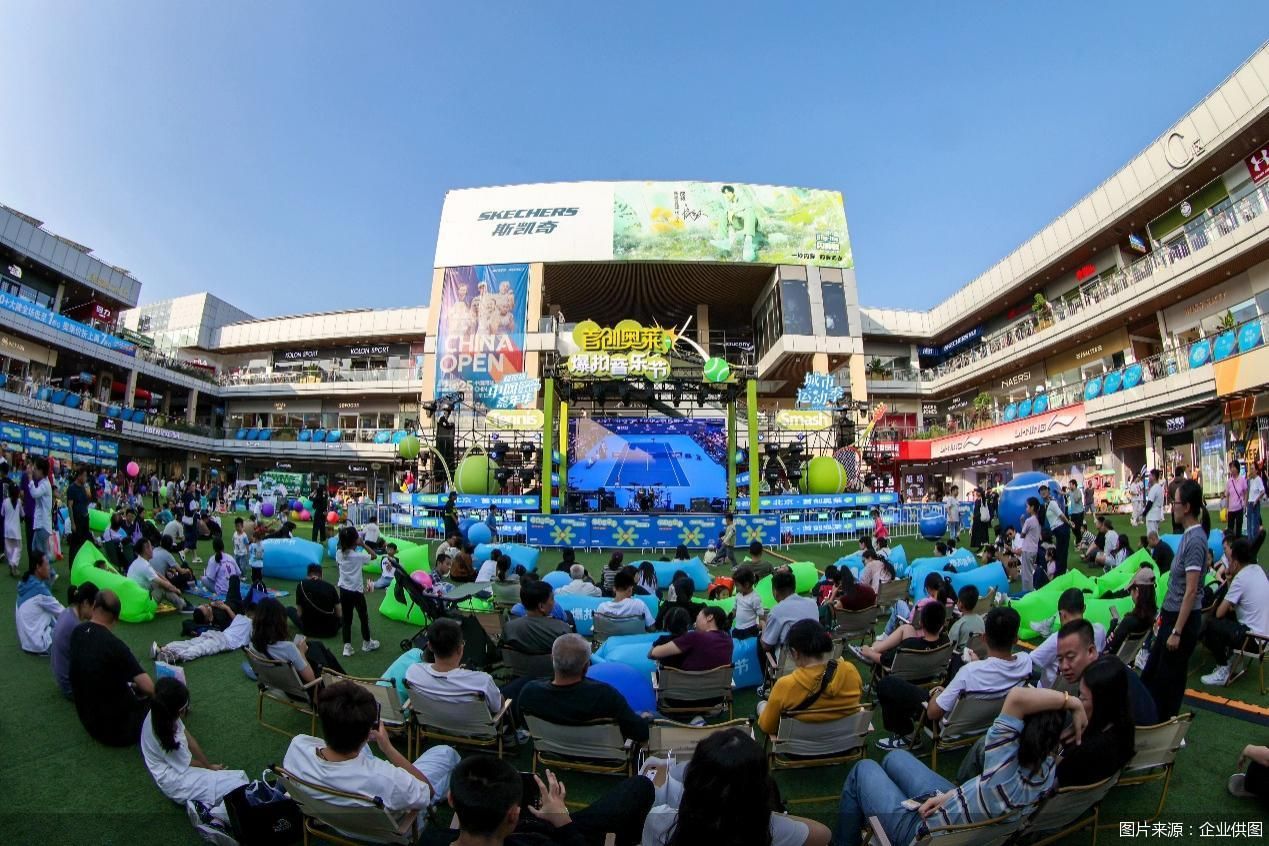
Core Insights - The "Second Venue" initiative in cultural performances and sports events is rapidly expanding, breaking traditional venue boundaries and enhancing consumer experiences through immersive technology [1][4][10] Group 1: Cultural Performances - The National Centre for the Performing Arts has completed four high-level live broadcasts this year, reaching over 80,000 viewers across all provincial administrative regions in China and even extending to Malaysia [2][8] - The "Second Venue" project aims to create a collaborative network with over 200 theaters and cinemas nationwide, promoting resource sharing and sustainable development [2][3] - The integration of advanced technologies such as 4K, 5G, and XR virtual production is enhancing the quality of live broadcasts, providing audiences with a unique viewing experience that can surpass traditional live performances [5][6] Group 2: Sports Events - The 2025 China Open introduced the "Open Live Second Venue," featuring 12 unique viewing points, including flagship locations in major commercial areas, enhancing fan engagement and driving local economic growth [3][8] - The "Second Venue" model effectively transforms sports events into broader cultural experiences, generating significant economic and social benefits through increased consumer spending in surrounding areas [9][10] - Data indicates that the cultural performance market in China is expected to reach 520 billion yuan, while sports events are projected to drive over 90 billion yuan in consumption, highlighting the strong growth potential of the "Second Venue" model [8][11] Group 3: Technology and Innovation - The success of the "Second Venue" relies heavily on technological advancements that enhance the immersive experience and operational efficiency, including the use of high-performance encoding and cloud broadcasting systems [6][7] - The integration of digital technologies is not only improving the cultural industry's scalability and professionalism but also contributing to GDP growth and job creation [7][10] - The ongoing development of the "Second Venue" is expected to shift cultural and sports consumption from isolated events to a more integrated ecosystem, fostering long-term economic benefits [10][11]
文化演出、体育赛事场景扩围 “第二现场”体验与消费的乘数效应
Bei Jing Shang Bao· 2025-12-30 11:48
Core Insights - The "Second Venue" concept is rapidly expanding in cultural performances and sports events, breaking traditional venue boundaries and enhancing consumer experiences through immersive technology [1][3][4] Group 1: Cultural Performances - The National Centre for the Performing Arts has completed four high-level live broadcasts this year, reaching over 80,000 viewers across all provincial administrative regions in China, including a significant international broadcast to Malaysia [3][9] - The "Second Venue" initiative collaborates with over 200 theaters and cinemas nationwide, aiming for sustainable development and resource cooperation to achieve a vision of "hundreds of cities, thousands of screens, shared globally" [3][4] - The integration of advanced technologies such as 4K, 5G, and XR virtual production enhances the immersive experience and operational efficiency of live broadcasts [6][8] Group 2: Sports Events - The 2025 China Open introduced the "Open Live Second Venue," featuring 12 unique viewing points, including flagship locations in major urban areas, enhancing fan engagement and driving local economic growth [4][10] - The "Second Venue" model effectively connects cultural and sports events, creating a closed-loop of viewing, interaction, and consumption, which stimulates secondary spending in related sectors like dining and retail [5][9] - The model has shown significant economic impact, with the China Open attracting approximately 2.2 million participants and boosting local hotel occupancy and consumer spending during the event [10][11] Group 3: Economic Impact - The cultural performance market in China is projected to reach 520 billion yuan, while sports events are expected to drive over 90 billion yuan in consumption, with the "Second Venue" acting as a key growth driver [9][10] - The "Second Venue" approach is anticipated to transform cultural and sports consumption from "single-point" to "ecological" consumption, promoting a long-term mechanism of content-driven engagement and industry linkage [11][12] - By 2030, the "Second Venue" is expected to account for 25% of total cultural and sports consumption, becoming a new growth engine for high-quality industry development [11]

可感知 可交互 可延伸 文旅新消费 “玩”出科技感
Zhong Guo Qing Nian Bao· 2025-09-16 01:01
Core Viewpoint - Digital technology is profoundly reshaping the cultural and tourism industry, with technological innovation becoming the core driver to address development pain points and stimulate consumer vitality [1] Group 1: Transformation of Tourism Consumption - Tourism consumption is shifting from "superficial sightseeing" to "deep immersion," from "single-point service" to "full-domain intelligence," and from "offline limitations" to "cross-domain interaction" [1] - New technologies such as artificial intelligence, virtual reality (VR), and ultra-high-definition are acting as "experience reconstructors," "demand activators," and "boundary expanders," injecting strong momentum into new tourism consumption [1] Group 2: Immersive Experience Reconstruction - Traditional tourism experiences are being transformed by new technologies, allowing visitors to become participants rather than mere observers, which enhances ticket sales, secondary consumption, and repeat visit rates [2] - The National Grand Theatre's "second scene" utilizes ultra-high-definition technology to break the time-space limitations of performance consumption, achieving nationwide cultural dissemination [2] - VR technology is being used to convert "one-time experiences" into "sustainable consumption," significantly lowering content adaptation and distribution costs across different venues [2] Group 3: Intelligent Service Integration - The core pain point in tourism consumption is the mismatch between service and demand, which is being addressed by intelligent service systems powered by AI and big data, enabling personalized service [4] - AI-driven products like "Starfire Companion" enhance the travel experience by providing in-depth knowledge and dynamic adjustment of explanation strategies [4] - Intelligent robots are addressing service coverage issues, with significant interaction volumes reported, indicating a high level of engagement [4] Group 4: Cross-Domain Integration - New technologies are not only optimizing existing tourism consumption scenarios but also breaking the traditional perception of tourism as merely "scenic spots," promoting deep integration with transportation, gaming, and content creation [5] - The "Star Light Train" exemplifies the integration of tourism and transportation, offering combined ticketing options that unlock new thematic travel possibilities [6] - Gaming is evolving into a comprehensive media form that enhances cultural dissemination and user engagement through interactive advertising [6] Group 5: International Expansion of Tourism Technology - The international expansion of tourism technology is pushing consumption scenarios onto the global stage, with innovations like 360-degree immersive projection technology being promoted in Southeast Asia [6] - The overall transformation of tourism consumption is characterized by becoming "more immersive, more intelligent, and more open," injecting lasting vitality into the consumer market [6]