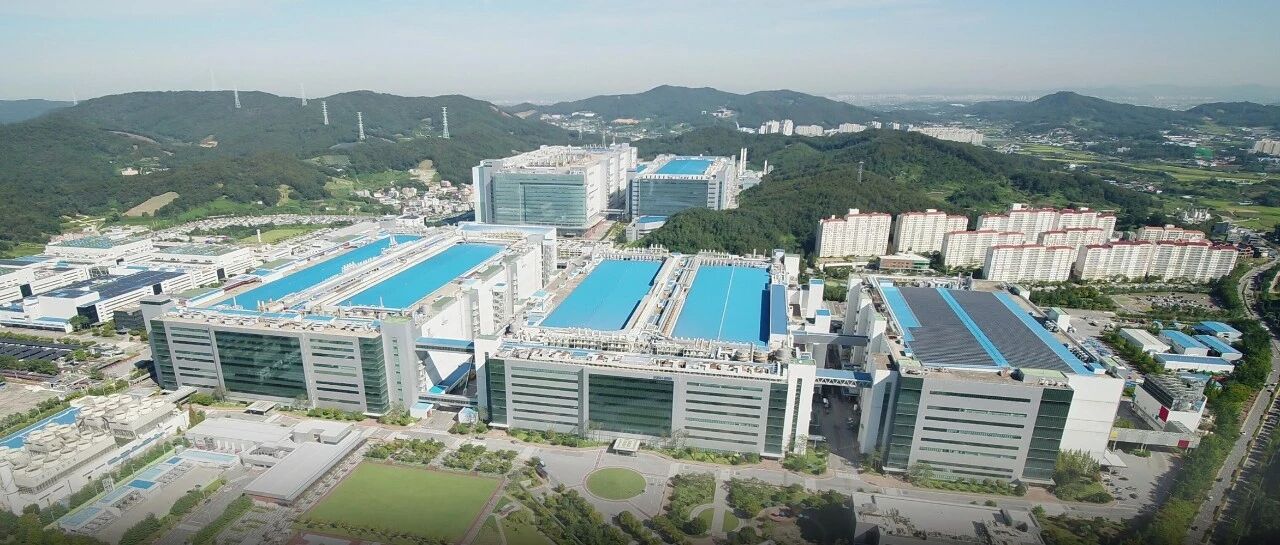
第8.6代OLED面板

Search documents
国海证券晨会纪要-20260119
Guohai Securities· 2026-01-19 01:03
Group 1 - The A-share market in 2025 experienced significant changes, primarily driven by valuation increases across various sectors, with the non-ferrous metals industry leading the gains [4] - The overall A-share market performance can be divided into four phases: Phase 1 (Jan-Mar): Technology concepts led the "tech bull"; Phase 2 (Apr-Jun): External shocks and internal support boosted the market; Phase 3 (Jun-Nov): Liquidity and economic conditions resonated, accelerating trends; Phase 4 (Nov-Dec): A period of consolidation after the main index rise [4] - Key characteristics of the 2025 A-share market include a new level of total market capitalization, continuous inflow of new funds, and a shift in market structure, with the electronics sector reaching the highest market value for the first time [4] Group 2 - Yonyou Network expects a reduction in losses for 2025, projecting a net profit of -1.3 billion to -1.39 billion yuan, with revenue expected to be between 9.17 billion and 9.27 billion yuan [6][8] - The company is transitioning to a subscription-based business model, which is expected to impact revenue growth rates, despite a recovery in contract signing amounts starting from the second quarter of 2025 [7] - The launch of the BIP "Ontology-Driven Agent" aims to enhance AI capabilities in enterprises, shifting from probabilistic generation to logical execution, providing a new foundation for high-quality AI applications [10][11] Group 3 - Ant Group's collaboration with Weining Health has led to the rapid deployment of AI products, with the monthly active users of the Ant Health app exceeding 30 million, indicating strong market penetration [12][13] - Weining Health's WiNEX series AI products have been implemented in nearly 150 medical institutions, enhancing clinical decision-making and documentation efficiency [14] - The Chinese medical software system market is projected to reach 11.5 billion yuan by 2029, with Weining Health focusing on domestic innovation and adaptation [15][16] Group 4 - The People's Bank of China reported stable loan rates and increased corporate loan issuance, indicating a positive outlook for the banking sector [18][19] - The December social financing data showed a year-on-year increase in new loans, primarily driven by corporate loans, suggesting a robust lending environment [19][20] Group 5 - The UK AR7 offshore wind auction results exceeded expectations, with a total auction volume of 8.4GW, marking a 58% increase from the previous round, indicating strong future demand for offshore wind projects [21][22] - Domestic manufacturers are expected to benefit from increased orders as a result of the AR7 auction outcomes, with significant growth anticipated in the offshore wind sector [24] Group 6 - Tencent Holdings is projected to achieve a revenue of 195.4 billion yuan in Q4 2025, with strong growth in its gaming and advertising segments [25][26] - The company is expected to maintain robust performance across its core businesses, with AI capabilities enhancing its overall ecosystem [27] Group 7 - The coal market is expected to see price support due to seasonal demand and supply constraints, with current prices at 695 yuan/ton [28][31] - The coking coal market is experiencing a recovery in demand as steel production increases, leading to a rise in coking coal prices [29][30] Group 8 - The State Grid's investment during the 14th Five-Year Plan is projected to reach 4 trillion yuan, significantly boosting the power equipment supply chain [41] - The focus on new energy systems and AI integration in power operations is expected to enhance operational efficiency and support the growth of emerging industries [41]






新材料产业周报:三星显示正式启动第8.6代OLED面板量产,力鸿一号圆满完成亚轨道飞行试验-20260118
Guohai Securities· 2026-01-18 12:21
Investment Rating - The report maintains a "Recommended" rating for the new materials industry [1] Core Insights - The new materials sector is positioned as a crucial direction for the chemical industry, currently experiencing rapid growth in downstream demand. With policy support and technological breakthroughs, domestic new materials are expected to accelerate into a long-term growth phase. The report emphasizes that "one generation of materials leads to one generation of industry," highlighting the foundational nature of the new materials industry as the material basis for other sectors [3][4]. Summary by Sections 1. Electronic Information Sector - Focus areas include semiconductor materials, display materials, and 5G materials. Samsung Display has officially launched mass production of the 8.6 generation OLED panels, which will be used in new laptops this year [5][20]. 2. Aerospace Sector - Key materials of interest are PI films, precision ceramics, and carbon fibers. The successful suborbital flight test of the Lihong No. 1 vehicle demonstrates advancements in low-cost and flexible launch capabilities [7]. 3. New Energy Sector - Focus on photovoltaic materials, lithium-ion batteries, proton exchange membranes, and hydrogen storage materials. India is projected to become the second-largest solar market globally by 2026, driven by steady installation growth [9]. 4. Biotechnology Sector - Key areas include synthetic biology and scientific services. A team from Tsinghua University in Shenzhen has developed a 3D-printed "mini heart" that mimics the rhythmic beating of a real heart, with future applications in organ printing anticipated [11]. 5. Energy Conservation and Environmental Protection Sector - Focus on adsorbent resins, membrane materials, and biodegradable plastics. The Ministry of Industry and Information Technology has launched an action plan to promote high-quality development of industrial internet platforms, aiming for over 450 influential platforms by 2028 [13]. 6. Key Companies and Earnings Forecast - The report highlights several companies with their respective stock prices and earnings per share (EPS) forecasts for 2024A, 2025E, and 2026E, along with their price-to-earnings (PE) ratios and investment ratings. Notable companies include: - Ruihua Tai (688323.SH): EPS forecast of 0.26 for 2026E, rated as "Increase" [14] - Guangwei Composite (300699.SZ): EPS forecast of 0.97 for 2026E, rated as "Buy" [14] - Zhongfu Shenying (688295.SH): EPS forecast of 0.23 for 2026E, rated as "Buy" [14] - Wanrun Co., Ltd. (002643.SZ): EPS forecast of 0.53 for 2026E, rated as "Buy" [14] - Dinglong Co., Ltd. (300054.SZ): EPS forecast of 0.96 for 2026E, rated as "Buy" [14]





三星显示8.6 代OLED量产!
国芯网· 2026-01-16 04:41
Group 1 - Samsung Display has commenced mass production of its A6 8.6 generation OLED production line, marking the first of its kind to reach mass production globally [1] - The OLED panels produced are expected to be used in new laptop models this year, with Samsung already charging customers for samples that have passed internal quality tests [3] - Domestic companies such as BOE, TCL Huaxing, and Visionox are also constructing their own 8.6 generation OLED production lines, with BOE having successfully lit its first product [3]

重磅!全球首条8.6代OLED产线量产出货
WitsView睿智显示· 2026-01-15 04:23
Core Viewpoint - Samsung Display has officially started mass production of the 8.6-generation OLED panels, aiming to strengthen its position in the IT OLED market with plans to ship samples to customers this year [1][4]. Group 1: Production and Market Strategy - Samsung Display held a shipment ceremony on January 15, celebrating the successful operation of its 8.6-generation OLED production line [4]. - The company plans to begin trial operations in mid-2024 and officially ship samples by the end of the year, indicating a rapid response to capture the IT OLED market [4]. - Samsung Display's president stated that successful operation of the new production line is crucial, with expectations of a 20% to 30% increase in IT product sales this year [4]. Group 2: Competitive Landscape - The 8.6-generation OLED panels feature a glass substrate size that is 2.2 times larger than the current mainstream 6th generation, leading to significant improvements in production efficiency and cost reduction [4]. - Competitors such as BOE, Visionox, and TCL Huaxing are also investing in 8.6-generation OLED production lines, with BOE planning to invest 63 billion RMB in a new facility [5]. - Analysts suggest that if Samsung Display successfully achieves mass production of the 8.6-generation OLED, it will create a significant competitive advantage over rivals, especially as the transition from LCD to OLED accelerates in the market [5].

多家上市公司竞速 高世代OLED产能明年起集中释放
Zheng Quan Ri Bao· 2025-11-16 13:35
Core Insights - The high-generation OLED capacity is a focal point for leading companies in the global semiconductor display industry, with China's production expected to significantly increase starting next year [1][4] - Major Chinese companies are accelerating their investments in high-generation OLED production lines, which will enhance their market share in the high-end segment [1][4] Group 1: Company Developments - BOE Technology Group announced the investment in an 8.6-generation AMOLED production line, targeting high-end touch OLED displays for laptops and tablets, with mass production expected in the second half of next year [1] - TCL Technology's subsidiary, TCL Huaxing, has commenced construction of its 8.6-generation printed OLED production line with a total investment of approximately 29.5 billion yuan, aiming for mass production by the end of 2027 [2] - Visionox Technology announced plans to invest 55 billion yuan in an 8.6-generation flexible AMOLED production line in Hefei, with a recent move to raise up to 2.937 billion yuan through stock issuance [2] Group 2: Market Trends - Samsung Display is converting a large LCD production line into an 8.6-generation OLED panel production line, with mass production expected to start in Q3 2026 [3] - The total investment in 8.6-generation OLED production lines by major manufacturers, including Samsung, BOE, Visionox, and TCL Huaxing, is nearing 170 billion yuan, indicating a strong commitment to this technology [4] - The global OLED market is projected to expand rapidly as production costs decrease and applications extend from small to medium and large sizes, with Chinese companies expected to surpass a 50% global market share in OLED production [4]



全球首条8.6代OLED面板产线量产时间公布
WitsView睿智显示· 2025-09-28 09:06
Core Viewpoint - Samsung Display plans to mass-produce the world's first 8.6-generation OLED panels by Q2 or Q3 of 2026, with significant investments in production lines [2][4][7]. Group 1: Samsung Display's Plans - Samsung Display announced an investment of 22.4 billion RMB to upgrade its LCD production line L8 and build a dedicated A6 production line for IT OLED [2]. - The A6 production line is expected to supply OLED panels for Apple's MacBook, with mass production of 14-inch and 16-inch panels anticipated by late Q2 2026 [4]. Group 2: Competitors' Developments - Other companies like BOE, Visionox, and TCL Huaxing are also advancing their 8.6-generation OLED production lines, with significant investments and timelines for mass production [6]. - BOE's Chengdu 8.6-generation AMOLED line is set to start mass production by the end of 2026, with a total investment of 63 billion RMB and a design capacity of 32,000 glass substrates per month [6]. - Visionox's 8.6-generation AMOLED line in Hefei is expected to begin mass production by August 2025, with a total investment of 55 billion RMB [6]. - TCL Huaxing plans to invest 29.5 billion RMB in its 8.6-generation OLED line, with construction expected to start in November 2025 [6]. Group 3: Market Outlook - The 8.6-generation OLED production line is seen as a key path for achieving economies of scale and cost optimization, particularly for IT products [9]. - OLED technology is expected to gain traction in mid-size displays, with a projected increase in market penetration from 2% in 2025 to 5% by 2028 [9]. - TrendForce forecasts that OLED monitor shipments will reach 2.66 million units in 2025, marking an 86% year-on-year increase, with China's market share expected to exceed 20% [9].