粉末高温合金

Search documents
钢研高纳(300034.SZ):产品涉及变形高温合金、铸造高温合金、粉末高温合金
Ge Long Hui· 2026-02-25 09:27
Group 1 - The core products of the company include deformed high-temperature alloys, cast high-temperature alloys, and powder high-temperature alloys [1] - The secondary market investment is influenced by multiple factors such as macroeconomic environment, overall industry trends, and market sentiment [1] - The company focuses on the development of its main business, continuously enhancing its core competitiveness, and aims to improve long-term investment value through high-quality and sustainable development, sharing the results of its growth with shareholders [1]

商业航天新材料:高温合金-金属新材料的优质赛道(附92页PPT深度)
材料汇· 2026-02-05 15:00
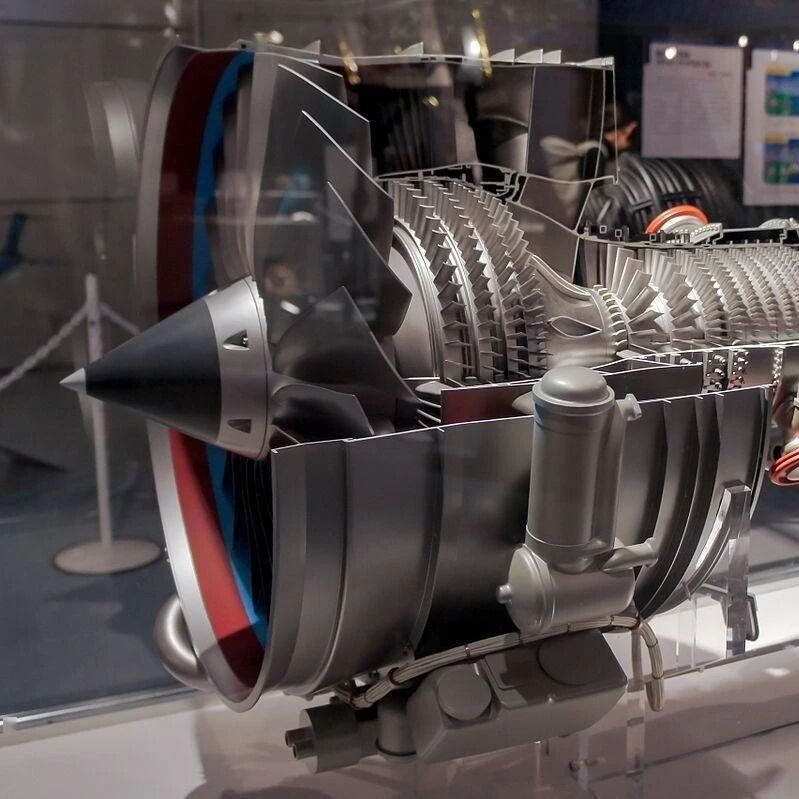
Core Viewpoint - The article discusses the significance of high-temperature alloys in extreme environments, particularly in aerospace and automotive applications, highlighting their unique properties and market potential [2][5]. Group 1: High-Temperature Alloys Overview - High-temperature alloys are essential for internal combustion engines, capable of withstanding temperatures between 600°C and 1200°C, with nickel-based alloys dominating the market, accounting for nearly 80% [2][16]. - There are three main types of high-temperature alloys: deformation alloys, casting alloys, and powder alloys, each with distinct properties and applications [3][19]. - Deformation alloys are primarily used in turbine disks, while casting alloys are utilized in turbine blades, offering higher temperature resistance [3][37]. Group 2: Market Trends and Demand - The demand for high-temperature alloys is expected to grow significantly, with military applications projected to reach 13,000 tons over the next five years, driven by advancements in military aircraft [5]. - The automotive sector is also anticipated to contribute to demand growth, with a compound annual growth rate (CAGR) of 16% over the next five years due to the increasing use of turbochargers [5][6]. - The nuclear power sector is expected to create additional demand, with nearly 10,000 tons required for construction projects aimed at achieving carbon neutrality [5]. Group 3: Supply Chain and Competition - The high-temperature alloy market is characterized by limited competition among domestic manufacturers, as the industry has high entry barriers due to stringent qualification requirements [6]. - Companies involved in the recycling of high-temperature alloy waste are expected to see growth, as this can reduce costs and reliance on critical strategic materials [4][6]. Group 4: Key Companies in the Industry - Notable companies in the high-temperature alloy sector include Fushun Special Steel, Steel Research High-Tech, and West Superconducting, each specializing in different alloy types and production methods [6][8].

高温合金行业深度:航空发动机换代与燃气轮机国产化下的确定性增长(附53页PPT)
材料汇· 2026-01-06 16:00
Group 1 - High-temperature alloys are critical materials in aerospace engines, gas turbines, and nuclear power equipment, directly influencing thrust, efficiency, and lifespan of high-end equipment [2][3] - The high-temperature alloy industry in China is accelerating due to the "Two Aircraft Special Project," the mass production of the C919 aircraft, breakthroughs in gas turbine localization, and the "dual carbon" strategy [2][4] - Nickel-based alloys dominate the market, accounting for 80% of demand, with deformation alloys making up 75% of production by 2024 [3][21] Group 2 - The production of high-temperature alloys in China increased from 19,000 tons in 2017 to 49,000 tons in 2023, with a CAGR of 17.1%, while demand rose from 21,000 tons to 52,000 tons, with a CAGR of 16.8% [4][34] - By 2024, production is expected to reach 57,000 tons, with aerospace (55%) and power generation (20%) as the main demand sectors [4][34] - The annual average demand for high-temperature alloys is projected to exceed 56,500 tons from 2025 to 2030, driven by factors such as the replacement of aircraft engines and the localization of commercial aircraft [4][39] Group 3 - The global high-temperature alloy market is expected to exceed $30 billion by 2025, with China's market projected to reach 120 billion yuan, growing at over 15% annually [5] - Domestic production capacity is expected to exceed 60,000 tons by 2025, but there remains a 30% supply gap for high-end products [5][6] - The domestic localization rate is anticipated to rise from less than 40% in 2020 to about 65% by 2025, supported by policies under the 14th Five-Year Plan [5][6] Group 4 - The industry is characterized by a "technology-driven, strong players" dynamic, with an expected annual compound growth rate of 15% from 2025 to 2027 [6] - Leading companies are achieving breakthroughs in niche markets, with notable revenue growth reported by companies such as Western Superconducting and Steel Research [6][8] - The competitive landscape shows a high concentration in upstream and a diverse midstream, with major players in the upstream segment like Fushun Special Steel [5][6] Group 5 - High-temperature alloys are primarily used in aerospace, accounting for over 50% of total demand, and are critical for the performance of advanced aircraft engines [26][34] - The demand for high-temperature alloys in gas turbines is expected to exceed 151,000 tons from 2025 to 2030, driven by domestic and international power generation needs [40][44] - The military sector is also a significant driver, with domestic naval gas turbines reaching international standards, enhancing the capabilities of the People's Navy [62]
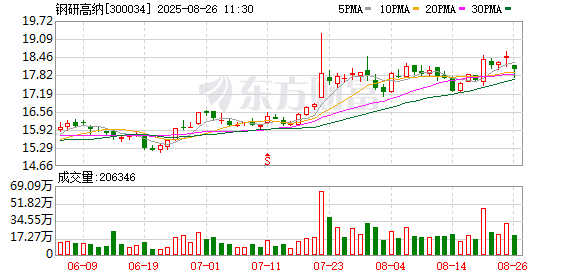
钢研高纳上半年实现营业收入18.17亿元
Zheng Quan Ri Bao· 2025-08-26 04:39
Group 1 - The core viewpoint of the article highlights that Beijing Steel Research High-Temperature Alloy Technology Co., Ltd. (Steel Research High-Temperature) reported a revenue of 1.817 billion yuan for the first half of 2025, reflecting a year-on-year growth of 5.07%, while the net profit attributable to shareholders decreased by 64.52% to 63.8054 million yuan [2] - The company is recognized as one of the leading producers of high-end and new high-temperature alloy products in China, with a comprehensive product system [2] - Steel Research High-Temperature has a strong focus on nickel-based high-temperature alloys and is expanding into aluminum, magnesium, and titanium casting and forging, establishing a diversified industrial layout across seven cities and ten factories, headquartered in Beijing [2] Group 2 - The company possesses the capability to produce 5,000 tons of aerospace high-temperature alloy mother alloy annually and has the ability to manufacture precision castings for aerospace engines [2] - It also has the production capacity for over 1,000 tons of deformed alloy raw materials and more than 10,000 aerospace ring forgings annually, showcasing its advanced manufacturing capabilities for essential aerospace engine materials [2] - The company is equipped with production technologies for new alloy products, including powder high-temperature alloys, intermetallic compound castings, oxide dispersion strengthened alloys, and foam metals, which are critical for advanced aerospace engines [2]