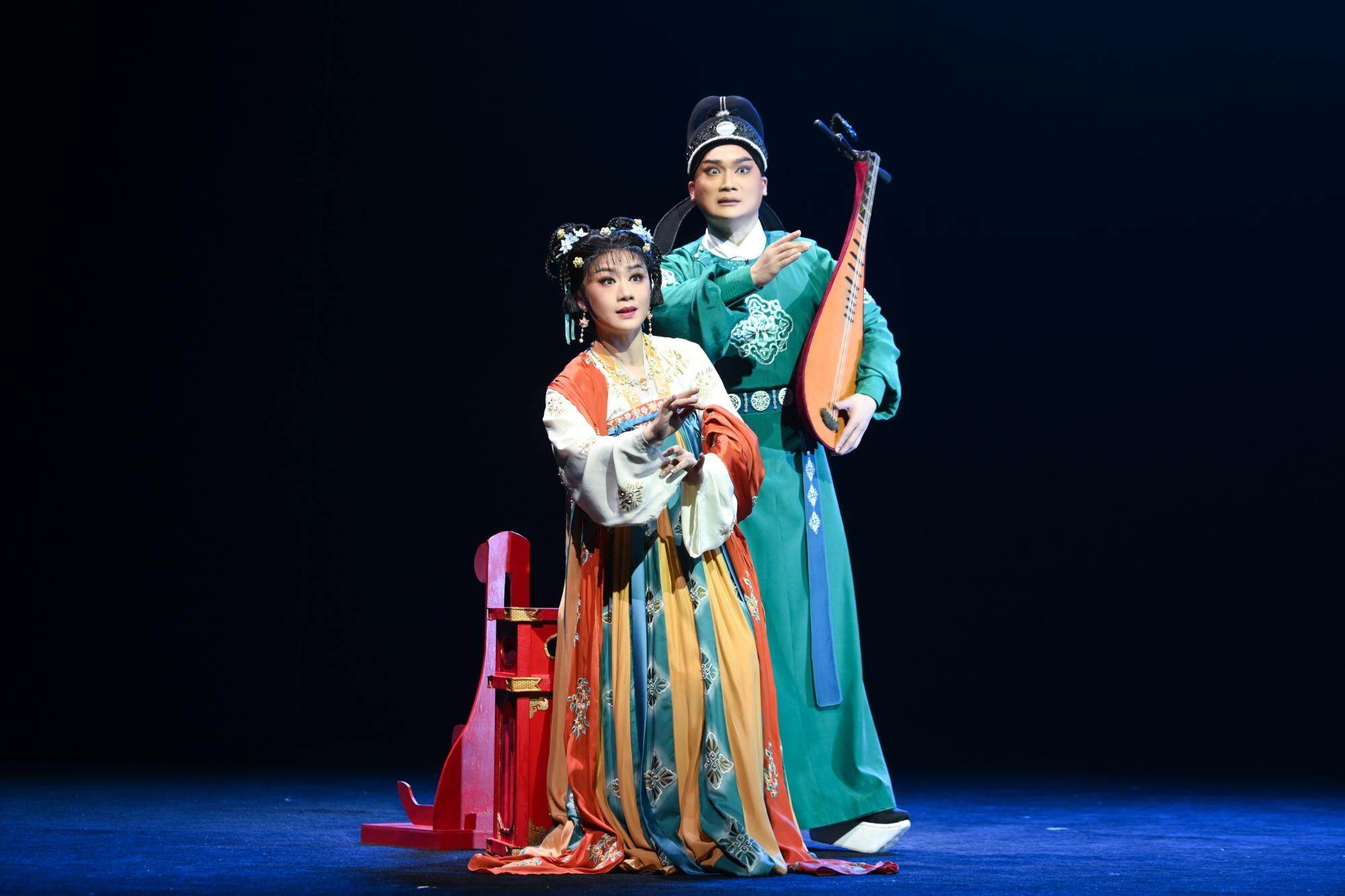
粤剧电影《白蛇传·情》

Search documents
那些“只可意会”的神韵,是戏曲跨越时空的珍贵密码
Xin Lang Cai Jing· 2025-12-23 19:08
Core Viewpoint - The vitality of art lies not in the newness of its form but in its ability to touch hearts, convey values, and continue cultural heritage [1][5]. Group 1: Integration of Technology and Traditional Art - Recent innovations in digital technology have showcased a new synergy between technology and art, leading to a collision between traditional aesthetics and digital aesthetics in performing arts [1]. - The use of immersive technologies, such as XR glasses in performances like "The Mourning of Daiyu," creates stunning experiences but raises questions about the necessity of traditional expressive characteristics in opera [1][3]. - The application of digital tools in traditional opera can enhance the artistic expression, as seen in the Zhejiang Wuju Art Research Institute's "The Three Strikes of the White Bone Spirit," where digital lighting and sound effects create an immersive experience [2]. Group 2: Aesthetic Considerations - While digital tools provide new mediums for expression, there is a need to maintain "poetic restraint" to preserve the unique aesthetic values of traditional opera [3]. - The challenge lies in balancing technological advancements with the traditional art form's emphasis on suggestion and imagination, as excessive reliance on technology can detract from the intended artistic expression [3][4]. - Historical reflections, such as the "mechanical scenery" trend in the Republican era, highlight the importance of ensuring that technology enhances rather than overshadows the artistic experience [4]. Group 3: The Role of AI in Traditional Arts - Generative AI offers new creative dimensions for opera but struggles to capture the nuanced emotional expressions that define traditional performances [4]. - The essence of traditional art is rooted in human interaction and emotional understanding, which AI cannot replicate, emphasizing the importance of human artistry in the creative process [4][5]. - The integration of AI should focus on enhancing understanding of what can be quantified in art versus what must be conveyed through human experience [4]. Group 4: Artistic Integrity and Human Creativity - Technology should serve to enhance artistic creation rather than replace human judgment, with artists determining the emotional and thematic elements of their work [5]. - Historical technological advancements in opera have often sparked concerns about the dilution of tradition, yet they have also led to new growth opportunities within the art form [5]. - The true essence of opera lies in the subtle expressions and improvisational skills of performers, which should not be overshadowed by dazzling digital technologies [5].
冬至梅开,听一曲粤韵话团圆丨节绘岭南
Xin Lang Cai Jing· 2025-12-21 06:20
Core Viewpoint - The article highlights the cultural significance and evolution of Cantonese opera, emphasizing its adaptation to modern times while maintaining traditional roots. Group 1: Cultural Significance - Cantonese opera is deeply rooted in the culture of Guangdong, where the winter solstice is celebrated as a time for family reunions, reflecting warmth in the cold season [1] - The art form has evolved from using "stage Mandarin" to "vernacular" Cantonese, marking a significant transformation in its history [3] Group 2: Artistic Evolution - The evolution of Cantonese opera includes changes in singing styles, instruments, and performance techniques, with over 20 different vocal styles emerging [3] - Contemporary adaptations include the integration of Western instruments and innovative storytelling methods, allowing the art form to resonate with modern audiences [9] Group 3: Modern Adaptations - The film "White Snake: The Legend" serves as a modern interpretation of traditional stories, attracting younger audiences to Cantonese opera [12] - Young people are increasingly engaging with the art form, experiencing a sense of nostalgia and cultural connection through performances [13]

打造主流媒体系统性变革试验田
Nan Fang Du Shi Bao· 2025-03-28 23:16
Core Insights - Guangdong is strongly promoting the high-quality development of the digital creative industry, leveraging opportunities in technological innovation such as artificial intelligence to enhance cultural and technological integration [2][3][6] - The newly constructed Lingnan Digital Creative Building aims to expand the physical space for cultural industry development and foster new industry clusters, enhancing the synergy between culture and technology [3][13] Industry Performance - In 2023, Guangdong's digital creative industry cluster achieved a revenue of 623.34 billion yuan, surpassing the target of 620 billion yuan set for 2025, with an average annual growth rate of 10.37% over the past five years [6] - The cultural industry revenue in Guangdong is projected to exceed 2.5 trillion yuan by 2024, with the gaming industry, digital publishing, and film box office revenues leading the nation [3][6] Talent Development - Guangdong is implementing the "Million Talents Gather in Nanyue" action plan to attract innovative talents, providing a platform for entrepreneurship in the digital creative sector [4][11] - The Lingnan Digital Creative Building is designed to be a hub for young talent, offering various services such as cultural investment funds, policy consulting, and tax incentives [13] Strategic Advantages - Guangdong's digital creative industry benefits from the strategic opportunities presented by the Guangdong-Hong Kong-Macao Greater Bay Area, with significant infrastructure and talent development initiatives [7][8] - The region boasts a rich cultural heritage, a large population, and robust market demand, which collectively support the growth of the digital creative industry [7][8] Policy and Ecosystem Support - The government is enhancing policy support for key sectors such as animation, gaming, film production, and creative design to foster a collaborative industry ecosystem [10] - Initiatives include the establishment of digital creative industry parks and the promotion of cultural data centers to facilitate the digital transformation of cultural resources [10][12]