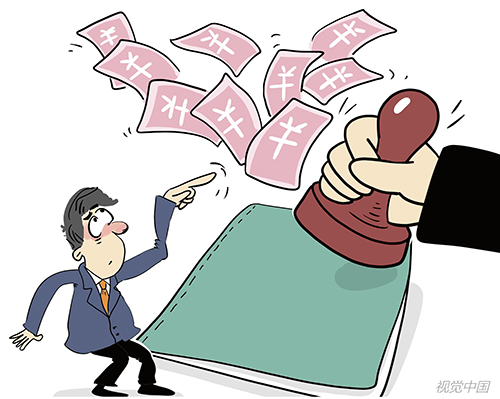
精密输液器

Search documents
威高股份销售员行贿案背后:医药回扣链条暴露上市公司治理与合规风险
Xin Lang Cai Jing· 2026-01-22 08:40
Core Viewpoint - The recent bribery case involving a sales representative from Shandong Weigao Co., Ltd. highlights systemic risks within the company's sales structure, especially in the context of ongoing national efforts to combat commercial bribery and promote centralized procurement of medical supplies [1][6]. Group 1: Bribery Details - The bribery actions of the representative, totaling over 1.58 million yuan, were characterized by long-term and multi-department penetration, affecting nearly 20 departments in a hospital [2][7]. - A significant portion of the bribes, amounting to 1.1912 million yuan, was directed towards various medical departments, with individual bribe amounts ranging from thousands to hundreds of thousands of yuan [2][7]. - The National Healthcare Security Administration emphasized that such practices disrupt normal medical practices and distort competition, shifting the focus from quality and price to "rebate-driven" sales [2][7]. Group 2: Corporate Governance Concerns - Weigao has not publicly disclosed any information regarding the bribery case, raising concerns about its transparency and internal control mechanisms [3][8]. - The company operates a vast sales network with 25 sales offices and 170 city representatives, yet multiple bribery incidents indicate significant management and compliance training gaps [3][8]. - The actions of local employees directly impact the company's brand and legal risks, suggesting that without strengthened internal controls, similar incidents may recur, potentially leading to regulatory investigations and penalties [3][8]. Group 3: Industry Transformation Challenges - The National Healthcare Security Administration has stated that commercial bribery inflates the prices of medical supplies, with the excess not contributing to legitimate profits or innovation [4][9]. - Companies like Weigao, which have relied on high margins and rebates, face significant challenges as centralized procurement and price transparency become the norm [4][9]. - There is a growing emphasis on ESG (Environmental, Social, and Governance) principles, making compliance and ethical sales practices critical for long-term investment value [4][9]. Conclusion - The bribery case serves as a reflection of the governance shortcomings in the pharmaceutical sales sector, emphasizing the need for companies to move away from rebate dependency and focus on product quality and efficiency to ensure sustainable growth [5][11].
送现金、美金、金条……威高股份业务员行贿医务人员被通报
Huan Qiu Wang· 2026-01-16 10:29
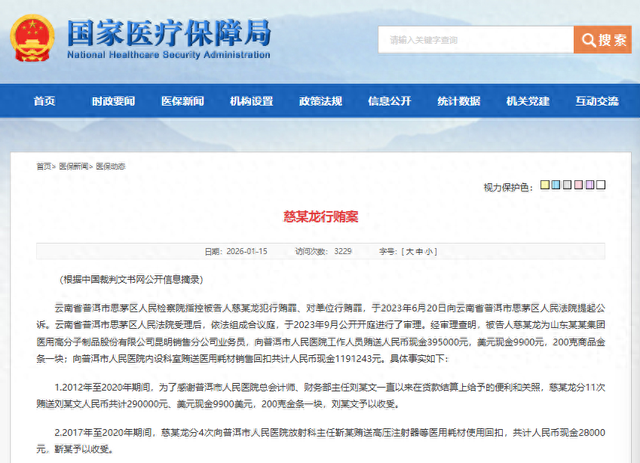
Core Viewpoint - The National Healthcare Security Administration reported on the bribery case involving a sales representative from a medical polymer products company, highlighting extensive bribery practices within a public hospital that compromised fair competition and increased medical costs [1][6][10]. Summary by Sections Bribery Details - The accused, Ci Mou Long, bribed staff at the Pu'er City People's Hospital with a total of RMB 3,950,000 in cash and 200 grams of gold bars, along with various medical supplies as kickbacks [1][6]. - From 2012 to 2020, Ci Mou Long made 11 payments totaling RMB 290,000 and USD 9,900 to the hospital's chief accountant for favorable payment processing [1][2]. - Over the years, multiple hospital staff members received kickbacks for various medical supplies, including RMB 1,191,243 in total from 2012 to 2018 [1][6]. Legal Consequences - Ci Mou Long was sentenced to 2 years and 6 months in prison and fined RMB 200,000 for bribery and corporate bribery [10]. - The case reflects ongoing issues in the medical supply industry, where improper incentives disrupt normal medical practices and inflate costs [6][10]. Industry Implications - The National Healthcare Security Administration is taking steps to regulate the procurement of medical supplies, aiming to reduce inflated prices and alleviate the financial burden on patients [10]. - The case underscores the need for stricter oversight and accountability in the medical supply sector to ensure fair competition and protect healthcare funds [6][10].

金条、送美元、送现金 威高股份一业务员被国家医保局通报行贿
Zhong Guo Jing Ying Bao· 2026-01-15 15:58
Core Viewpoint - The case highlights the issue of commercial bribery in the pharmaceutical industry, specifically involving a sales representative from Shandong Weigao Group Medical Polymer Co., Ltd., who engaged in bribery to influence prescription practices and disrupt fair competition in the healthcare sector [5][7]. Group 1: Bribery Details - The sales representative, Ci Mou Long, was found guilty of bribing staff at the Pu'er People's Hospital with a total of RMB 1,195,243 in cash and goods, including cash payments of RMB 395,000 and USD 9,900, as well as a gold bar weighing 200 grams [5][8]. - Between 2012 and 2020, Ci Mou Long made multiple payments to various hospital staff, including a total of RMB 290,000 in cash and a gold bar to the hospital's chief accountant, Liu Mou Wen, for facilitating payment settlements [8]. - The bribery involved various medical supplies, with cash kickbacks totaling RMB 408,200 and 500 supermarket vouchers distributed among nursing staff across different departments [13]. Group 2: Legal Consequences - Ci Mou Long was sentenced to 2 years and 6 months in prison and fined RMB 200,000 for his actions [7]. - The National Healthcare Security Administration (NHSA) plans to guide local healthcare authorities in conducting credit evaluations and enforcing measures against untrustworthy companies to protect healthcare fund security [7]. Group 3: Industry Implications - The NHSA has been actively reporting multiple cases of commercial bribery in the pharmaceutical sector to warn against unethical practices that undermine the integrity of medical services and increase healthcare costs [6].
济民健康“萝卜章”谜案
Jing Ji Wang· 2025-05-16 08:36
Core Viewpoint - The company, Jimin Health, is facing significant financial losses due to a scandal involving the forgery of company seals by its vice president, He Qinghong, which has led to legal disputes with distributors and a projected loss of 28.32 million yuan for 2024 [1]. Financial Impact - Jimin Health reported a net profit loss of 59.71 million yuan for 2024, which is similar to the previous year's losses, and the expectation of reducing losses by approximately 50 million yuan has not materialized [1]. - The sales revenue generated by He Qinghong's team amounted to approximately 117 million yuan, representing about 7% of the company's total revenue during 2023 and 2024 [5]. Legal and Management Issues - The company is under scrutiny for its internal control and management practices, particularly regarding the unauthorized signing of contracts by a high-ranking executive [5][6]. - Legal experts suggest that the contracts signed under the forged seals may still be considered valid, placing the company at risk of having to fulfill its obligations to the distributors [8][9]. Company Response and Future Measures - Jimin Health has stated its intention to improve governance and internal controls to prevent similar incidents in the future [5]. - The company has terminated He Qinghong's employment following the revelation of the scandal [4]. Contractual Obligations - The disputed supplementary agreement allows distributors to return products and claim a 10% compensation for funds occupied if sales targets are not met within a specified period [7]. - Legal opinions indicate that the company may be held liable for the actions of its employees, even if those actions involve criminal misconduct [8][9].