医药商业贿赂

Search documents
国家医保局密集披露医药贿赂案,什么信号?
第一财经· 2026-03-27 12:22
Core Viewpoint - The National Healthcare Security Administration (NHSA) has intensified its crackdown on bribery in the pharmaceutical sector, revealing multiple cases of corruption that highlight issues such as "kickbacks" and "golden sales" practices, which contribute to inflated drug prices and undermine fair market competition [3][4][6]. Summary by Sections Bribery Cases - In 2023, the NHSA disclosed eight bribery cases in the pharmaceutical field, involving not only hospital directors but also doctors and nurses [3][7]. - Specific cases include: - **Case of Tao**: Tao bribed a doctor with a total of 465,000 yuan (approximately 46.5 million) from 2016 to 2024 to promote a nasal spray product, resulting in a four-month detention and a fine of 10,000 yuan [6]. - **Case of Zhang**: Zhang was sentenced to one year in prison (with a six-month probation) and fined 20,000 yuan for bribing medical staff to promote a drug [6]. Regulatory Measures - The NHSA has established a credit evaluation system for pricing and procurement since 2020, aimed at addressing issues of bribery and ensuring compliance among pharmaceutical companies [9][10]. - The system categorizes companies into different levels of creditworthiness, with stricter penalties for those involved in bribery, including suspension of their products from procurement lists [10][11]. Ongoing Anti-Corruption Efforts - The trend of anti-corruption in the healthcare sector is shifting towards a more normalized governance approach, focusing on comprehensive oversight across the pharmaceutical supply chain [13]. - The NHSA's efforts are part of a broader initiative involving multiple government agencies to address issues related to healthcare fund management and to enhance regulatory measures [14].


假住院真套保,医保资金如何严防医疗机构“围猎”?
2 1 Shi Ji Jing Ji Bao Dao· 2026-02-03 09:25
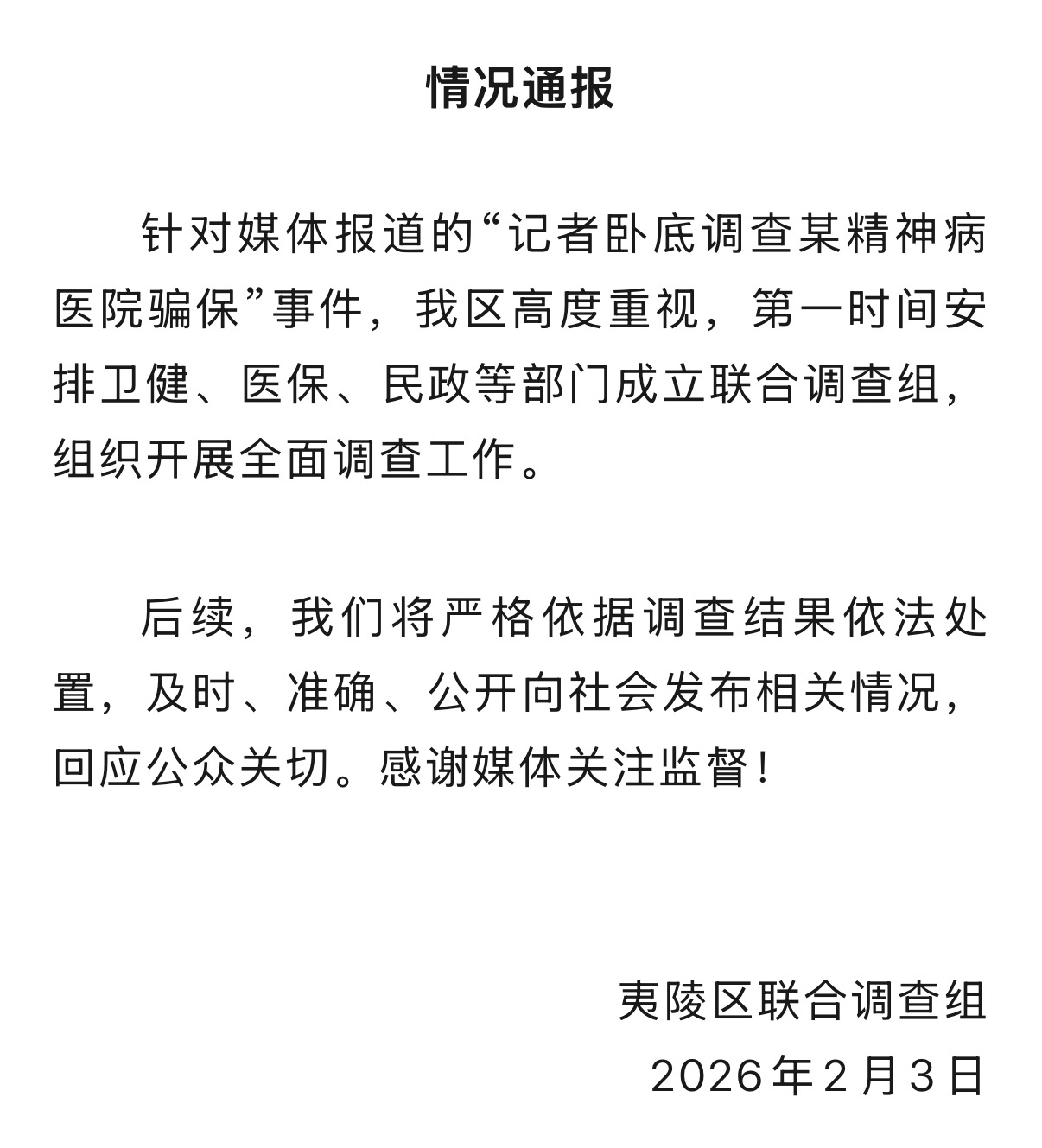
Core Viewpoint - The investigation reveals that several psychiatric hospitals in Xiangyang and Yichang are illegally admitting normal individuals as patients to exploit insurance funds, turning them into revenue-generating tools for the hospitals [1][4][5]. Group 1: Hospital Practices - Hospitals are engaging in practices such as admitting healthy individuals under false pretenses, with some even employing internal staff to pose as patients [4][5]. - These institutions are manipulating diagnoses to fit insurance reimbursement criteria, such as misclassifying alcohol dependence as a mental disorder to secure funding [4][5]. - Patients are subjected to minimal treatment, with reports indicating that some only receive occasional medication and basic tests, while the hospitals charge exorbitant fees for services not rendered [5]. Group 2: Regulatory Response - A joint investigation team has been established by the Yichang government to address the fraudulent practices, promising to handle the situation according to the findings and keep the public informed [2]. - The National Medical Insurance Bureau has emphasized a "zero tolerance" policy towards fraud, implementing a comprehensive regulatory framework to combat various forms of insurance fraud across healthcare institutions [9]. Group 3: Broader Implications - The fraudulent activities not only harm the patients who genuinely need care but also undermine the overall healthcare system, affecting the quality of medical services and insurance benefits for all insured individuals [1][6]. - The prevalence of fraud in psychiatric hospitals reflects a larger issue within the healthcare sector, where similar deceptive practices are reported across various medical institutions and retail pharmacies [6][7]. Group 4: Future Directions - Experts suggest that the exposure of these fraudulent practices presents an opportunity for reform, advocating for stricter regulations and innovative payment models to reduce the potential for fraud [5][9]. - The integration of big data from multiple sectors is seen as a crucial step in enhancing oversight and ensuring that legitimate patients receive the care they need while deterring fraudulent activities [9].
供货705万给院长回扣247万,整治医药商业贿赂须“行贿受贿一起查”
第一财经· 2026-02-03 07:08
Core Viewpoint - The article highlights the rampant issue of commercial bribery in the medical sector, particularly focusing on the recent cases exposed by the National Medical Insurance Administration, which reflect a systemic problem that undermines fair competition and increases medical costs for patients and insurance funds [2][3]. Group 1: Recent Cases of Bribery - The article discusses a case involving a hospital director in Shaanxi who illegally accepted bribes totaling 2.72 million yuan, primarily from orthopedic consumables, with suppliers paying a 35% kickback on total supply amounts [2]. - This case is part of a broader trend, with the National Medical Insurance Administration previously exposing similar bribery cases in Heilongjiang, Chongqing, and Yunnan, indicating a widespread issue in the medical industry [2]. Group 2: Nature of Commercial Bribery - Commercial bribery in the medical field distorts prescription rights and disrupts normal medical practices, leading to increased medical burdens and a shift from competition based on clinical value to competition driven by high kickbacks [3]. - The article emphasizes that the high kickback rates, such as the 35% observed in the Shaanxi case, suggest significant price inflation in medical products, which ultimately contributes to the rising costs of healthcare for patients [4]. Group 3: Systemic Issues and Reforms - The article points out that the persistence of commercial bribery is linked to complex interest chains and institutional loopholes, particularly in high-value consumables and pharmaceuticals, where "kickback sales" have become a common practice [3]. - It advocates for comprehensive reforms in the medical procurement system, including expanding volume-based procurement to reduce unreasonable profit margins and combat bribery [5]. Group 4: Recommendations for Combating Bribery - The article suggests a multi-faceted approach to eradicate commercial bribery, including strict enforcement of laws against both bribery and receiving bribes, improving internal decision-making and supervision mechanisms in medical institutions, and enhancing monitoring of medical insurance funds [5][6]. - It highlights the necessity of treating bribery and receiving bribes as interconnected issues, with legal frameworks supporting joint investigations and penalties for both parties involved [6]. Group 5: Broader Implications - The article concludes that corruption in the medical field not only affects public finances but also jeopardizes public health and social equity, emphasizing the need for ongoing regulatory efforts to cleanse the industry and protect the well-being of citizens [7].

壹快评|供货705万给院长回扣247万,整治医药商业贿赂须“行贿受贿一起查”
Di Yi Cai Jing· 2026-02-03 03:40
Core Viewpoint - The article highlights the serious issue of commercial bribery in the medical sector, emphasizing the need for stringent measures to combat it and protect public health and the integrity of the healthcare system [1][2][3]. Group 1: Cases of Bribery - The National Healthcare Security Administration (NHSA) reported a case involving a hospital director in Shaanxi who illegally accepted 2.72 million yuan in bribes, primarily from orthopedic consumables [1]. - This case is part of a broader trend, with the NHSA exposing multiple instances of bribery in the medical field, indicating a rampant issue that undermines fair competition and increases medical costs [1][2]. Group 2: Nature of Commercial Bribery - Commercial bribery in the medical field distorts prescription rights and interferes with normal medical practices, leading to increased costs for patients and the healthcare system [2]. - The bribery cases reveal a pattern where suppliers offer high rebates to secure contracts, which ultimately inflates product prices and burdens patients and insurance funds [2][3]. Group 3: Systemic Issues and Reforms - The article discusses the systemic issues that allow commercial bribery to persist, including complex interest chains and regulatory loopholes, particularly in high-value consumables and pharmaceuticals [2][3]. - The NHSA has been increasing efforts to combat commercial bribery through administrative and criminal measures, emphasizing the need for comprehensive reforms in the procurement system to reduce incentives for bribery [3][4]. Group 4: Recommendations for Action - To effectively eliminate commercial bribery, a multi-faceted approach is necessary, including strict penalties for both bribers and recipients, improved internal decision-making processes in medical institutions, and enhanced transparency in procurement [4][5]. - The article stresses the importance of enforcing the principle of "joint investigation of bribery and acceptance" and the "dual penalty system" for companies and individuals involved in bribery [4][6]. Group 5: Broader Implications - The prevalence of commercial bribery not only harms public finances but also jeopardizes public health and social equity, as each bribe can lead to unnecessary medical expenses and inappropriate treatment choices [6]. - The ongoing efforts to combat medical commercial bribery are crucial for purifying the industry and safeguarding the health and welfare of the public [6].
吃回扣、重婚,医院院长李某被判刑
Xin Lang Cai Jing· 2026-02-02 12:50
Core Viewpoint - The case involving Li, a hospital director in Shaanxi, highlights significant corruption in the medical supply industry, where bribes were accepted in exchange for preferential treatment in the procurement of medical supplies and drugs, indicating a need for regulatory reforms in the sector [1][4]. Group 1: Case Details - Li was accused of accepting a total of 2,720,548 yuan in bribes from medical supply vendors, including 2,468,958 yuan from supplier Jia, 231,580 yuan from supplier Sun, and 20,010 yuan from pharmaceutical representative Jiang [1][3]. - The bribes were structured as a percentage of the total supply value, with Jia offering a 35% kickback and Sun offering 30%, indicating a systemic issue of inflated pricing in the medical supply chain [2][4]. - The court sentenced Li to six years in prison and imposed a fine of 400,000 yuan for his involvement in these corrupt practices [3]. Group 2: Industry Implications - The case exemplifies how medical commercial bribery undermines fair competition and increases healthcare costs, as the inflated prices of medical supplies are driven by kickbacks rather than clinical value [4]. - The involvement of substandard or rebranded products in the supply chain raises concerns about the quality and efficacy of medical supplies used in clinical settings [4]. - The National Healthcare Security Administration plans to implement credit evaluations and corrective measures for untrustworthy companies to safeguard healthcare funds and ensure compliance within the industry [4].
国家医保局一个月曝光四起回扣案
第一财经· 2026-02-02 11:27
Core Viewpoint - The article discusses a bribery case involving a hospital director in Shaanxi Province, highlighting the issue of kickbacks in the medical supply industry and the need for regulatory oversight to ensure fair competition and protect healthcare funds [3][6]. Group 1: Case Details - Li, the director of a bone surgery department, received a total of 2.7205 million yuan in bribes, primarily from orthopedic supply kickbacks [3][4]. - Li accepted 2.469 million yuan from supplier Jia, who promised a 35% kickback on the total supply amount, leading to the use of Jia's products in surgeries from July 2014 to March 2017 [4][5]. - Li also received 231,600 yuan from supplier Sun, who offered a 30% kickback, with the supply agreement in place from January 2018 to January 2019 [5]. Group 2: Implications and Regulatory Actions - The National Healthcare Security Administration (NHSA) stated that medical bribery distorts prescription rights and disrupts normal medical practices, leading to inflated prices for medical supplies [6]. - The NHSA plans to guide local healthcare authorities in evaluating the credit of dishonest companies and enforcing corrective measures to protect healthcare funds [6]. - In 2023, the NHSA has already exposed four bribery cases, indicating a trend of corruption in the pharmaceutical and medical supply sectors [7].

供货705万,给医生回扣247万!国家医保局一个月曝光四起回扣案
Di Yi Cai Jing· 2026-02-02 10:40
Core Viewpoint - The National Healthcare Security Administration (NHSA) has exposed multiple cases of kickbacks in the medical industry, particularly in the fields of pharmaceuticals and medical supplies, highlighting the prevalence of corruption and its impact on healthcare costs and competition [3][4]. Group 1: Case Details - A case involving Li, the director of an orthopedic hospital in Shaanxi, revealed that he illegally accepted a total of 2.7205 million yuan in kickbacks, primarily from orthopedic supplies [1]. - Li received 2.469 million yuan from supplier Jia, who promised a 35% kickback on the total supply amount, leading to the procurement of supplies worth 7.0546 million yuan from July 2014 to March 2017 [1]. - Another supplier, Sun, paid Li 231,600 yuan in kickbacks from January 2018 to January 2019, with a total supply value of 772,200 yuan, despite Li lacking the authority to choose suppliers [2]. Group 2: Implications and Responses - The NHSA stated that medical commercial bribery undermines fair competition and increases healthcare costs, as kickbacks can inflate the prices of medical products by at least one-third [3]. - The NHSA plans to guide local healthcare authorities in evaluating the creditworthiness of involved companies and enforce corrective measures against those that fail to comply [3]. - In 2023, the NHSA has already exposed four kickback cases, indicating a significant issue within the pharmaceutical and medical supply sectors [3].
陕西安康一骨科医院院长吃回扣270万,回扣比例高达35%,数罪并罚获刑6年
第一财经· 2026-02-02 08:34
Core Viewpoint - The article discusses a case of corruption involving a hospital director in Ankang City, Shaanxi Province, who was found guilty of accepting bribes totaling 2,720,548 yuan from medical suppliers, highlighting issues of medical commercial bribery and its impact on healthcare costs and competition [2][5]. Group 1: Case Details - The hospital director, Li, accepted a total of 2,720,548 yuan in bribes from various medical suppliers, including 2,468,958 yuan from supplier Jia for medical consumables, which was used for personal expenses such as purchasing and renovating a villa [2][3]. - Li also received 231,580 yuan from supplier Sun, who promised a 30% kickback on the total supply amount, which Li used to repay personal loans [3]. - Additionally, Li accepted 20,010 yuan from pharmaceutical supplier Jiang, which he used to promote a specific drug within the hospital [4]. Group 2: Implications of Corruption - The case illustrates how medical commercial bribery undermines fair competition and increases healthcare costs, as the kickback system distorts the procurement process, leading to inflated prices for medical supplies [5]. - The article emphasizes the necessity for centralized procurement of orthopedic consumables to mitigate such corrupt practices and ensure the integrity of the healthcare system [6].

重庆某医院检验科主任狂买30多处房产,遍布海南、浙江等多省!面对纪委她称买房钱“都是借的”,还不时闭目养神或发愣出神
Mei Ri Jing Ji Xin Wen· 2026-01-22 06:10
Group 1 - The article highlights the case of She Qian, a former director of the laboratory department at a hospital in Chongqing, who is under investigation for corruption and bribery related to real estate purchases [1][2][3] - She Qian allegedly received over 1,042,000 RMB in bribes from pharmaceutical companies, with a significant portion used to fund her real estate investments [6][10] - The investigation revealed that She Qian utilized her position to accept kickbacks and benefits from medical companies, often requiring them to finance her property purchases to create a "firewall" against direct evidence of corruption [4][7][8] Group 2 - The National Medical Insurance Administration has been actively disclosing multiple cases of corruption in the medical field, indicating a widespread issue involving various stakeholders, including medical device companies and hospital leaders [11][12] - Recent reports show that the amounts involved in these corruption cases range from 35,000 RMB to 8 million RMB, with some cases spanning over a decade [11][12] - Experts suggest that the root causes of these corruption issues stem from information asymmetry, weak regulatory frameworks, and a lack of compliance awareness among involved parties [15][16]

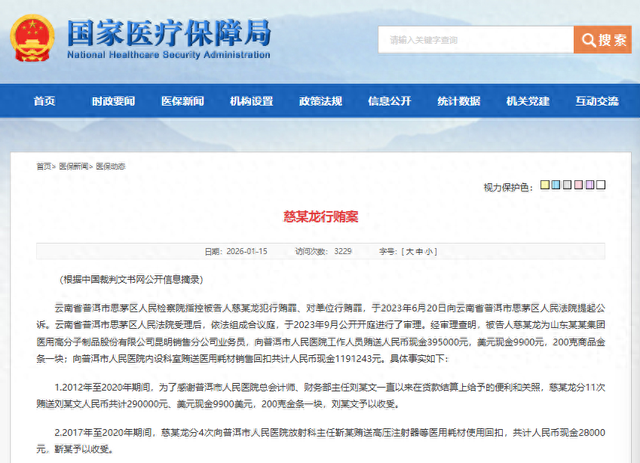
送现金、美金、金条……威高股份业务员行贿医务人员被通报
Huan Qiu Wang· 2026-01-16 10:29
Core Viewpoint - The National Healthcare Security Administration reported on the bribery case involving a sales representative from a medical polymer products company, highlighting extensive bribery practices within a public hospital that compromised fair competition and increased medical costs [1][6][10]. Summary by Sections Bribery Details - The accused, Ci Mou Long, bribed staff at the Pu'er City People's Hospital with a total of RMB 3,950,000 in cash and 200 grams of gold bars, along with various medical supplies as kickbacks [1][6]. - From 2012 to 2020, Ci Mou Long made 11 payments totaling RMB 290,000 and USD 9,900 to the hospital's chief accountant for favorable payment processing [1][2]. - Over the years, multiple hospital staff members received kickbacks for various medical supplies, including RMB 1,191,243 in total from 2012 to 2018 [1][6]. Legal Consequences - Ci Mou Long was sentenced to 2 years and 6 months in prison and fined RMB 200,000 for bribery and corporate bribery [10]. - The case reflects ongoing issues in the medical supply industry, where improper incentives disrupt normal medical practices and inflate costs [6][10]. Industry Implications - The National Healthcare Security Administration is taking steps to regulate the procurement of medical supplies, aiming to reduce inflated prices and alleviate the financial burden on patients [10]. - The case underscores the need for stricter oversight and accountability in the medical supply sector to ensure fair competition and protect healthcare funds [6][10].