纯电动货船

Search documents
一家老牌煤企如何向内河新能源船舶转型? | 聚焦2026山东两会
Jing Ji Guan Cha Wang· 2026-01-27 08:09
Core Viewpoint - The development of inland new energy vessels has become a key move for regional collaboration and green transformation, with significant growth expected in this sector by 2026 [2][11]. Group 1: Strategic Developments - The Shandong Provincial Government aims to enhance the quality of inland shipping and reduce logistics costs, with major projects planned for 2026, including the construction of the Jing-Hang Canal and Xiaoqing River connectivity [2][10]. - By the end of 2025, the main channel of the Jing-Hang Canal in Shandong is expected to reach Class II waterway standards, with a projected 1.6 times increase in inland port throughput over five years [2][10]. Group 2: Advantages of Shandong - Shandong holds a strategic position, accounting for one-third of the Jing-Hang Canal's navigable length, providing a unique market demand and testing ground for new energy vessels [3][6]. - The city of Jining has a complete industrial chain for new energy vessel manufacturing, supported by the Jining Energy Group, which is leading in the scale, intelligence, and greening of vessel manufacturing [3][6]. Group 3: Transition and Innovation - The Jining Energy Group is transitioning from a coal-centric model to a diversified economy, integrating coal, ports, trade, logistics, and now shipbuilding to create an industrial ecosystem [6][7]. - The establishment of Shandong New Energy Shipbuilding Co., in collaboration with major partners, aims to create a demonstration base for new energy vessel manufacturing, significantly reducing construction time through modular technology [7][8]. Group 4: Production and Environmental Impact - By the end of 2025, the new energy shipbuilding sector is expected to deliver 82 new energy vessels and 6 international custom vessels, with Jining Energy Group projected to achieve revenues exceeding 102 billion yuan [8][10]. - The introduction of electric vessels is anticipated to reduce carbon emissions by over 260 tons per ship annually, with a fleet of 50 electric cargo ships set to operate on the Jing-Hang Canal [7][8]. Group 5: Future Goals and Infrastructure - The Jining Energy Group aims to establish a comprehensive new energy vessel manufacturing base by 2026, with an annual production capacity of 200 to 500 vessels and projected sales revenue of 3.2 billion yuan [11][12]. - By 2027, the port's cargo throughput is expected to reach 150 million tons, with further growth anticipated by 2030, establishing Jining as a key northern inland shipping center [13][14]. Group 6: Policy Recommendations - Recommendations include integrating the northern inland shipping center into provincial strategic planning, establishing a coordination mechanism among provinces, and providing policy support for logistics hubs and new energy vessel manufacturing bases [14].

重大项目吸引民企参与
Ren Min Ri Bao· 2026-01-04 22:21
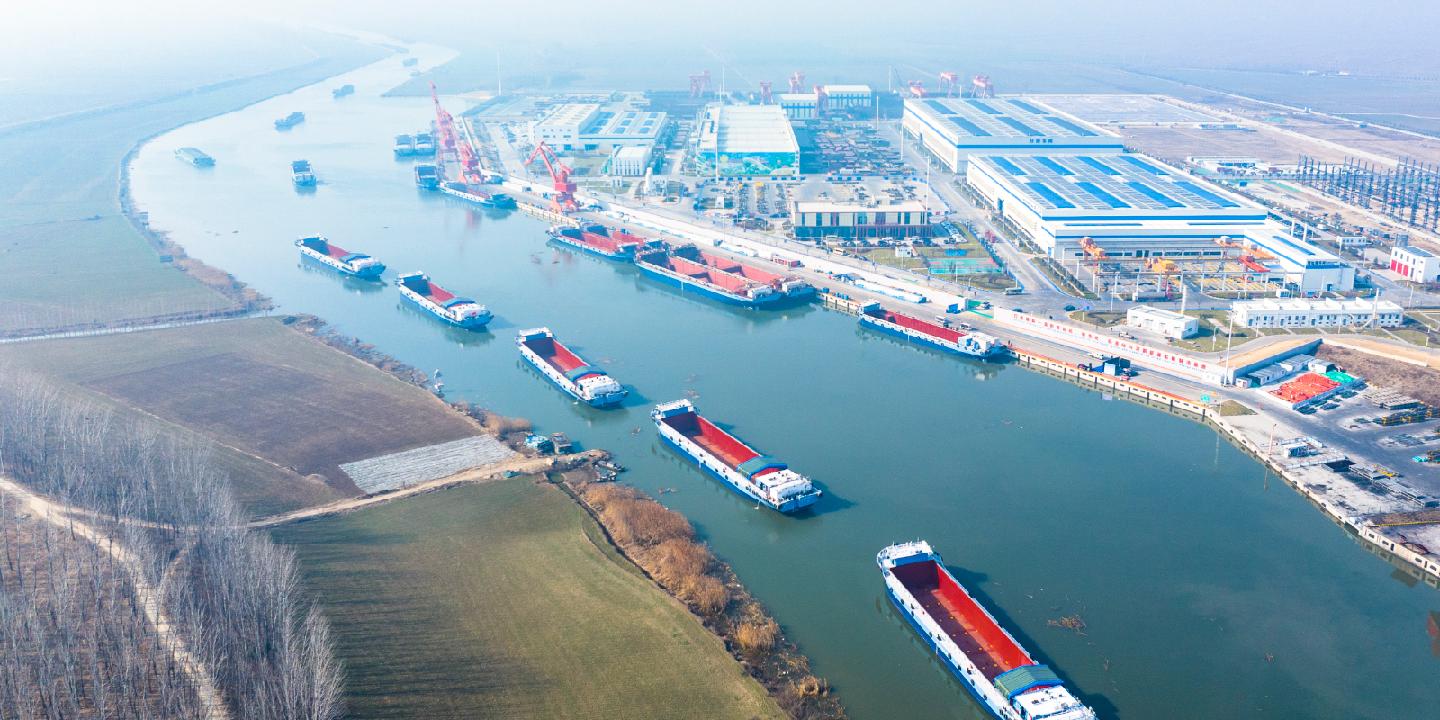
Core Viewpoint - The collaboration between Ningde Times Electric Ship Technology Co., Ltd. and Jining Energy Development Group Co., Ltd. marks a significant step in promoting green and intelligent shipping along the Grand Canal, with the delivery of the first five pure electric cargo ships and a contract for an additional fifty ships [2] Group 1: Company Initiatives - Ningde Times Electric Ship Technology Co., Ltd. has developed an integrated "ship-shore-cloud" technology solution that addresses the challenges of initial investment, refueling efficiency, operational economics, and accountability in the electric cargo shipping sector [2] - The company aims to leverage policy benefits to transform its experience in major projects into investments and practices across various fields, contributing to the activation of private investment and supporting the strategy of expanding domestic demand [2] Group 2: Industry Challenges and Support - The inland cargo transportation industry is highly sensitive to costs, making the transition to green shipping challenging [2] - The Shandong province and Jining city have implemented a series of supportive measures, including construction subsidies, purchase subsidies, and upcoming facility subsidies, which significantly reduce initial investment and operational costs for companies [2]