内河新能源船舶

Search documents
内陆城市靠什么跻身亿吨大港 ——山东济宁加快打造北方内河航运中心调查
Jing Ji Ri Bao· 2026-02-04 02:36
Core Viewpoint - Jining, an inland resource-based city, is set to achieve a cargo throughput of 116 million tons by 2025, becoming a significant player in China's inland port sector, driven by strategic development and multi-modal transport initiatives [1][5]. Group 1: Port Development and Strategic Positioning - Jining's strategic location along the Grand Canal has positioned it as a vital logistics hub, enhancing its role in national transportation networks [1]. - The city has transformed its port infrastructure, with Liangshan Port expected to handle over 40 million tons of coal by 2025, accounting for 70% of Shandong's coal supply [2]. - The development of Liangshan Port is part of a broader strategy to shift towards inland waterway transport, significantly improving logistics efficiency and reducing costs [3]. Group 2: Technological Advancements and Automation - Longgong Port has implemented full automation in container handling, achieving a two-minute turnaround for container loading and unloading, showcasing advancements in operational efficiency [4]. - The integration of AI, 5G, and digital twin technologies at Longgong Port has set a benchmark for smart transformation in inland ports [4]. Group 3: Economic Impact and Future Goals - Jining's port network, comprising eight major port areas, is projected to achieve a cargo throughput of 116 million tons by 2025, with a revenue exceeding 100 billion yuan [5]. - The city aims to establish itself as a northern inland shipping center, with plans to enhance its port capabilities and expand its logistics infrastructure by 2030 [6]. Group 4: Industry Integration and Urban Transformation - The integration of port operations with local industries, such as steel and grain processing, is fostering urban transformation and economic growth in Jining [7][8]. - The establishment of industrial parks around ports is creating a comprehensive ecosystem that supports logistics, trade, and manufacturing, enhancing the region's economic resilience [10][11]. Group 5: Green and Smart Shipping Initiatives - Jining is focusing on green development in its shipping industry, with initiatives to promote LNG and electric-powered vessels, aiming for a sustainable and efficient transport system [12][13]. - The introduction of standardized shipbuilding processes and smart energy solutions is expected to lower operational costs and enhance the economic viability of electric vessels [15].
一家老牌煤企如何向内河新能源船舶转型? | 聚焦2026山东两会
Jing Ji Guan Cha Wang· 2026-01-27 08:09
Core Viewpoint - The development of inland new energy vessels has become a key move for regional collaboration and green transformation, with significant growth expected in this sector by 2026 [2][11]. Group 1: Strategic Developments - The Shandong Provincial Government aims to enhance the quality of inland shipping and reduce logistics costs, with major projects planned for 2026, including the construction of the Jing-Hang Canal and Xiaoqing River connectivity [2][10]. - By the end of 2025, the main channel of the Jing-Hang Canal in Shandong is expected to reach Class II waterway standards, with a projected 1.6 times increase in inland port throughput over five years [2][10]. Group 2: Advantages of Shandong - Shandong holds a strategic position, accounting for one-third of the Jing-Hang Canal's navigable length, providing a unique market demand and testing ground for new energy vessels [3][6]. - The city of Jining has a complete industrial chain for new energy vessel manufacturing, supported by the Jining Energy Group, which is leading in the scale, intelligence, and greening of vessel manufacturing [3][6]. Group 3: Transition and Innovation - The Jining Energy Group is transitioning from a coal-centric model to a diversified economy, integrating coal, ports, trade, logistics, and now shipbuilding to create an industrial ecosystem [6][7]. - The establishment of Shandong New Energy Shipbuilding Co., in collaboration with major partners, aims to create a demonstration base for new energy vessel manufacturing, significantly reducing construction time through modular technology [7][8]. Group 4: Production and Environmental Impact - By the end of 2025, the new energy shipbuilding sector is expected to deliver 82 new energy vessels and 6 international custom vessels, with Jining Energy Group projected to achieve revenues exceeding 102 billion yuan [8][10]. - The introduction of electric vessels is anticipated to reduce carbon emissions by over 260 tons per ship annually, with a fleet of 50 electric cargo ships set to operate on the Jing-Hang Canal [7][8]. Group 5: Future Goals and Infrastructure - The Jining Energy Group aims to establish a comprehensive new energy vessel manufacturing base by 2026, with an annual production capacity of 200 to 500 vessels and projected sales revenue of 3.2 billion yuan [11][12]. - By 2027, the port's cargo throughput is expected to reach 150 million tons, with further growth anticipated by 2030, establishing Jining as a key northern inland shipping center [13][14]. Group 6: Policy Recommendations - Recommendations include integrating the northern inland shipping center into provincial strategic planning, establishing a coordination mechanism among provinces, and providing policy support for logistics hubs and new energy vessel manufacturing bases [14].

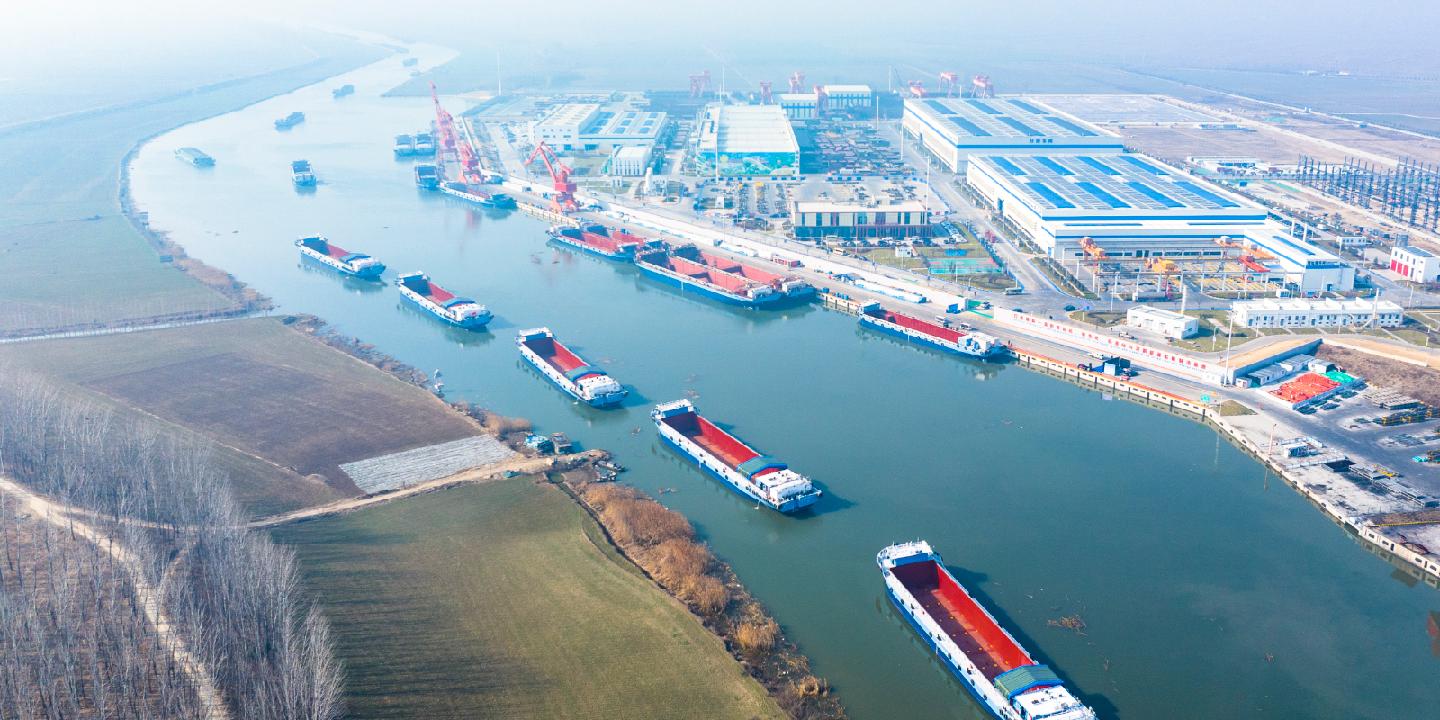
奔腾漆业定制“防护铠甲”赋能内河新能源船舶
Qi Lu Wan Bao Wang· 2025-08-01 16:15
Core Viewpoint - The integration of manufacturing and coating is essential for enhancing the performance of inland vessels and achieving green development throughout their lifecycle [1] Group 1: Company Initiatives - Shandong Pentium Paint Co., Ltd. is a national-level specialized and innovative "little giant" enterprise that focuses on providing customized coating solutions for new energy vessels [3] - The company has developed high-temperature and corrosion-resistant coatings for LNG-powered vessels and fire-retardant coatings for lithium battery-powered vessels, ensuring safety and longevity in complex shipping environments [3] - The company is committed to green development by using low VOC water-based coatings and high solid content coatings, which align with the zero-emission characteristics of new energy vessels [3] Group 2: Technological Collaboration - The company collaborates with institutions like the Chinese Academy of Sciences to develop weather-resistant coatings suitable for various shipping routes, optimizing impact resistance and abrasion resistance [4] - A joint laboratory for new energy vessel coatings has been established to customize coating solutions based on specific project needs, facilitating seamless integration of technology iteration and mass production [4] - The company aims to deepen the synergy between the "coating + vessel" industry chain and assist the new energy shipping industry in expanding into overseas markets [4]