新能源船舶制造

Search documents
一家老牌煤企如何向内河新能源船舶转型? | 聚焦2026山东两会
Jing Ji Guan Cha Wang· 2026-01-27 08:09
Core Viewpoint - The development of inland new energy vessels has become a key move for regional collaboration and green transformation, with significant growth expected in this sector by 2026 [2][11]. Group 1: Strategic Developments - The Shandong Provincial Government aims to enhance the quality of inland shipping and reduce logistics costs, with major projects planned for 2026, including the construction of the Jing-Hang Canal and Xiaoqing River connectivity [2][10]. - By the end of 2025, the main channel of the Jing-Hang Canal in Shandong is expected to reach Class II waterway standards, with a projected 1.6 times increase in inland port throughput over five years [2][10]. Group 2: Advantages of Shandong - Shandong holds a strategic position, accounting for one-third of the Jing-Hang Canal's navigable length, providing a unique market demand and testing ground for new energy vessels [3][6]. - The city of Jining has a complete industrial chain for new energy vessel manufacturing, supported by the Jining Energy Group, which is leading in the scale, intelligence, and greening of vessel manufacturing [3][6]. Group 3: Transition and Innovation - The Jining Energy Group is transitioning from a coal-centric model to a diversified economy, integrating coal, ports, trade, logistics, and now shipbuilding to create an industrial ecosystem [6][7]. - The establishment of Shandong New Energy Shipbuilding Co., in collaboration with major partners, aims to create a demonstration base for new energy vessel manufacturing, significantly reducing construction time through modular technology [7][8]. Group 4: Production and Environmental Impact - By the end of 2025, the new energy shipbuilding sector is expected to deliver 82 new energy vessels and 6 international custom vessels, with Jining Energy Group projected to achieve revenues exceeding 102 billion yuan [8][10]. - The introduction of electric vessels is anticipated to reduce carbon emissions by over 260 tons per ship annually, with a fleet of 50 electric cargo ships set to operate on the Jing-Hang Canal [7][8]. Group 5: Future Goals and Infrastructure - The Jining Energy Group aims to establish a comprehensive new energy vessel manufacturing base by 2026, with an annual production capacity of 200 to 500 vessels and projected sales revenue of 3.2 billion yuan [11][12]. - By 2027, the port's cargo throughput is expected to reach 150 million tons, with further growth anticipated by 2030, establishing Jining as a key northern inland shipping center [13][14]. Group 6: Policy Recommendations - Recommendations include integrating the northern inland shipping center into provincial strategic planning, establishing a coordination mechanism among provinces, and providing policy support for logistics hubs and new energy vessel manufacturing bases [14].

鼎新革故 迈向万亿
Qi Lu Wan Bao· 2026-01-20 01:24
Core Viewpoint - The Jining government has prioritized the "breakthrough in industrial economy 'number one project'" in its 2026 work report, reflecting a significant shift towards a modern industrial system centered on advanced manufacturing [1] Group 1: Project Objectives and Strategies - The "number one project" aims to enhance the overall level of the industrial value chain through measures such as focusing on advantages, strengthening supply chains, and promoting ecological empowerment [1] - The implementation path includes enhancing industrial chains, upgrading traditional industries, and developing emerging industries, which are crucial for establishing a competitive industrial identity for Jining [1][2] Group 2: Industrial Development and Transformation - Several industrial enterprises and projects with technological leadership and market competitiveness have emerged as key examples of the project's effectiveness, such as the Shandong Times New Energy Battery project and the Great Wall Heavy Industry headquarters [2] - The project promotes the simultaneous upgrading of traditional industries and the cultivation of emerging industries, setting specific goals like achieving a 50% deep digital transformation rate for large-scale industrial enterprises [2] Group 3: Industrial Ecosystem and Infrastructure - Jining focuses on optimizing the "1+15+N" park layout to concentrate resources and create a more robust and specialized industrial development platform [3] - The acceleration of productive service industries, such as R&D and headquarters economy, is essential for completing the modern industrial system and fostering a conducive industrial ecosystem [3]
山东首条纯电动货船绿色航线来了
Xin Lang Cai Jing· 2025-12-29 13:44
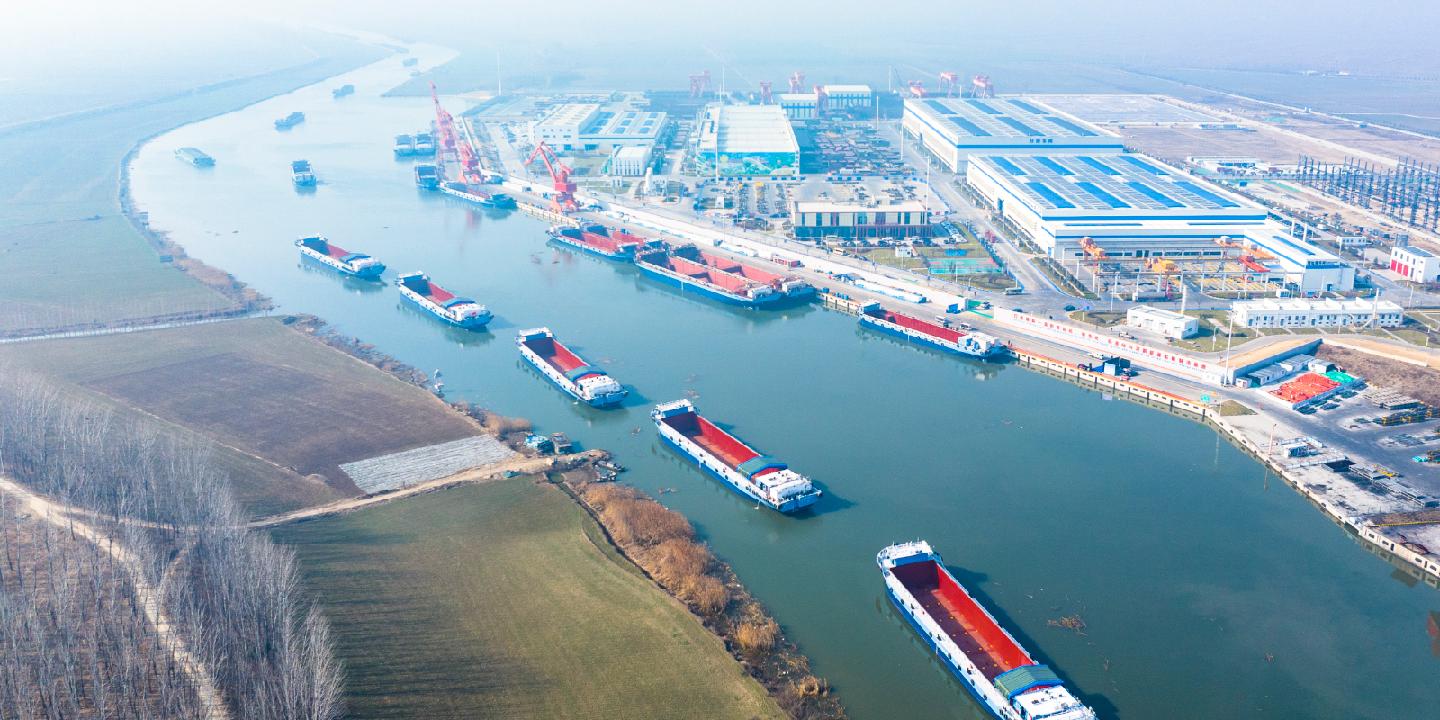
Core Viewpoint - The successful launch of the first batch of five pure electric multi-purpose vessels marks a significant step towards establishing a green shipping route in Shandong Province, with a total of 50 electric vessels ordered for operation on the Grand Canal [2][8]. Group 1: Company Developments - Jining Energy Group and CATL signed a contract for 50 pure electric vessels, with the first five vessels delivered for operation on the Grand Canal, creating Shandong's first large-scale electric cargo fleet [2][8]. - The new fleet utilizes an innovative "ship-electric separation" business model and containerized battery swapping technology, allowing each vessel to carry 2,000 tons and achieve zero emissions and low noise operation [2][8]. - Jining Energy Group's subsidiary, New Energy Shipbuilding Co., has signed over 180 vessel orders to date, with plans to launch 100 vessels and deliver 80 by 2025 [3][9]. Group 2: Industry Context - China's inland waterways are extensive, with a freight volume ranking first globally; however, approximately 300,000 vessels still operate on traditional diesel power, with around 60,000 on the Grand Canal [5][11]. - The Shandong Province government is committed to supporting the development of intelligent electric vessels, encouraging organized deployment and operation of electric vessels along rivers [5][11]. - Infrastructure improvements, including the establishment of charging and battery swapping facilities, are being prioritized to enhance service capabilities for electric vessels [5][11].
山东圈出一个“新核心”!济宁5年冲刺北方内河航运中心,啥信号
Qi Lu Wan Bao· 2025-08-06 03:11
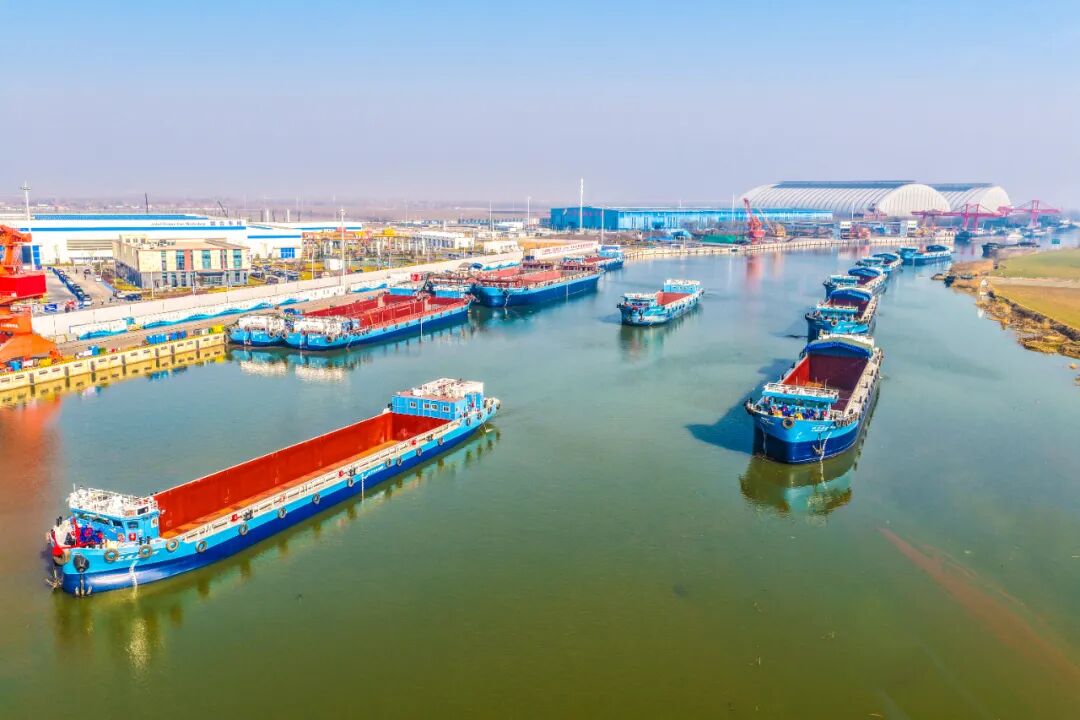
Core Viewpoint - Shandong Province has announced a new port and waterway layout plan for 2025-2035, positioning Jining Port as a core hub for northern inland shipping, aiming to enhance regional competitiveness and establish a modern water transport system [1][7][8]. Group 1: Jining Port's Development - Jining is set to become a northern inland shipping center by 2030, with a clear timeline and strategic focus on leveraging its geographical advantages and existing infrastructure [1][13]. - The port's cargo throughput is projected to reach 1.5 billion tons and 1 million TEUs by 2027, with a target of 2 billion tons and 1.5 million TEUs by 2030 [13][14]. - Jining's port and shipping industry is expected to generate over 2.2 billion yuan in output value by 2030, reflecting significant growth potential [13][14]. Group 2: New Energy Shipbuilding Industry - Jining is establishing the first inland new energy shipbuilding base in China, with an investment of 5.03 billion yuan, aiming for mass production of electric-powered vessels by August 2024 [2][3]. - The new energy shipbuilding facility is designed to produce 240 vessels and repair 100 vessels annually, focusing on various alternative fuel technologies [3]. - The establishment of a new energy fleet on the Grand Canal aims to replace over 4,000 outdated diesel vessels, enhancing environmental sustainability in the shipping industry [3][4]. Group 3: Strategic Importance of the Grand Canal - The Grand Canal is identified as a key waterway, with Jining's segment accounting for 24% of its total length and 80% of Shandong's share, highlighting its strategic significance [4][12]. - Jining's logistics capabilities are enhanced by its comprehensive transport system, connecting rail, road, and water, facilitating efficient multi-modal transport [4][12]. - The port's connectivity to major economic regions, including the Yangtze River Delta, positions it as a critical player in national logistics and trade [20][21]. Group 4: Market Dynamics and Competition - The global shift towards alternative fuel vessels is evident, with 55.5% of new ship orders in the first half of the year being for alternative fuel ships, indicating a growing market opportunity for Jining's new energy shipbuilding [3]. - The competition in the new energy sector is intensifying, necessitating strategic positioning and resource allocation to capitalize on emerging trends [4][21]. - Jining's port is actively engaging in partnerships and collaborations with major port groups to enhance its competitive edge and operational efficiency [21].