纯电动iX5氢燃料电池

Search documents
德国企业,正在疯狂涌入中国
Xin Lang Cai Jing· 2025-12-13 07:49
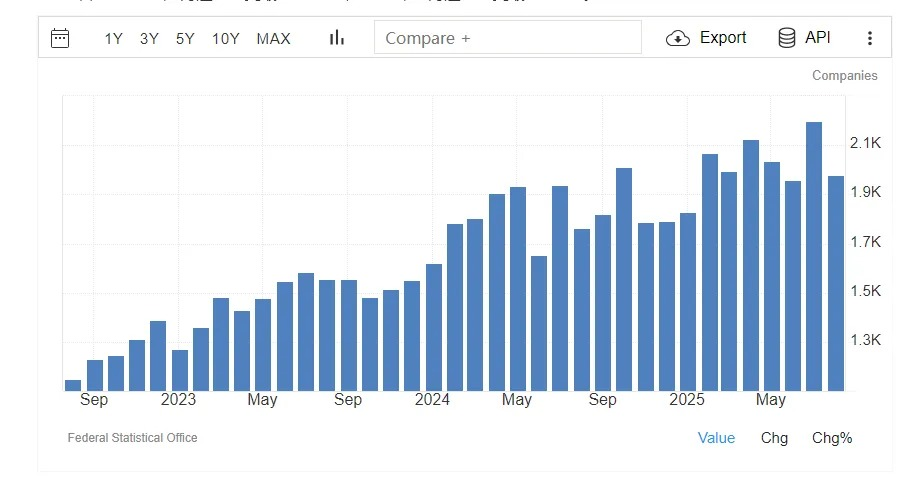
Core Viewpoint - German companies are increasingly relocating to China, marking a significant industrial migration that is accelerating over time [1][28]. Group 1: German Companies in China - Over 560 German companies have gathered in Taicang, Jiangsu, with more than 60 being renowned "hidden champions," accounting for over 10% of the total [2][29]. - The first 100 German companies took 14 years to establish in Taicang, while the next 100 (from 400 to 500) only took two years [3][30]. - German investments in Taicang exceed $6 billion, with annual industrial output surpassing 67 billion yuan [4][30]. Group 2: Major Investments and Developments - Notable investments include Volkswagen's announcement of a €2.5 billion investment to expand its production and innovation center in Hefei [5]. - Bayer plans to invest 600 million yuan in a new supply center in Jiangsu [5]. - Mercedes-Benz is investing €1 billion in a new autonomous driving research institute in Beijing [5]. - Volkswagen is investing ¥16.8 billion to establish a new smart electric vehicle R&D center in China while closing three factories in Germany [5]. Group 3: Challenges Faced by German Companies - In 2024, the number of bankruptcies in Germany reached 22,000, the highest in a decade, with a 12% year-on-year increase in the first half of 2025 [7][32]. - Major companies like Gerhard, Flabeg, and Webasto have declared bankruptcy, while others like Porsche are closing divisions to cut costs [9][34]. - The IFO Institute's survey indicates that German industrial companies' self-assessed competitiveness has hit a 31-year low, with 36.6% of respondents feeling disadvantaged compared to non-EU competitors [35]. Group 4: Factors Driving Migration - Rising energy costs, particularly due to the Green Party's policies, have led to a 148% increase in industrial electricity prices in Germany, making it 3.8 times higher than in China [37][41]. - The closure of nuclear and coal power plants has forced German industries to rely on imported electricity, resulting in soaring energy costs [41][40]. - The U.S. tariffs on EU goods have further impacted German exports, with a 6.5% decline in exports to the U.S. in the first eight months of the year [43][44]. Group 5: Strategic Advantages of Relocation - The migration of German companies to China is not merely a cost-driven relocation but a strategic choice to integrate into a more dynamic "super ecosystem" [45]. - The "innovation cost" advantage in China allows for faster technology iteration cycles, crucial for the electric vehicle market [15][48]. - The "system cost" advantage in China provides access to a complete supply chain, skilled labor, and efficient logistics, reducing overall operational costs [18][49]. - The "future cost" advantage positions China as a leader in global manufacturing, with a 31% share of global manufacturing value added [50][52]. Group 6: Future Outlook - German companies are not just relocating but are actively participating in shaping the future of industrial standards in China, as seen with BMW's investment in hydrogen fuel cell technology [52]. - The bilateral trade between Germany and China reached €185.9 billion in the first nine months of the year, with Germany accounting for 50% of EU investments in China over the past five years [24][53]. - The ongoing migration of German companies is viewed as a long-term strategic choice rather than a temporary measure, with many planning further investments in China [25][53].

不出意外德国工业的“去中国化”,将变成全网笑话
芯世相· 2025-11-26 11:31
Core Viewpoint - The article discusses the ongoing industrial crisis in Germany, highlighting the paradox of German companies increasingly relying on China despite political calls for "decoupling" from the Chinese market. It argues that the notion of "de-Chinafication" is unrealistic and counterproductive, as German industries are deeply integrated with Chinese markets and technologies [10][21][29]. Group 1: Industrial Crisis in Germany - German industrial companies are experiencing a significant decline in competitiveness, with a recent survey indicating that 36.6% of firms feel disadvantaged compared to non-EU competitors, marking a historical low [12][13]. - The crisis is attributed to structural issues such as an aging population, a shortage of skilled labor, rising labor costs, and bureaucratic inefficiencies, which collectively exert pressure on business operations [14][15]. - A notable trend is the migration of German companies abroad, with 70% of energy-intensive firms planning to invest overseas, reflecting a loss of confidence in the domestic industrial landscape [16][17]. Group 2: Dependence on China - Despite political rhetoric advocating for reduced reliance on China, trade data shows that Germany's imports and exports with China reached €163.4 billion (approximately $190.7 billion) from January to August, surpassing trade with the U.S. [22][23]. - German companies are increasingly viewing China not just as a low-cost manufacturing base but as a critical driver for technological innovation and market growth, as evidenced by BMW's investment in hydrogen fuel cell production in China [22][23]. - BASF's significant investment in a chemical production facility in Guangdong, totaling €10 billion, underscores the strategic importance of the Chinese market for German firms [23][24]. Group 3: Global Industrial Landscape Shift - The article highlights a historical shift in global industrial power, with developing countries, particularly China, increasing their share of global manufacturing value added, which now stands at 31% [30][31]. - China's manufacturing prowess is evident in various sectors, including electric vehicles and semiconductors, where it leads global production [33][34]. - The article concludes that the "de-Chinafication" narrative is fundamentally flawed, as it contradicts economic principles and the realities of global supply chains, ultimately harming Germany's industrial competitiveness [35][36].