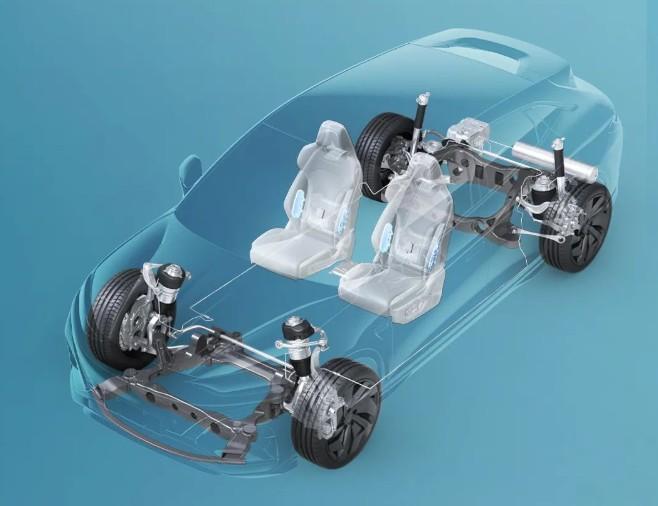
线控制动EMB

Search documents
明年开始,你的刹车会迎来一波史诗级更新
36氪· 2025-12-01 14:12
Core Viewpoint - The article discusses the advancements in brake technology, specifically focusing on the transition from traditional hydraulic braking systems to electronic mechanical braking (EMB) systems, highlighting the benefits and challenges associated with this shift [4][30]. Group 1: Technology Overview - The article introduces the concept of line control braking technology, which has recently received approval from national standards, paving the way for its implementation in vehicles [6][27]. - Current systems like EHB (Electronic Hydraulic Brake) still rely on hydraulic components, while EMB aims to eliminate these, using electric motors at each wheel for direct control [9][12]. - EMB technology promises faster response times, potentially reducing braking distances significantly compared to traditional systems [12][13]. Group 2: Benefits of EMB - EMB offers three main advantages: speed, precision, and efficiency. It can reduce response times to under 100ms, which is crucial for advanced driving assistance systems [12][14]. - The precision of EMB allows for individual wheel control, enhancing vehicle stability and safety, especially in adverse conditions [18]. - By eliminating the hydraulic system, EMB reduces vehicle weight and maintenance costs, contributing to better fuel efficiency and longevity of components [20][21]. Group 3: Market Readiness and Challenges - Despite the technological readiness, EMB has seen limited adoption in the market, with only a few models currently utilizing this system [23][24]. - Safety concerns remain a significant barrier to widespread implementation, as the automotive industry prioritizes reliability in braking systems [25]. - The introduction of national standards (GB 21670-2025) aims to address safety and redundancy requirements for EMB, but this may increase production costs by 30%-50% compared to existing systems [29][30]. Group 4: Future Outlook - The article suggests that while EMB technology is not yet fully mature, it is at a critical juncture for potential market expansion, with major suppliers preparing to launch products [31][34]. - Domestic suppliers are also advancing in this field, indicating a competitive landscape for EMB technology development [32][34]. - The expectation is that major automotive manufacturers will begin to adopt EMB systems in the near future, signaling a shift in braking technology [35].



明年开始,你的刹车会迎来一波史诗级更新
3 6 Ke· 2025-12-01 00:25
Core Viewpoint - The article discusses the upcoming significant advancements in brake technology, particularly focusing on the transition from traditional hydraulic systems to electronic mechanical braking (EMB) systems, which are expected to enhance vehicle safety and performance. Group 1: Technology Overview - The new "line control braking" technology has received approval from national standards, paving the way for its implementation in vehicles [2][17] - Current braking systems like EHB (Electronic Hydraulic Brake) still rely on hydraulic components, limiting their full potential [4][6] - EMB eliminates the hydraulic system entirely, using electric motors at each wheel for precise control, resulting in faster response times and improved braking efficiency [6][11] Group 2: Performance Benefits - EMB can reduce braking response time to under 100 milliseconds, significantly decreasing stopping distances compared to traditional systems [7][8] - The accuracy of EMB allows for precise control of braking force at each wheel, enhancing vehicle stability and safety, especially in adverse conditions [9][11] - The elimination of hydraulic components not only reduces weight but also improves energy efficiency and maintenance costs [11][13] Group 3: Market Readiness and Challenges - Despite the advantages, EMB technology is not yet widely adopted, with only a few models currently utilizing it, such as the Audi R8 e-tron and the Dongfeng Fengxing Star Sea V9 [13][19] - Safety concerns and the need for redundant systems have delayed broader implementation, as manufacturers await clearer regulations [15][18] - The introduction of national standards (GB 21670-2025) is expected to facilitate the adoption of EMB, although it may increase production costs by 30%-50% due to the need for backup systems [18][21] Group 4: Industry Competition - Major suppliers like Bosch and Continental are preparing to launch EMB products, indicating a competitive landscape in both domestic and international markets [19][21] - The article highlights the importance of EMB technology for the automotive industry's advancement, particularly in the context of meeting European regulations [21][22]