罗汉果美式咖啡

Search documents
新加坡媒体:枸杞冰激凌或中药鸡尾酒,传统中医邂逅现代餐饮
Huan Qiu Wang· 2025-10-21 22:32
Core Insights - The article discusses the rising trend of integrating traditional Chinese medicine (TCM) into modern food and beverage offerings, reflecting a growing interest among younger generations in health and wellness [1][2] - The health and wellness industry in China is experiencing rapid growth, with projections indicating that the herbal tea market will reach 64.27 billion RMB by 2025, growing at a rate of 25.3% annually, and is expected to exceed 100 billion RMB by 2028 [1] Group 1 - The emergence of TCM-themed bars and restaurants, where customers can enjoy herbal cocktails and dishes after receiving a pulse diagnosis, highlights a new business opportunity driven by consumer interest in wellness [1][2] - Various food and beverage products, such as herbal ice cream, medicinal bread, and herbal bubble tea, are becoming increasingly popular, with some brands expanding their operations internationally to countries like Singapore, Malaysia, and Vietnam [2] - Despite the popularity of TCM-infused products, there is skepticism regarding their actual health benefits, leading to a mixed reception among consumers and industry experts [2] Group 2 - The trend is seen as a double-edged sword; while it may lead to potential misuse of herbal remedies without proper understanding, it also offers a pathway for greater acceptance of TCM as consumers become more familiar with its applications [2] - The increasing presence of TCM in everyday food and drink options suggests a cultural shift towards embracing traditional practices in modern lifestyles, particularly among the younger demographic [1][2]
“古韵”奏“新声”(城市更新这样推进③)
Ren Min Ri Bao Hai Wai Ban· 2025-07-23 22:22
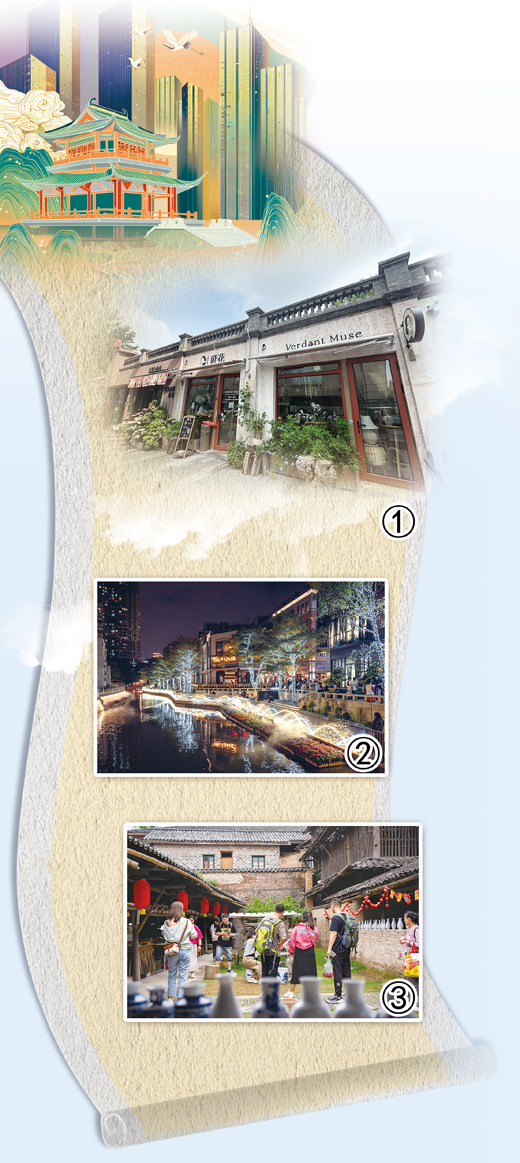
Core Insights - The article discusses the integration of historical culture into modern urban life through successful case studies in various cities, emphasizing the importance of preserving cultural heritage while promoting contemporary consumption and tourism [5][6][9]. Group 1: Beijing Longfu Temple - The Longfu Temple area in Beijing has transformed from a traditional cultural site into a trendy shopping district, blending traditional Chinese medicine concepts with modern lifestyle offerings [6][7]. - The area has seen the introduction of various brands, including old and new, creating a vibrant cultural consumption hub that attracts both locals and tourists [8][9]. - The renovation efforts focus on preserving historical elements while introducing modern amenities, aiming to create a unique cultural identity for the district [6][7]. Group 2: Guangzhou Yongqingfang - Yongqingfang in Guangzhou represents a successful model of integrating old and new, maintaining historical architecture while introducing contemporary retail and cultural experiences [9][10]. - The area has revitalized through careful restoration efforts, preserving its historical essence while enhancing its appeal to modern consumers [10][11]. - The introduction of interactive cultural experiences, such as workshops and performances, has made Yongqingfang a dynamic space for both locals and tourists [11][12]. Group 3: Jingdezhen Taoyangli - Taoyangli in Jingdezhen is a historical ceramic production center that has embraced a model of "living heritage," allowing visitors to engage with traditional crafts in a modern context [13][14]. - The area has undergone significant restoration while maintaining its historical layout, fostering a blend of cultural tourism and creative industries [13][14]. - The presence of skilled artisans and interactive workshops has transformed Taoyangli into a vibrant destination, showcasing the living tradition of ceramics [14][23].