中医药养生

Search documents
推动药膳事业传承创新 2025全国首届药食同源发展大会在厦门举办
Ren Min Wang· 2025-12-04 06:31
Core Insights - The "2025 National First Conference on the Development of Food and Medicine" was held in Xiamen, focusing on the inheritance and innovation of medicinal cuisine, with the theme "Inheriting and Innovating the Essence of Medicinal Cuisine, Composing a Healthy China Chapter" [1] - The conference featured four core segments: academic exchanges, professional training, a cooking competition, and an industry exhibition, showcasing the charm and value of medicinal cuisine [1] - Over 200 institutions participated in discussions on nine thematic sub-forums, addressing public health issues such as child development and chronic disease prevention [1] Group 1: Academic and Industry Collaboration - The Xiamen Health Commission emphasized the unique health theory of "food and medicine sharing," which has been validated over thousands of years, and aims to enhance public awareness of this concept [2] - The conference aims to strengthen scientific research on the safety and effectiveness of food and medicine products, promoting the protection of local medicinal resources and standardizing research [2] - The integration of technology, product, and industry innovation is essential for the high-quality development of the food and medicine industry, benefiting public health [2] Group 2: Nutritional and Culinary Insights - The balance of diet is highlighted in traditional texts, aligning with modern nutritional principles, emphasizing the importance of personalized dietary choices based on individual health needs [3] - Clinical nutritionists are encouraged to master the characteristics of food and medicinal substances to create personalized dietary plans for patients [3] - The cooking competition attracted over 200 participants, showcasing more than 200 health-oriented dishes, and aimed to improve the palatability of medicinal ingredients [3][4] Group 3: Future Directions and Cultural Significance - The conference aims to promote the development of high-quality talent in medicinal cuisine and enhance the global presence of Chinese culinary culture [4] - The event was organized by several associations, indicating a collaborative effort to advance the medicinal cuisine industry [4] - The initiative to establish a "Food and Medicine Sharing Industry-Academia-Research-Application Alliance" was announced, aiming to foster collaboration across sectors [4]
新加坡媒体:枸杞冰激凌或中药鸡尾酒,传统中医邂逅现代餐饮
Huan Qiu Wang· 2025-10-21 22:32
Core Insights - The article discusses the rising trend of integrating traditional Chinese medicine (TCM) into modern food and beverage offerings, reflecting a growing interest among younger generations in health and wellness [1][2] - The health and wellness industry in China is experiencing rapid growth, with projections indicating that the herbal tea market will reach 64.27 billion RMB by 2025, growing at a rate of 25.3% annually, and is expected to exceed 100 billion RMB by 2028 [1] Group 1 - The emergence of TCM-themed bars and restaurants, where customers can enjoy herbal cocktails and dishes after receiving a pulse diagnosis, highlights a new business opportunity driven by consumer interest in wellness [1][2] - Various food and beverage products, such as herbal ice cream, medicinal bread, and herbal bubble tea, are becoming increasingly popular, with some brands expanding their operations internationally to countries like Singapore, Malaysia, and Vietnam [2] - Despite the popularity of TCM-infused products, there is skepticism regarding their actual health benefits, leading to a mixed reception among consumers and industry experts [2] Group 2 - The trend is seen as a double-edged sword; while it may lead to potential misuse of herbal remedies without proper understanding, it also offers a pathway for greater acceptance of TCM as consumers become more familiar with its applications [2] - The increasing presence of TCM in everyday food and drink options suggests a cultural shift towards embracing traditional practices in modern lifestyles, particularly among the younger demographic [1][2]
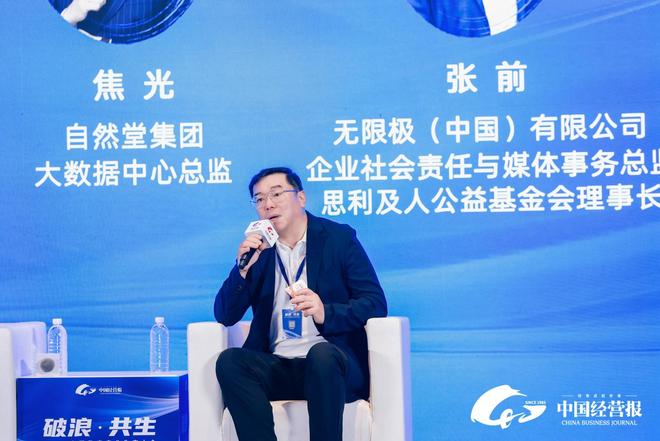
打造信任生产力 无限极张前谈数字时代品牌的“第二人格”
Zhong Guo Jing Ying Bao· 2025-07-31 10:34
Core Insights - The core message emphasizes the importance of "trust" in reshaping brand experiences within the digital health sector, as articulated by Zhang Qian at the "2025 China Digital Industry Ecosystem Conference" [1] Group 1: Digital Transformation and Trust - The company believes that the ultimate goal of technology is to rebuild trust and emotional connections rather than merely enhancing efficiency [3] - Infinite's digital health service model includes an online "health digital space" for consumers to engage in pulse recognition, constitution assessment, and learning about traditional Chinese medicine, creating a closed-loop system of "product traceability - service response - user feedback" [3][6] - The aim is not "intelligent replacement" but to construct a brand ecosystem that understands, accompanies, and earns the trust of consumers [3] Group 2: Emotional Connection and Brand Persona - There is a shift from "functional delivery" to "emotional companionship," with consumers seeking genuine understanding rather than cold data [4] - Zhang Qian introduced the concept of a brand's "second persona," where brands evolve into entities that can communicate, empathize, and interact with consumers over time [5] - The digital technology allows brands to embody a human-like presence, fostering a deeper connection with consumers [5] Group 3: Trust as a Competitive Advantage - Infinite has been actively implementing the "trust productivity" concept across various dimensions, including product quality, service transparency, technological empowerment, and cultural dissemination [6] - The essence of the health industry lies in being "trustworthy," with "perceptible trust" becoming a crucial variable in brand competitiveness [6] - The company aims to provide not just products but also reliable and long-term health solutions, emphasizing the need for brands to express humanity to leave a lasting impression on users [6]