美年达

Search documents
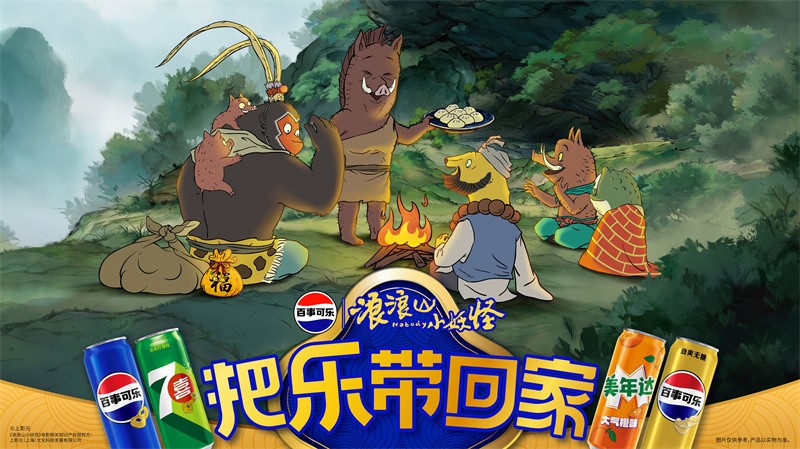
十五年长情陪伴,百事“把乐带回家”联动现象级动画IP《浪浪山小妖怪》,以平凡微光照亮新春归途
Zhong Guo Shi Pin Wang· 2026-01-19 10:34
Core Insights - The collaboration between Pepsi and the animated IP "Wang Wang Mountain Little Monsters" aims to redefine the narrative of the brand's "Bringing Joy Home" campaign, marking a new phase in its 15-year journey [1][4][12] Group 1: Brand Narrative and Emotional Connection - The campaign reflects a shift in public sentiment, where the definition of "joy" has evolved from external achievements to finding peace and stability in everyday life [3][4] - The meaning of "home" has transformed from a ceremonial return to a place of emotional comfort and acceptance, emphasizing the importance of ordinary connections [3][4] - Over the past 15 years, the "Bringing Joy Home" campaign has grown from a simple New Year greeting to a cultural symbol embedded in family traditions, resonating with the emotional pulse of the nation [4][12] Group 2: Engagement Strategies - Pepsi has created an immersive emotional experience through various channels, including limited edition packaging and themed products that resonate with consumers' identities [5][7] - The campaign extends into real-life settings by establishing themed experience spaces in key cultural and commercial locations, allowing the brand's message to permeate everyday life [7][9] - The new year special "Wang Wang Mountain Little Monsters: Bringing Joy Home" film conveys the essence of joy derived from unconditional acceptance by family, aligning with the brand's emotional core for this year's campaign [9][12] Group 3: Cultural and Market Implications - The partnership with "Wang Wang Mountain Little Monsters" signifies Pepsi's commitment to engaging with contemporary narratives around family and joy, reflecting a deep empathy for ordinary lives [12] - The campaign serves as a bridge between generations, fostering understanding and resonance through relatable stories of everyday workers and their experiences [12] - The 15-year milestone represents both a significant achievement and a new beginning for Pepsi, reinforcing its role as a companion during the Chinese New Year and its ongoing commitment to emotional engagement with consumers [12]


百事公司投资850万美元启用新罐装生产线
Bei Jing Shang Bao· 2025-10-20 11:15
Core Insights - PepsiCo has invested $8.5 million (approximately 60.55 million RMB) to launch a new beverage canning production line at its Dragomirești-Deal factory in Ilfov County, Romania, marking a significant milestone in its investment in the country [1] Group 1: Investment Details - The new canning line is the only one of its kind in the Eastern Balkans region [1] - The production line supports packaging sizes of 250ml, 330ml, and 500ml [1] - The daily production capacity of the new line is 1.5 million cans [1] Group 2: Product Range - The new production line will cover the entire beverage product portfolio for PepsiCo in the Eastern Balkans, including Pepsi, Mirinda, 7UP, Gatorade, and Lipton [1]
“娃哈哈纯净水由今麦郎代工”冲上热搜 代工模式在饮料行业常见吗?
Mei Ri Jing Ji Xin Wen· 2025-05-15 14:05
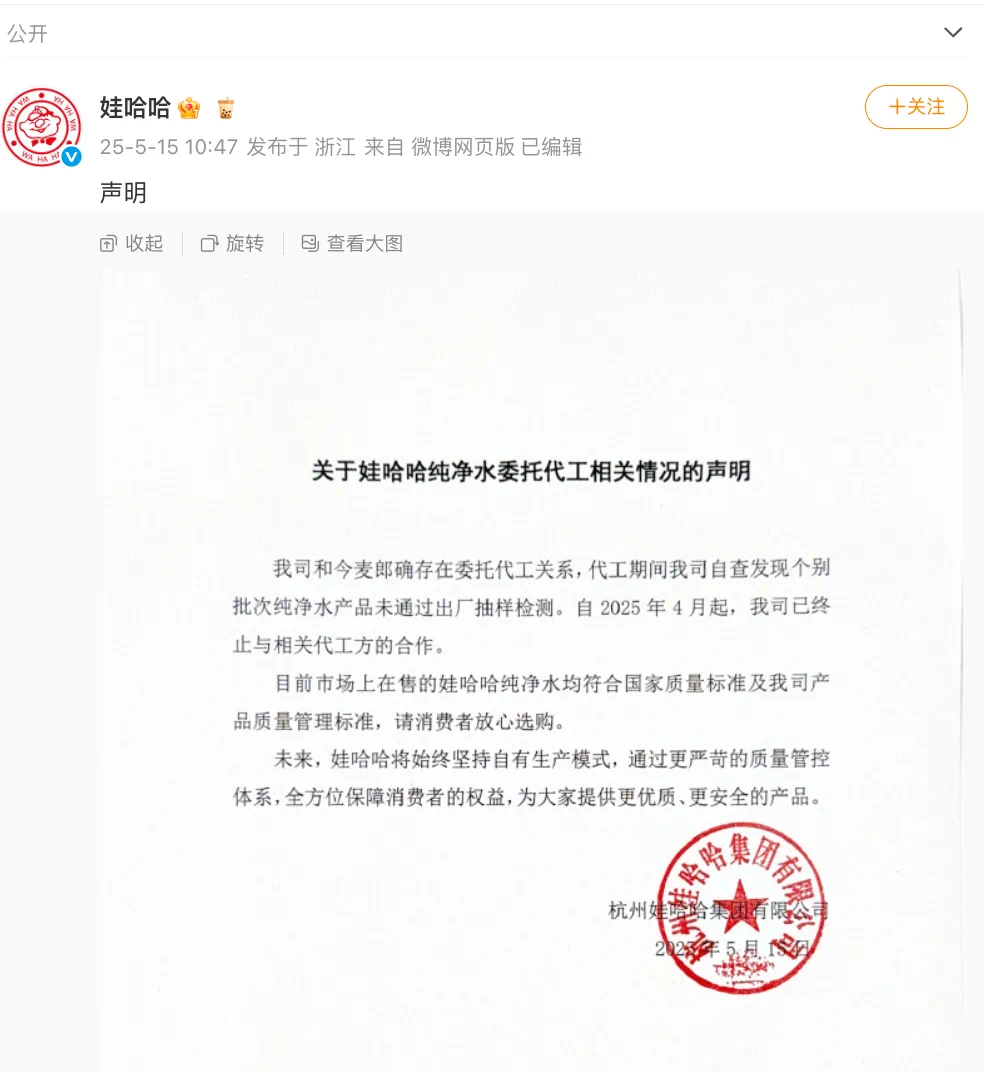
Core Viewpoint - The controversy surrounding Wahaha's bottled water being produced by Jinmailang highlights the common practice of contract manufacturing in the beverage industry, with Wahaha confirming its partnership with Jinmailang and announcing the termination of this relationship by April 2025 [1][4]. Group 1: Contract Manufacturing in the Beverage Industry - Contract manufacturing is a prevalent practice in the beverage and fast-moving consumer goods (FMCG) sectors, with many products in supermarkets being produced by third-party manufacturers [5]. - Companies like Wahaha resort to contract manufacturing when facing temporary capacity constraints, while others may use it to expand into new markets without the immediate need for their own production facilities [5][6]. - New and smaller brands often choose contract manufacturing to minimize costs and risks associated with entering the market, as establishing their own production facilities can be complex and costly [5][6]. Group 2: Major Players and Their Strategies - Major beverage companies, such as Coca-Cola and Pepsi, utilize contract manufacturing in China, partnering with local bottlers for production, which is part of their global strategy [6]. - The relationship between large companies and their contract manufacturers often evolves into a deep partnership, where manufacturers may exclusively produce for these brands [6][7]. Group 3: Advantages of In-House Production - While contract manufacturing is common, companies like Wahaha are investing in their own production facilities to ensure stable supply chains and maintain control over their products [7][8]. - Owning production facilities allows companies to protect proprietary recipes and reduce long-term costs compared to relying on contract manufacturers [7][8]. - The trend towards in-house production is evident in companies like Genki Forest, which has invested over 6 billion yuan in its own factories, moving away from contract manufacturing as their market stabilizes [7][8].