美洲虎攻击机

Search documents
印度要买114架“阵风”
Zhong Guo Ji Jin Bao· 2026-02-13 02:10
近几个月来,印度空军的战斗机中队规模已经萎缩至29个,远低于核定的42个。其主力机型米格-21已 于去年9月退役,米格-29早期型号、英法联合研发的"美洲虎"攻击机和法国的"幻影"-2000战斗机也将在 未来几年逐步退役。 印度斯坦航空有限公司目前已接到近180架"光辉"MK-1A改进型战斗机的国内订单,但由于美国通用电 气航空航天公司的发动机供应链问题,迄今尚未开始交付。 据路透社2月12日报道,据印度媒体报道,印度国防采购委员会12日通过一项初步提案,拟斥资3.25万 亿卢比(约合358亿美元)从法国达索飞机制造公司采购114架"阵风"战斗机。 长期以来,新德里的武装部队一直依赖进口机械设备和武器装备,但印度总理莫迪近期采取的举措推动 了本土制造业的发展。 报道称,对印度空军而言,国产战机时代始于20世纪80年代,但直到最近十年,"光辉"战斗机入役并逐 步替代苏制米格-21战斗机,才算真正取得成果。 (原标题:印度要买114架"阵风") 来源:参考消息 凌晨突发,重挫670点!黄金白银,闪崩暴跌 ...
印度要买114架“阵风”
第一财经· 2026-02-13 01:13
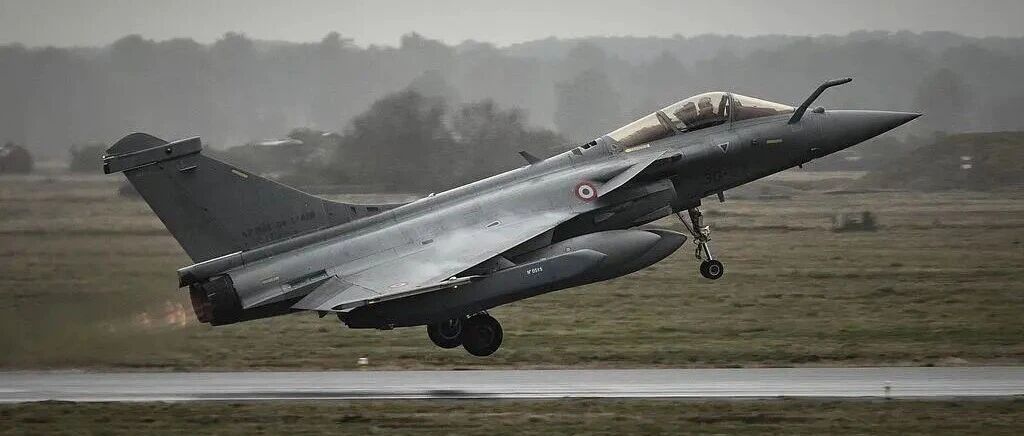
近几个月来,印度空军的战斗机中队规模已经萎缩至29个,远低于核定的42个。其主力机型米 格 -21 已 于 去 年 9 月 退 役 , 米 格 -29 早 期 型 号 、 英 法 联 合 研 发 的 " 美 洲 虎 " 攻 击 机 和 法 国 的 " 幻 影"-2000战斗机也将在未来几年逐步退役。 2026.02. 13 本文字数:514,阅读时长大约1分钟 来源 | 参考消息 封面 | 央视新闻 "阵风"战斗机(资料图) 据路透社2月12日报道,据印度媒体报道,印度国防采购委员会12日通过一项初步提案,拟斥资 3.25万亿卢比(约合358亿美元)从法国达索飞机制造公司采购114架"阵风"战斗机。 长期以来,新德里的武装部队一直依赖进口机械设备和武器装备,但印度总理莫迪近期采取的举措推 动了本土制造业的发展。 报道称,对印度空军而言,国产战机时代始于20世纪80年代,但直到最近十年,"光辉"战斗机入役 并逐步替代苏制米格-21战斗机,才算真正取得成果。 印度斯坦航空有限公司目前已接到近180架"光辉"MK-1A改进型战斗机的国内订单,但由于美国通 用电气航空航天公司的发动机供应链问题,迄今尚未开始交付。 微 ...

印度空军举行仪式,退役所有米格-21
Guan Cha Zhe Wang· 2025-09-26 09:49
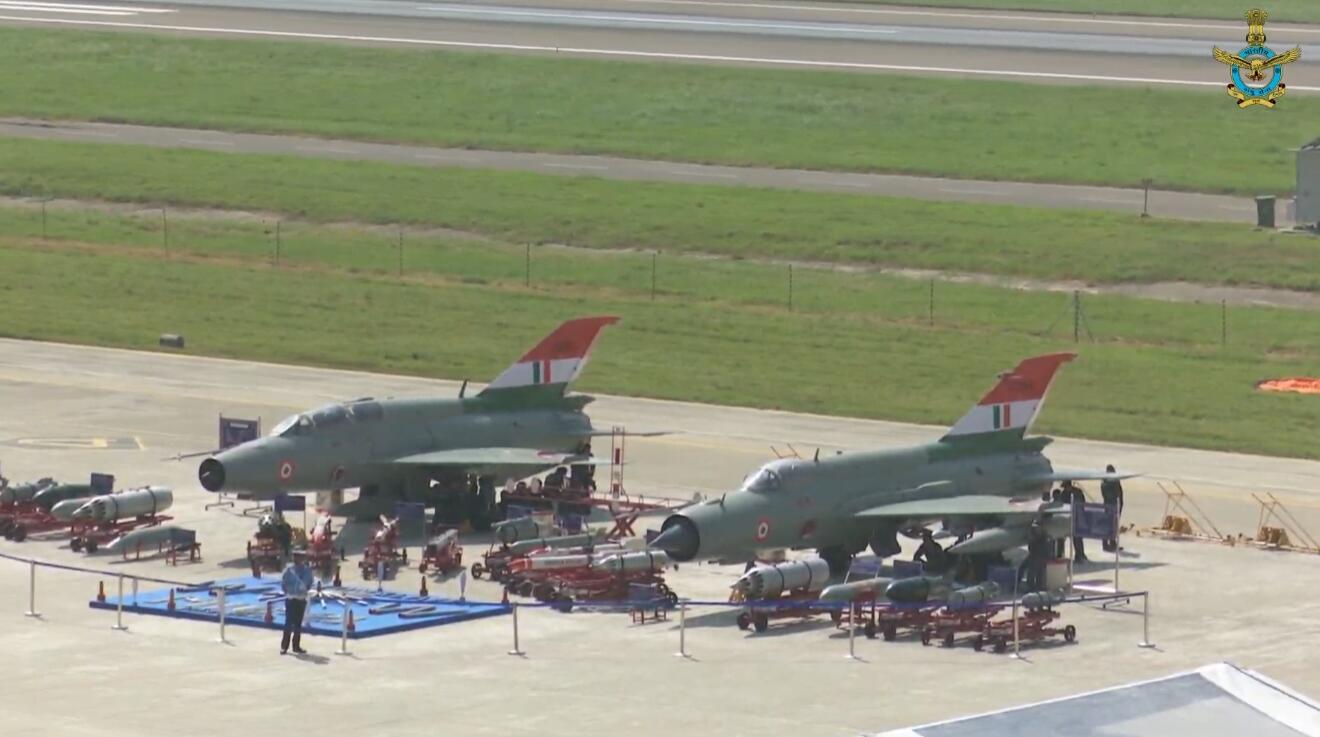
Core Points - The Indian Air Force officially retired its MiG-21 aircraft after 62 years of service, marking the end of an era for this fighter jet series [1][11] - The retirement ceremony took place in Chandigarh, with the last two squadrons, the 23rd "Black Panther" and the 3rd "Cobra," decommissioning a total of 36 MiG-21 Bison aircraft [1][11] - The event included a live broadcast, aerial displays, and the unveiling of commemorative items by the Indian Defense Minister Rajnath Singh [1][11][13] Summary by Sections Retirement Ceremony - The ceremony featured the last flight of six MiG-21 Bison aircraft, with one piloted by the Chief of Air Staff, General Amar Preet Singh [3][5] - A water salute was given by fire trucks to welcome the returning aircraft [5] - Other aircraft, including the "Tigre" attack aircraft and LCA "Tejas," participated in the aerial display [6][7] Historical Context - The MiG-21 was introduced to the Indian Air Force in 1963 to counter U.S. U-2 reconnaissance aircraft, with the first batch of 13 MiG-21F-13 delivered [13][15] - Over the years, the Indian Air Force operated various sub-series of the MiG-21, with a total of over 870 units, including more than 600 locally assembled by Hindustan Aeronautics Limited (HAL) [15][17] Upgrades and Capabilities - In 2001, 125 MiG-21 Bis aircraft were upgraded to the MiG-21 Bison standard, enhancing their combat capabilities with modern avionics and weapon systems [17] - The MiG-21 Bison became the only variant with active radar beyond-visual-range (BVR) combat capability [17] Current Implications - Following the retirement of the MiG-21s, the number of operational squadrons in the Indian Air Force will decrease to 29, significantly below the planned requirement of 42 squadrons due to a lack of new aircraft [17]
印度的一张王牌
Hu Xiu· 2025-09-12 07:07
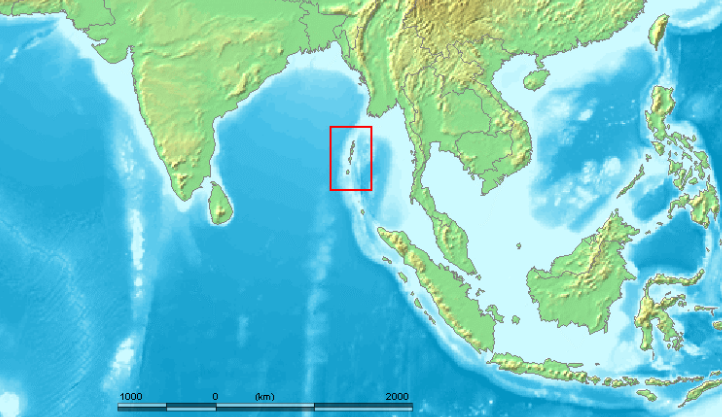
Core Viewpoint - The article discusses India's strategic military developments in the Andaman and Nicobar Islands, emphasizing its significance in countering China's influence in the Indian Ocean region and the broader geopolitical implications of these actions. Group 1: Military Developments - In July 2020, India deployed 10 "Tigershark" attack aircraft armed with anti-ship missiles to an airbase in the Andaman and Nicobar Islands during the India-China standoff in the Galwan Valley [1] - In November 2020, the Indian military conducted a test launch of a land-based BrahMos anti-ship cruise missile with a range of 450 kilometers, signaling a clear deterrent message [3] - The Modi government has significantly increased military presence and infrastructure in the islands since 2014, aiming to transform the region into a strategic maritime security hub [25][26] Group 2: Geopolitical Context - The Andaman and Nicobar Islands control several critical maritime routes, making them strategically important for both India and China [6][7] - Indian media has linked the border disputes with China's "Malacca Dilemma," suggesting that the islands can control four out of five alternative routes for China to access the Indian Ocean [4][38] - The region is viewed as a key area for India to assert dominance in the Bay of Bengal, which is seen as the first stop for China’s access to the Indian Ocean [34] Group 3: International Relations - The United States has shown interest in enhancing cooperation with India in the Southeast Asian region, particularly in the Andaman and Nicobar Islands, as it lacks reliable military bases in the Bay of Bengal [36] - A report from the RAND Corporation highlighted the strategic importance of the Andaman and Nicobar Islands for future US-India collaboration in Southeast Asia [37] - The article notes that if India deploys long-range offensive weapons in the islands, it could threaten the safety of vessels passing through the Malacca Strait, potentially escalating security tensions with China [37]