联想笔记本电脑

Search documents
天津滨海新区区长单泽峰:深耕协同“试验田” 勇当发展“动力源”
Bei Jing Ri Bao Ke Hu Duan· 2026-02-26 03:53
Core Viewpoint - The Beijing-Tianjin-Hebei (Jing-Jin-Ji) coordinated development has transitioned from blueprint to reality, with a focus on deep integration and high-quality growth during the 14th Five-Year Plan period [1] Group 1: Strategic Development - The Tianjin Binhai New Area is positioned as a strategic cooperation zone for the Jing-Jin-Ji development, leveraging its geographical advantages and industrial foundation to enhance regional collaboration and resource sharing [4] - The area aims to elevate from "project承接" to "chain collaboration" in supporting the decongestion of non-capital functions from Beijing, guided by directives from national leadership [5] Group 2: Industrial Integration - Binhai New Area is focusing on sectors such as biomanufacturing, intelligent equipment, and integrated circuits, aligning closely with Beijing's key industries and research institutions to facilitate technology transfer and industrial resource integration [6] - The new generation information technology application innovation cluster led by Tianjin has attracted five of the top ten companies in national revenue, achieving over 40% market share domestically [5] Group 3: Transportation and Infrastructure - The approval of the "Modern Capital Urban Circle Spatial Coordination Plan" integrates Binhai New Area into a broader spatial framework, enhancing its role in the transportation network among Beijing, Hebei, and Tianjin [9] - Key initiatives include enhancing the functionality of Tianjin Port, improving logistics capabilities, and ensuring seamless connections between sea, land, and air transport [9][10] Group 4: Innovation and Market Integration - Binhai New Area is implementing a "two-creation integration" model to break down barriers between technology and traditional industries, ensuring that innovations penetrate various sectors [11] - The area is focusing on creating application scenarios for new technologies and products, facilitating a complete path from technological breakthroughs to market applications [12] Group 5: Consumer and Tourism Development - The Binhai New Area is enhancing its tourism offerings, aiming to transform day visitors into overnight guests by developing high-quality marine cultural tourism destinations [15][16] - Initiatives include the construction of the Tianjin Aircraft Carrier Theme Park and the promotion of diverse tourism experiences to attract a broader audience [15][16]



消费者对“双十一”祛魅
21世纪经济报道· 2025-11-11 11:14
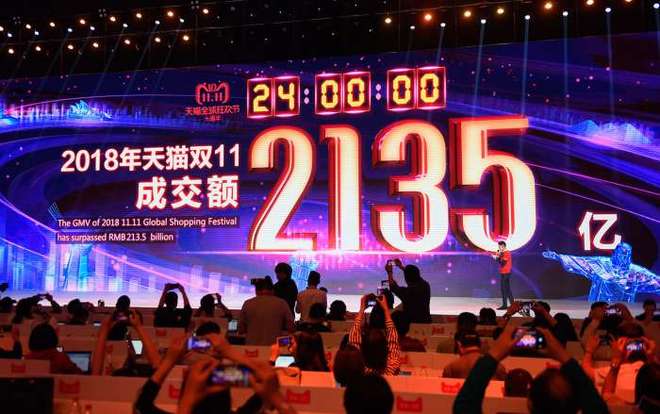
Core Insights - The article discusses the evolution of the Double Eleven shopping festival initiated by Tmall, highlighting its transformation from a simple promotional event to a significant cultural phenomenon in China [1][2][4]. Group 1: Historical Context - The first Double Eleven event in 2009 was a hasty decision aimed at boosting sales, featuring only 27 merchants and a simple discount strategy [1]. - Over the years, Tmall has become synonymous with "the lowest prices of the year," creating a massive retail event that has set numerous sales records [2][3]. Group 2: Current Trends - The shopping festival has seen a decline in consumer enthusiasm, with fewer people actively participating in the event compared to previous years [4]. - The shift in consumer behavior reflects a growing preference for emotional value and cultural significance over mere material possession [6]. Group 3: Market Dynamics - Brands are now facing pressure to move beyond single-target sales strategies, with new pricing constraints imposed by e-commerce platforms [5]. - The overall e-commerce growth rate is slowing, with a decrease in penetration from 27.6% in 2023 to 26.8% in 2024 [5]. Group 4: Future Outlook - The retail landscape is evolving, with the rise of live-streaming e-commerce and the blurring of online and offline retail boundaries [6]. - The focus is shifting towards emotional connections and value recognition, as consumers seek deeper relationships with brands [7].


双十一祛魅:当促销不再是集体朝圣丨力见消费
2 1 Shi Ji Jing Ji Bao Dao· 2025-11-11 06:59
Core Insights - The evolution of the Double Eleven shopping festival reflects a shift from a frenzied consumer culture to a more rational and meaningful approach to consumption [3][7][8] Group 1: Historical Context - The Double Eleven event originated in 2009 when Tmall, then known as Taobao Mall, initiated a promotional campaign to boost sales during a relatively quiet shopping period [2] - The first event featured 27 merchants and was more about public relations than actual sales, marking the beginning of Tmall's competition with various B2C platforms [2] Group 2: Changing Consumer Behavior - Over the years, Double Eleven has transformed into a significant social event, with consumers engaging in collective shopping experiences and sharing strategies [3] - Recent trends indicate a decline in consumer enthusiasm, with fewer people sharing their purchases on social media and a noticeable reduction in the excitement surrounding the event [3][4] Group 3: Market Dynamics - The marketing value of Double Eleven has shifted, with brands now focusing on sustainable business practices rather than solely on sales volume during promotional events [4][6] - The e-commerce growth rate is slowing, with a reported decrease in e-commerce penetration from 27.6% in 2023 to 26.8% in 2024 [4] Group 4: Technological Influence - E-commerce platforms utilize sophisticated algorithms to analyze consumer preferences and extend user engagement through complex promotional strategies [5] - A significant portion of consumers (nearly 70%) report feeling indifferent or even negative towards marketing content, indicating a shift in consumer sentiment [5] Group 5: Future Trends - The future of retail is expected to prioritize emotional connections and value recognition over mere price incentives, as consumers seek deeper relationships with brands [8] - The rise of live-streaming e-commerce and the digital transformation of offline retail are reshaping the traditional shopping landscape, making events like Double Eleven just one part of a more complex retail ecosystem [6][8]