自如心舍

Search documents
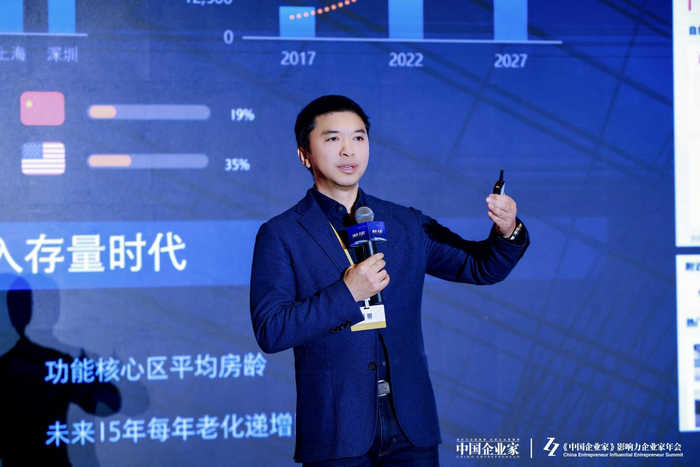
自如董事长、CEO熊林:巨量市场里,“窄门”怎么找?
Tai Mei Ti A P P· 2025-12-10 05:36
Core Insights - The core message of the speech emphasizes the importance of understanding the market and choosing the right path for business growth, illustrated through the concept of "narrow doors" leading to broader opportunities [2][12]. Group 1: Company Growth and Strategy - The company has achieved a scale of managing 1 million rental units, making it the largest in the world in this sector, reflecting a significant growth trajectory over the past decade [2][6]. - The company focuses on a "narrow door" strategy, which involves specializing in refined operations within the vast rental market, thus establishing itself as China's largest professional housing rental institution [12][14]. - The company has adapted its business model to the changing market conditions, emphasizing the need for structural innovation in response to evolving consumer demands and market dynamics [12][14]. Group 2: Market Insights - China has a total of 350 million housing units, with approximately 30% currently rented out, indicating a massive market potential for rental services [5][13]. - The rental market is expected to grow as housing needs become more fragmented and personalized, leading to increased demand for individual unit updates and rentals [6][13]. - The company has identified a shift in rental demographics, with a growing need for one-bedroom apartments as young professionals transition from shared living arrangements [10][11]. Group 3: Product Development - The company has developed various rental products, such as "Ziroom Youjia" for shared living and "Ziroom Xinshe" for whole-unit rentals, catering to different market segments and needs [8][10]. - The introduction of high-end rental products like "Manshe" targets corporate executives, showcasing the company's ability to diversify its offerings based on market demand [11]. - The company is investing in smart rental communities, aiming to create fully automated living spaces, which reflects a forward-thinking approach to property management [11][14].

年轻人逃离北上广?租房市场的真相没那么简单
Sou Hu Cai Jing· 2025-09-20 05:56
Core Insights - The rental market is transitioning from "wild growth" to institutional management with the implementation of the Housing Rental Regulations, yet there is a paradox where overall rents are declining while tenants struggle to find satisfactory housing [1] Group 1: Market Dynamics - The rental market is experiencing a structural transformation, moving from a "heavy management" model to a "light management" model, where platforms focus on soft decoration and maintenance rather than full renovations [2] - Average rental prices in 50 cities decreased by 1.37% year-on-year in the first half of 2025, indicating a shrinking profit margin for platforms relying on rental price differentials [2] - The trend of "de-platforming" is emerging, with landlords opting to rent directly rather than through platforms, as the number of personal rental listings in 55 cities reached 618,000 in July 2025, a 12.19% increase year-on-year [4] Group 2: Service Quality and Regulation - The new regulations impose stricter requirements on individual landlords, including the need for dedicated management personnel and accurate property information, raising the industry's entry barriers [6] - The focus is shifting from scale to service quality, with future profitability relying on aspects such as maintenance response times and tenant satisfaction [6] - The rental market's cooling does not indicate a lack of demand but rather a necessary update in operational models, emphasizing the importance of service in retaining tenants [8]