自如友家

Search documents
自如董事长、CEO熊林:巨量市场里,“窄门”怎么找?
Tai Mei Ti A P P· 2025-12-10 05:36
Core Insights - The core message of the speech emphasizes the importance of understanding the market and choosing the right path for business growth, illustrated through the concept of "narrow doors" leading to broader opportunities [2][12]. Group 1: Company Growth and Strategy - The company has achieved a scale of managing 1 million rental units, making it the largest in the world in this sector, reflecting a significant growth trajectory over the past decade [2][6]. - The company focuses on a "narrow door" strategy, which involves specializing in refined operations within the vast rental market, thus establishing itself as China's largest professional housing rental institution [12][14]. - The company has adapted its business model to the changing market conditions, emphasizing the need for structural innovation in response to evolving consumer demands and market dynamics [12][14]. Group 2: Market Insights - China has a total of 350 million housing units, with approximately 30% currently rented out, indicating a massive market potential for rental services [5][13]. - The rental market is expected to grow as housing needs become more fragmented and personalized, leading to increased demand for individual unit updates and rentals [6][13]. - The company has identified a shift in rental demographics, with a growing need for one-bedroom apartments as young professionals transition from shared living arrangements [10][11]. Group 3: Product Development - The company has developed various rental products, such as "Ziroom Youjia" for shared living and "Ziroom Xinshe" for whole-unit rentals, catering to different market segments and needs [8][10]. - The introduction of high-end rental products like "Manshe" targets corporate executives, showcasing the company's ability to diversify its offerings based on market demand [11]. - The company is investing in smart rental communities, aiming to create fully automated living spaces, which reflects a forward-thinking approach to property management [11][14].

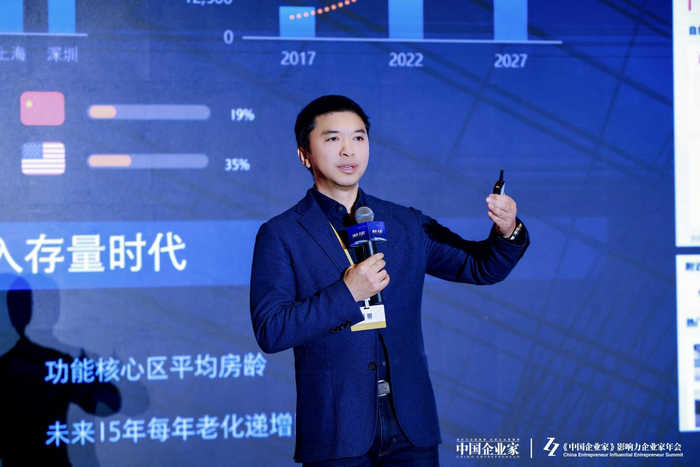
自如生长14年,两次改变租住行业的底层逻辑
3 6 Ke· 2025-10-31 10:37
Core Insights - The article discusses the evolution of the Chinese rental market through the lens of the company Ziroom, highlighting its innovative business model and strategic shifts over the years [2][5][6]. Group 1: Historical Context and Initial Innovations - In 2011, a group of Chinese entrepreneurs, including Ziroom's founder Xiong Lin, traveled to Japan and the U.S. to learn from established markets, aiming to transform the fragmented rental market in China [2][3]. - The initial model focused on productizing individual rental units, moving from a C2C to a C2B2C model, which aimed to bring transparency to a previously opaque market [2][4]. Group 2: Key Strategies and Operational Changes - Ziroom's core actions centered on three areas: product enhancement, service provision, and technology integration, which collectively improved rental efficiency and user experience [4]. - The company transitioned from a "peace of mind rental" model to a "gain rental" model in 2021, treating each property as a hotel to optimize asset management and rental strategies [5][6][16]. Group 3: Market Adaptation and Resilience - Following the market downturn post-2021, many rental companies failed, but Ziroom's early transition allowed it to survive and thrive, with over 70% of its properties now under the gain rental model [6][27]. - The shift to gain rental was seen as a necessary evolution, allowing for shared risk and reward between the company and property owners, thus enhancing market stability [27][28]. Group 4: Future Outlook and Industry Impact - Ziroom aims to redefine the rental market's underlying logic by promoting a sustainable and long-term asset management approach, which is increasingly accepted by property owners [27][28]. - The company emphasizes the importance of creating value for both landlords and tenants, ensuring a balanced and efficient rental ecosystem [23][24].
自如生长14年,两次改变租住行业的底层逻辑
36氪· 2025-10-31 09:17
Core Viewpoint - The article discusses the evolution of the Chinese rental housing market, focusing on the transformation initiated by the company Ziroom, which shifted from a traditional rental model to an asset management approach, significantly changing the industry's underlying logic [1][6][24]. Group 1: Market Background and Initial Challenges - In 2011, a group of Chinese entrepreneurs, including Ziroom's founder, sought to learn from mature rental markets in Japan and the U.S. to innovate in China's rental sector [1][2]. - The rental market was primarily in a C2C phase, with high operational costs and inefficiencies due to the fragmented nature of individual landlords and tenants [2][3]. - Ziroom aimed to transform this market by productizing rental properties and enhancing transparency, which was initially met with skepticism from industry peers [2][3]. Group 2: Key Innovations and Business Model - Ziroom focused on three core areas: product standardization, service enhancement, and technology integration, which collectively improved rental efficiency and tenant experience [4][5]. - The company introduced a new rental model that allowed for the leasing of individual rooms rather than entire units, catering to diverse tenant needs and significantly increasing property utilization [4][5]. - By leveraging technology, Ziroom optimized the matching process between tenants and available properties, moving the rental experience closer to that of booking a hotel [5][22]. Group 3: Transition to Asset Management - In 2021, Ziroom transitioned to an "incremental rental" model, positioning itself as an asset management company rather than just a rental service provider [7][24]. - This shift was driven by the need for a more sustainable business model in response to market changes and increased competition, allowing for shared risk and reward with property owners [10][35]. - The new model has seen over 70% of Ziroom's properties switch to this asset management approach, demonstrating resilience in a challenging market environment [10][38]. Group 4: Long-term Vision and Industry Impact - Ziroom's evolution reflects a broader trend in the real estate sector, emphasizing the importance of understanding both tenant and landlord needs to create value [21][22]. - The company aims to redefine the rental market by providing high-quality living experiences through professional management and continuous property maintenance [26][39]. - Ziroom's journey illustrates the potential for innovation in the rental market, setting a new standard for professionalized housing rental services in China [8][39].

夫妻住合租房生娃,被要求“3个工作日搬离”,平台:合同规定入住不超2人,年龄18~40岁!最新回应
新浪财经· 2025-09-10 08:37
Core Viewpoint - The article discusses a recent incident involving a couple in Guangzhou who were asked to vacate their rented room due to a violation of the rental agreement after the birth of their child, highlighting the tension between contractual obligations and human considerations in rental agreements [2][4][11]. Summary by Sections Incident Overview - A couple rented a room in Guangzhou through a platform and faced eviction after the birth of their child, as the landlord claimed they violated the rental agreement by exceeding the allowed number of occupants [5][7]. - The rental contract specified a maximum of two occupants per room and prohibited minors, which the couple violated by having a child [8][12]. Platform's Response - The rental platform stated that they had provided multiple solutions to the couple, including a no-fault termination of the lease, but the couple refused to accept these options [2][9]. - The platform emphasized the need to balance the living experience of the couple with that of other tenants, leading to the decision to terminate the lease after failed negotiations [2][11]. Legal and Social Context - The rental agreement's restrictions are rooted in local regulations aimed at preventing overcrowding and ensuring safety, with specific guidelines on minimum living space per person [12][14]. - The article raises questions about the balance between contractual obligations and the humane treatment of tenants, especially in cases involving childbirth and family dynamics [11][15]. Broader Implications - The incident reflects broader issues in the rental market, including discrimination against certain demographics such as the elderly and families with children, which can exacerbate housing challenges [14][16]. - Suggestions for policy improvements include creating more inclusive rental agreements and developing public housing initiatives to support families and vulnerable populations [15][16].