花生奶

Search documents
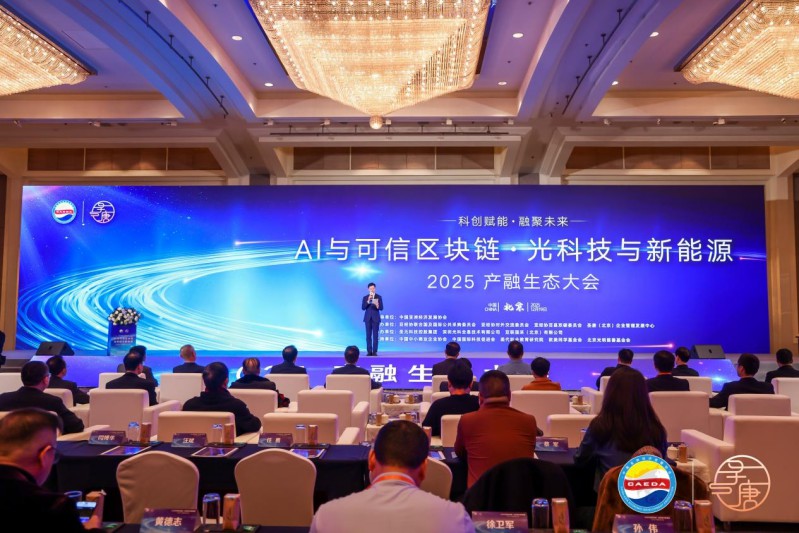
国建集团以融促产 深耕新时代地方国企减债融资助力产业高质量发展
Cai Fu Zai Xian· 2025-12-24 00:58
Core Viewpoint - The conference titled "AI and Trusted Blockchain, Optical Technology and New Energy - 2025 Industry-Finance Ecological Conference" aims to explore the deep integration of technology and capital to foster a new industrial ecosystem, which is significant for supporting China's "new quality productivity" and "Digital China" strategy [1][3] Group 1: Conference Overview - The conference is guided by the China Asia Economic Development Association and co-hosted by various organizations, focusing on the integration mechanisms of cutting-edge technologies like AI, trusted blockchain, optical technology, and new energy with financial capital [1][3] - Experts at the conference highlighted the need for long-term capital support to match the industrialization of technological innovations, as traditional financing models struggle to adapt to rapid technological iterations and evolving business models [3] Group 2: National Debt Reduction Financing (DRF) Initiative - The "New Era Local State-Owned Enterprise Debt Reduction Financing (DRF) to Assist High-Quality Industrial Development" initiative aims to provide a comprehensive solution for local state-owned enterprises facing financing difficulties due to weak regional economies and poor financial data [3][4] - The initiative includes systematic compliance supply chain operations to enhance revenue and positive profits for local state-owned enterprises, thereby improving their financial statements and meeting funding requirements for long-term, low-cost financing [3][4] Group 3: Investment Strategies and Outcomes - The initiative allows enterprises to use part of the DRF funds to establish equity investment funds in collaboration with the National Construction Group, with a co-investment ratio ranging from 1:1 to 1:9 [3][4] - The investment fund will focus on promising small and medium-sized enterprises across the entire industrial chain, aiming to promote collaborative development and ultimately drive these enterprises towards listing or acquisition, thereby creating greater economic benefits [3][4] Group 4: Innovation in Financing Models - The DRF initiative reflects a shift from traditional "blood transfusion" support to a systematic "blood-making" function, expanding the capital operation space for local state-owned enterprises [5] - The initiative is a practical response to national strategic deployments, providing significant support for building an open, collaborative, and sustainable high-quality industry-finance ecosystem [5]

一鸣食品20251127
2025-11-28 01:42
Summary of Yiming Foods Conference Call Company Overview - **Company**: Yiming Foods - **Reporting Period**: First three quarters of 2025 - **Key Financials**: - Net profit attributable to shareholders increased by 25.74% year-on-year - Deducting non-recurring gains, net profit grew by 16.33% [2][3] Industry Insights - **Sales Channel Performance**: - Milk bar channel accounted for the highest sales proportion, but direct store revenue decreased by 11.83% year-on-year - Direct sales and distribution channels grew by 19.12% and 27.87% respectively - Online sales channel surged by 48.46%, indicating a significant shift towards digital sales [2][3] Key Points - **Franchise Store Performance**: - Revenue growth in franchise stores driven by increased foot traffic, particularly during lunch and afternoon tea times - New product categories like rice products and sandwiches are key growth drivers, with a sustainable growth trend expected [2][5] - **Profit Margins**: - Health light food series has a gross margin of approximately 60%, significantly higher than dairy products (20%-30%) - Overall net profit margin for all store types is around 4% to 5% [2][10][11] - **Direct Sales Growth**: - Rapid growth in direct sales, with key clients including Hema and Guming - Hema's sales increased significantly from 10 million in 2024 to over 80 million in 2025 - Guming's performance declined due to product adjustments, while other clients showed over 40% growth [2][12][14] - **Product Pricing Strategy**: - New product launches may lead to price adjustments, with potential increases expected in the first half of 2026 to meet market demand [2][8] - **Store Expansion Plans**: - Anticipated opening of 600 to 800 new franchise stores in 2026 to enhance market coverage - Franchise store count increased in Q3 2025, with expectations for continued growth in Q4 [2][9] Additional Insights - **Cost Structure**: - Company expects a 1.5% decrease in overall raw material costs in 2026 compared to 2025 - Significant price drops observed in commodities like eggs, while some raw materials saw price increases [2][20][21] - **Raw Material Sourcing**: - Own milk source accounts for about 20%, with the remainder sourced through cooperatives - Future sourcing strategy aims to maintain a dynamic balance between self-sourced and cooperative-sourced milk [2][22][23] - **Distribution Channel Adjustments**: - Stable performance in distribution channels, with some clients reclassified, impacting reported growth rates - If certain large clients were included in direct sales, the growth would be reported as 32% instead of 19% [2][4][24] This summary encapsulates the key insights and financial performance of Yiming Foods as discussed in the conference call, highlighting the company's growth strategies, market dynamics, and operational efficiencies.

徐福记卖了
盐财经· 2025-03-11 11:28
Core Viewpoint - Nestlé's acquisition of the remaining 40% stake in Xu Fu Ji marks a significant move to gain full control over the brand, which has been a staple in the Chinese candy market but faces challenges in adapting to changing consumer preferences [2][19]. Group 1: Company Background - Xu Fu Ji, founded by the Xu brothers in the early 1990s, quickly became a leading candy brand in China, achieving sales of over 1 billion yuan by 1997 and maintaining a dominant market position since then [5][6]. - The brand's success is closely tied to its association with Chinese New Year, where candy sales can account for over 60% of annual revenue [6][12]. Group 2: Market Challenges - Despite being the market leader in bulk candy with over 30% market share, Xu Fu Ji faces declining demand for traditional candy as consumer habits shift away from sugary products [12][13]. - The overall candy market in China has seen a decline, with sales dropping by an average of 11.6% annually from 2019 to 2023 [14]. Group 3: Strategic Shift - Nestlé's decision to fully acquire Xu Fu Ji suggests a strategic pivot to reposition the brand as a "national classic snack brand," leveraging its extensive distribution network to tap into the growing snack market [19][22]. - The snack industry in China is experiencing robust growth, with the market for snacks projected to maintain a compound annual growth rate of around 10% from 2023 to 2028 [21][22]. Group 4: Future Prospects - Xu Fu Ji is diversifying its product offerings beyond traditional candy, with significant revenue coming from biscuits and other snack products, indicating a shift in strategy to adapt to modern consumer preferences [24]. - The brand aims to expand its distribution network to 2.6 million outlets by 2025, enhancing its market presence in the competitive snack industry [22].