酥心糖

Search documents
“福”满全球:徐福记四度点亮时代广场,邀全球华人共贺中国年
Zhong Guo Shi Pin Wang· 2026-02-10 10:14
Core Insights - Xu Fu Ji, a classic Chinese snack brand, has made its fourth appearance on the Times Square billboard, symbolizing its global outreach and connection to the Chinese New Year [1][3] - The brand has successfully penetrated the North American market, resonating with overseas Chinese consumers and gaining recognition among local consumers [3][5] Group 1: Brand Expansion - Xu Fu Ji will enter Costco in the U.S. in 2024, Walmart and T&T in Canada in 2025, and Loblaws in 2026, marking a significant transition from Chinese communities to mainstream retail [3][5] - The international business of Xu Fu Ji has experienced several-fold growth over the past four years, reflecting a strong cultural confidence and increasing visibility in Western markets [5] Group 2: Consumer Engagement - In North American supermarkets, Xu Fu Ji products are not just items on shelves but also serve as warm gathering points, especially during the Chinese New Year [6][8] - Taste-testing events have attracted both Chinese expatriates and local consumers, showcasing the brand's ability to bridge cultural gaps through food [8] Group 3: Strategic Drivers - Xu Fu Ji's success in North America is attributed to a solid foundation built on product quality, brand strength, and operational efficiency [10] - The brand emphasizes product innovation while maintaining traditional flavors, establishing itself as an irreplaceable symbol of the Chinese New Year for overseas Chinese [10] - Emotional connections are fostered through the cultural significance of its products, linking them to themes of reunion and happiness, which resonate with both Chinese and foreign consumers [10]


亿滋报告:86%中国人爱分享童年零食,怀旧风成消费新引擎
东京烘焙职业人· 2025-11-24 08:33
Core Insights - The article emphasizes the growing influence of nostalgia on consumer choices in the snack industry, particularly in China, where 86% of consumers enjoy sharing their childhood favorite snacks [8][12][13]. Group 1: Nostalgia and Consumer Behavior - The sixth annual Mondelēz International State of Snacking report highlights that cherished traditions and warm childhood memories are key factors influencing global snack choices [6][4]. - Brands are increasingly tapping into nostalgia as a mainstream consumer motivation, with successful campaigns like Kang Shifu's "White Moonlight Revival Plan" allowing consumers to vote on classic products to bring back [12][13]. - Mars Wrigley successfully reintroduced the "White Arrow" gum, resonating with older consumers while attracting younger generations, showcasing the importance of emotional connections in brand loyalty [15][17]. Group 2: Balancing Innovation and Nostalgia - The article discusses the challenge of balancing nostalgia with innovation, noting that a high percentage of new products fail within a year, with only 15% of food and beverage innovations surviving [21][22]. - Brands are shifting focus towards upgrading classic products through "micro-innovation," which allows them to leverage existing brand recognition while meeting evolving consumer demands [24][30]. - Examples include the introduction of real fruit juice in popular gummy products and the redesign of classic candy shapes to appeal to younger consumers' social media sharing habits [26][28]. Group 3: Seasonal and Emotional Marketing - Seasonal sentiments play a crucial role in snack consumption, with snacks serving as both a source of enjoyment and a means of emotional connection during holidays [32][34]. - Brands are actively innovating for holidays, with limited edition products designed to enhance festive experiences, such as the Christmas-themed gummy candies from Kuli [35][39]. - The article concludes that emotional marketing significantly boosts brand loyalty, with consumers engaged through emotional connections showing over 30% higher loyalty than average consumers [39][40].

东莞食品:从“制造”到“智造+文化”的华丽蝶变
Nan Fang Du Shi Bao· 2025-10-27 09:21
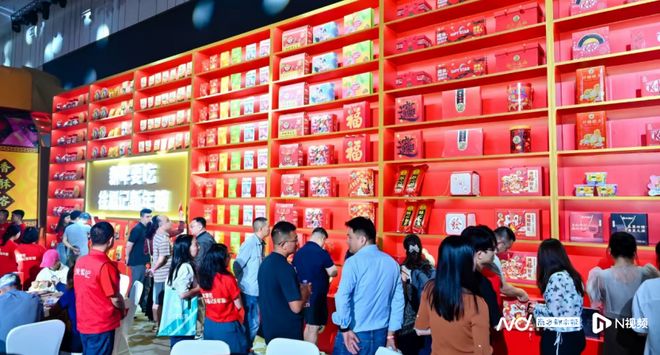
Core Insights - The article discusses the transformation of the food industry in Dongguan, China, highlighting Xu Fu Ji's launch of its 2026 New Year candy products, which aims to cover nearly 500 million Chinese households' festive candy consumption scenarios [1] Group 1: Manufacturing and Quality Upgrade - Dongguan's food enterprises are transitioning from "manufacturing" to "smart manufacturing," leveraging the region's mature industrial chain and precision manufacturing capabilities for technological upgrades [2] - Xu Fu Ji's classic crispy candy has seen a significant improvement in its production process, with the number of sugar layers increasing from 64 to 128, supported by 30 years of craftsmanship and automation across 39 workshops [4][2] - Other companies, like Huamei Foods, have also focused on automation and innovation, extending the shelf life of mooncakes from 7-14 days to 90 days, while introducing healthier options [4][5] Group 2: Cultural Integration - Dongguan food companies are shifting their focus from functional competition to deep cultural value exploration, with Xu Fu Ji's New Year candy series inspired by the Tang Dynasty, incorporating cultural elements into product design [8] - Huamei Foods has invested over 100 million to create the world's first mooncake-themed cultural museum, aiming to educate consumers about the cultural significance of mooncakes and the Mid-Autumn Festival [9][8] - Other brands, like Jiajia Mei, are integrating culture into their products, such as a zongzi gift box that transforms into a family game board, enhancing the festive experience [12] Group 3: Marketing and Consumer Engagement - Dongguan food companies are adopting digital strategies to engage younger consumers, with Xu Fu Ji promoting its brand through activities like the "Send Fortune with a Billion Candies" campaign [13] - Huamei Foods is expanding its presence across various channels, including e-commerce platforms, while Jiajia Mei is leveraging employee-generated content on social media to connect with consumers [15][13] Group 4: Collective Transformation - The transformation of Dongguan's food industry is characterized by a collective effort, with companies like Xu Fu Ji, Huamei Foods, and Jiajia Mei exploring a path of "manufacturing as the foundation, culture as the soul, and digital as the wings" [16] - In 2024, Dongguan's food industry is projected to exceed 100 billion yuan in total output value, with over 2,000 companies collaborating to build a comprehensive quality assurance system from farm to table [18][16]
让5亿中国家庭买到新年糖,徐福记新年糖如何成为年味仪式感?
Zhong Guo Shi Pin Wang· 2025-10-22 09:08
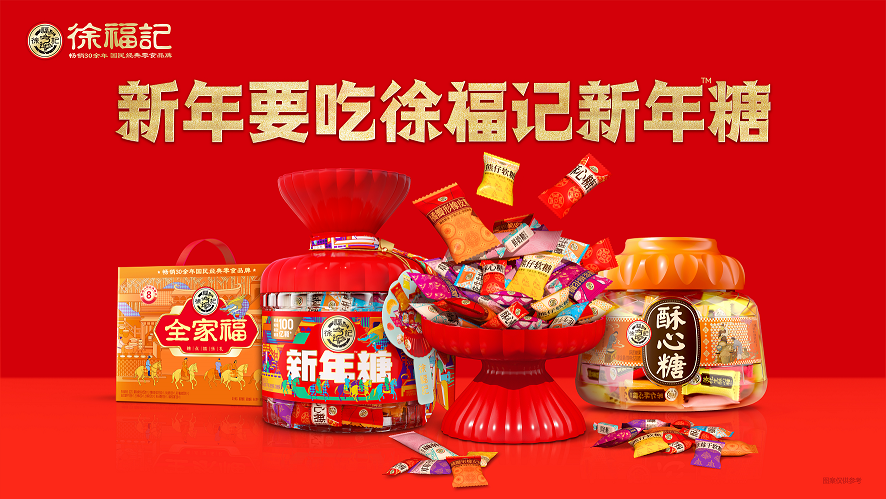
Core Insights - Xu Fu Ji is positioned as a cultural icon for the Chinese New Year candy market, aiming to connect with 500 million Chinese families through its products [3][5] - The company emphasizes emotional connections and cultural resonance in its marketing strategy, moving beyond just selling candy to becoming a symbol of family ties and traditions [3][14] Product Innovation - The 2026 New Year candy series features significant upgrades, including a transformation in the production process of the traditional "Su Xin Tang," increasing the layers from 64 to 128 for a richer taste experience [6] - Packaging design has been enhanced, inspired by traditional Chinese elements, such as the "Treasure Bowl," symbolizing wealth and good fortune [8] Cultural Integration - The new candy series reflects a cultural leap, drawing inspiration from the Tang Dynasty, with designs that resonate with modern aesthetics while maintaining traditional significance [9][11] - Xu Fu Ji's approach aligns with the growing trend of "Guochao" (national trend), with a projected market size exceeding 3 trillion yuan by 2028, indicating a strong consumer preference for culturally infused products [11] Emotional Marketing - The company has upgraded its gift box offerings, focusing on emotional connections and cultural significance, transforming them into experiential gifts rather than just consumables [14][15] - The "Longma Sending Blessings" series emphasizes cultural themes, making the packaging a collectible item that embodies cultural confidence and family memories [15] Marketing Strategy - Xu Fu Ji is actively pursuing a younger audience through innovative marketing strategies, including the "Send Fortune with a Billion Candies" campaign, which has become a hallmark of their New Year promotions [17] - The company is enhancing its digital marketing efforts by collaborating with platforms like Meituan and Douyin, aiming to engage younger consumers through live streaming and social media [19]
徐福记,卖了
36氪· 2025-03-11 13:48
Core Viewpoint - The acquisition of Xu Fu Ji by Nestlé marks a significant strategic move, as it aims to transform Xu Fu Ji into a "national classic snack brand" amidst declining candy consumption trends in China [2][18]. Group 1: Acquisition Details - On March 3, Nestlé announced the acquisition of the remaining 40% stake in Xu Fu Ji, achieving full ownership after previously acquiring 60% for $1.7 billion in 2011 [2][5]. - Xu Fu Ji has been a dominant player in the Chinese candy market, achieving sales of over 1 billion yuan in 1997 and maintaining a leading position in the market since [5][7]. Group 2: Market Context - The candy market in China has been experiencing a decline, with traditional candy sales dropping by an average of 11.6% annually from 2019 to 2023 [13]. - The overall candy market growth has stagnated, with a compound annual growth rate of only 2% from 2016 to 2020, and a decline in production from 352,000 tons in 2016 to 288,000 tons in 2018 [15]. Group 3: Brand Transformation - Nestlé aims to leverage Xu Fu Ji's extensive distribution network to penetrate the growing snack market, which contrasts with the declining candy sector [18][19]. - Xu Fu Ji has already begun diversifying its product offerings beyond traditional candies, including snacks like nuts and cakes, to adapt to changing consumer preferences [21]. Group 4: Consumer Behavior - The perception of Xu Fu Ji as a "candy king" persists, with Nielsen data indicating a market share of over 30% in bulk candy sales [10]. - However, the cultural significance of candy during festivals like the Spring Festival is diminishing, leading to a decline in its consumption as a gift item [12][14].
徐福记卖了
盐财经· 2025-03-11 11:28
Core Viewpoint - Nestlé's acquisition of the remaining 40% stake in Xu Fu Ji marks a significant move to gain full control over the brand, which has been a staple in the Chinese candy market but faces challenges in adapting to changing consumer preferences [2][19]. Group 1: Company Background - Xu Fu Ji, founded by the Xu brothers in the early 1990s, quickly became a leading candy brand in China, achieving sales of over 1 billion yuan by 1997 and maintaining a dominant market position since then [5][6]. - The brand's success is closely tied to its association with Chinese New Year, where candy sales can account for over 60% of annual revenue [6][12]. Group 2: Market Challenges - Despite being the market leader in bulk candy with over 30% market share, Xu Fu Ji faces declining demand for traditional candy as consumer habits shift away from sugary products [12][13]. - The overall candy market in China has seen a decline, with sales dropping by an average of 11.6% annually from 2019 to 2023 [14]. Group 3: Strategic Shift - Nestlé's decision to fully acquire Xu Fu Ji suggests a strategic pivot to reposition the brand as a "national classic snack brand," leveraging its extensive distribution network to tap into the growing snack market [19][22]. - The snack industry in China is experiencing robust growth, with the market for snacks projected to maintain a compound annual growth rate of around 10% from 2023 to 2028 [21][22]. Group 4: Future Prospects - Xu Fu Ji is diversifying its product offerings beyond traditional candy, with significant revenue coming from biscuits and other snack products, indicating a shift in strategy to adapt to modern consumer preferences [24]. - The brand aims to expand its distribution network to 2.6 million outlets by 2025, enhancing its market presence in the competitive snack industry [22].