苋菜

Search documents
还吃?这些食物会加速结石形成→
Xin Lang Cai Jing· 2026-01-07 13:11
Group 1 - Kidney stones are mineral deposits in the kidneys formed from crystals and organic matrix when certain minerals in urine become oversaturated, with calcium oxalate stones being the most common type [3][15] - Prevention of kidney stone recurrence requires intervention in daily diet and lifestyle, along with timely use of medications specific to the type of stones [3][15] Group 2 - Patients should limit high oxalate foods, which are significant contributors to calcium oxalate stone formation; common high oxalate foods include spinach, purslane, amaranth, beets, bamboo shoots, starfruit, sesame, and cocoa powder [5][17] - Cooking methods such as blanching can significantly reduce oxalate content; for example, blanching 180g of spinach in 1000ml of boiling water for 1 minute removes 43% of oxalate [6][19] - High purine foods like organ meats, seafood, and rich meat broths should also be limited as they can lead to uric acid stone formation [8][19] - High salt foods, including pickled products and processed meats, should be avoided as excessive sodium increases urinary calcium excretion, promoting kidney stone formation; the recommended daily salt intake for adults is no more than 5 grams [9][19] Group 3 - It is recommended for most kidney stone patients to drink 2.5 to 3.0 liters of fluid daily, ensuring a urine output of at least 2.0 to 2.5 liters [10][20] - Water is the preferred liquid, with moderate consumption of tea and coffee being acceptable; however, caffeine intake should not exceed 400mg, approximately equivalent to 2 cups of 355ml American coffee [12][22] - Adequate dietary calcium intake is essential to lower kidney stone risk, as calcium binds with oxalate in the digestive tract to form insoluble calcium oxalate, thus reducing the formation of calcium oxalate stones; the recommended daily calcium intake for adults in China is 800mg [12][22] - A balanced diet with sufficient vegetables and fruits is beneficial for alkalizing urine and providing citrate, although care should be taken with high oxalate fruits and vegetables [12][22]


灾后改种补种应采取超常规技术手段(信息服务台)
Ren Min Ri Bao· 2025-09-29 21:56
Core Insights - The article discusses the significant impact of heavy rainfall and Typhoon "Hagupit" on agricultural production since July, leading to government intervention with a funding allocation of 940 million yuan for disaster recovery efforts in four provinces [1] Group 1: Government Response - The Ministry of Finance, in collaboration with the Ministry of Agriculture and Rural Affairs and the Ministry of Water Resources, has allocated 940 million yuan to support post-disaster crop replanting and recovery efforts in provinces such as Guangdong and Gansu [1] - Timely replanting is emphasized as an effective disaster relief measure, particularly for fields that have been submerged for over three days, which significantly affects yield or results in total crop failure [1] Group 2: Crop Management Strategies - The article outlines specific crop management strategies for replanting based on local climatic conditions, recommending short growth period crops such as sweet corn, sweet potatoes, millet, buckwheat, and mung beans for the Huang-Huai-Hai region [1] - It highlights the importance of adjusting planting techniques, such as increasing sowing density and employing unconventional management practices to promote rapid growth and recovery of crops [2] Group 3: Post-Harvest Considerations - After harvest, there is a need to strengthen the connection between production and sales to minimize losses for farmers, indicating a focus on market integration and support for agricultural stakeholders [2]
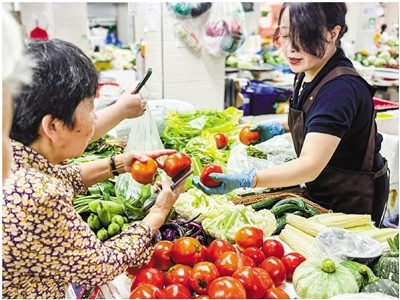
夏季时蔬争“鲜”上市,哪个才是你的菜?
Hang Zhou Ri Bao· 2025-06-18 02:58
Core Insights - The local vegetable supply is abundant and prices are affordable due to the seasonal growth of summer vegetables [5][7] - There is a notable increase in the sales of specific vegetables, such as lotus root, which dropped from 60 yuan to 30 yuan per kilogram [7] - The market is experiencing a surge in demand for both local and imported summer vegetables, with daily transaction volumes reaching 1200 tons, a slight increase from the previous month [8] Group 1: Local Market Trends - Local markets are seeing a high demand for fresh summer vegetables, with popular items including loofah, eggplant, and bitter melon [7] - Consumers are increasingly favoring locally grown produce, which, despite less appealing appearances, is preferred for its freshness [7] - The variety of vegetables available is expanding, with both local and external sources contributing to the market [8] Group 2: Retail Innovations - Retailers like Hema Fresh are introducing innovative ready-to-cook vegetable combinations to cater to the busy lifestyles of young consumers [9] - There has been a 70% increase in the sales of kale, a "functional" vegetable, indicating a shift in consumer preferences towards healthier options [9] - The market is witnessing a generational divide in purchasing habits, with younger consumers gravitating towards convenience and health-focused products [9]