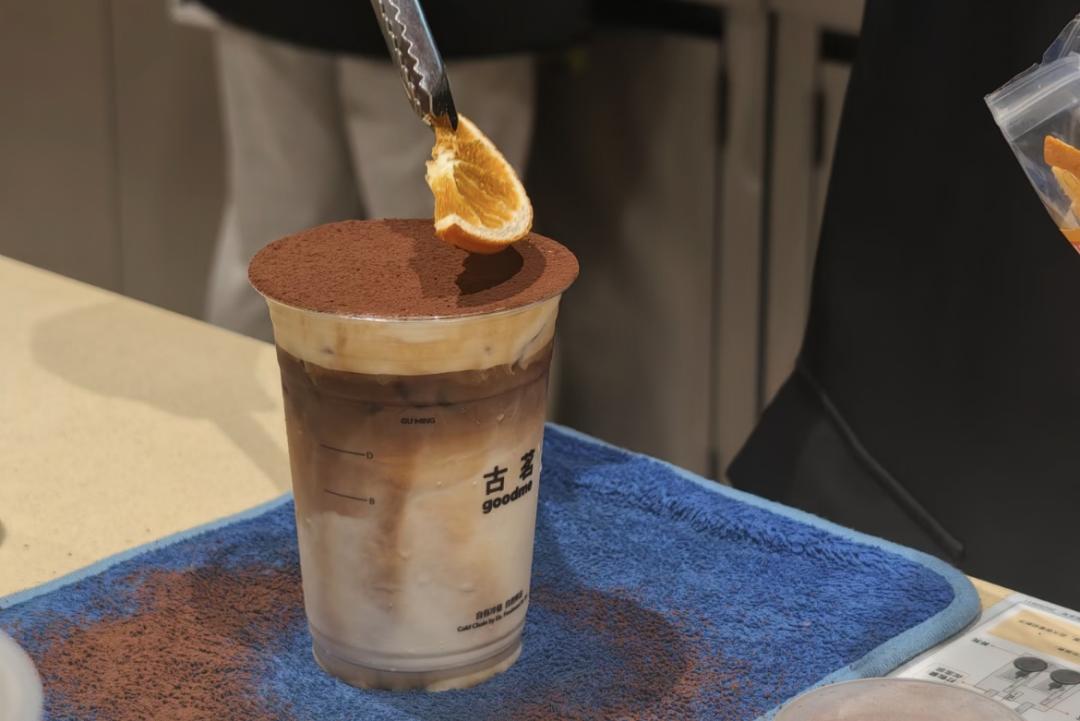
苦尽柑来拿铁

Search documents
2026年春节消费调研观察:春节消费高景气,关注性价比、情绪价值和体验
GUOTAI HAITONG SECURITIES· 2026-02-26 00:44
Investment Rating - The report assigns an "Overweight" rating for the industry [3] Core Insights - The report highlights a strong performance in offline retail and service consumption during the Spring Festival, particularly in lower-tier markets, indicating a robust consumer sentiment and demand [2][4] - Key investment opportunities are identified in the tourism and hospitality sectors, with specific recommendations for hotel groups and scenic spots [5][6] Summary by Relevant Sections Tourism and Hospitality - The overall travel and tourism during the Spring Festival exceeded expectations, with recommendations for hotel groups such as Huazhu Group, ShouLai Hotel, and JinJiang Hotels, as well as scenic spots like Emei Mountain A and Huangshan Tourism [5][6] - Major hotel chains are expanding into lower-tier markets without significant price differences, with local residents increasingly viewing high-end hotel restaurants as premium venues for gatherings [6] Retail and Consumer Goods - Certain brands experienced long queues during the Spring Festival, suggesting potential for exceeding sales expectations, with recommendations for CaiBai Co., LaoPu Gold, and LiuFu Group [5][6] - The report notes that consumer sensitivity to prices has increased, particularly in the gold and jewelry sector, with LaoPu Gold expected to raise prices on February 28, 2026 [6] Food and Beverage - The food and beverage sector saw strong performance due to favorable weather and new product launches, with lower-priced tea and fast food performing better in lower-tier markets compared to higher-tier cities [6] - High-priced dining benefited from the "reverse reunion" trend during the Spring Festival, particularly in higher-tier cities [6] E-commerce and Cross-border Trade - The report suggests investment in cross-border e-commerce due to adjustments in US-China tariffs, recommending companies like Anker Innovations and Green Union Technology [5][6] Other Notable Stocks - Additional recommendations include ZhuMian Group, Jiangsu Guotai, SuMeida, and HaiDiLao, indicating a broad range of investment opportunities across various sectors [5][6]


“奶茶界最伟大的发明”!多品牌上线一分糖被网友怒赞
东京烘焙职业人· 2026-02-12 08:33
Core Viewpoint - The beverage industry is experiencing a significant shift towards reduced sugar options, with brands introducing innovative low-sugar alternatives to meet consumer demand for healthier choices [5][6][19]. Group 1: Industry Trends - The introduction of the "1 Sugar" option by brands like Tea Waterfall, which contains only 5g of sugar per cup, has been widely praised by consumers as a major innovation in the milk tea sector [5][8][19]. - Many brands are quietly reducing sugar content, with some eliminating full-sugar options entirely, indicating a broader trend towards healthier beverage choices [6][9][11]. - Starbucks has successfully promoted its "True Flavor No Sugar" series, which replaces flavored syrups with natural floral flavors, leading to increased sales of low-sugar options [12][22]. Group 2: Consumer Behavior - Over half of consumers are shifting towards low-sugar or no-sugar options, reflecting a growing preference for healthier beverages [15]. - The "1 Sugar" option has seen approximately 3% of users opting for it within half a month of its launch, indicating a positive consumer response despite its initial low demand [16][19]. - Brands like Oriental Molan have reported that 7% of their sales come from the "1 Sugar" option, demonstrating that even niche offerings can find a market [19]. Group 3: Innovation Strategies - The industry is exploring three main strategies to reduce sugar while maintaining flavor: using real fruit juice to replace sugar, extracting natural floral essences, and experimenting with healthier alternative sweeteners [24][28][32]. - Companies are focusing on enhancing the natural sweetness of ingredients, such as using fruit juices and natural oils, to create flavorful beverages without relying on added sugars [28][30]. - The introduction of healthier alternative sweeteners like D-allulose, which mimics the taste of sugar without the negative health impacts, is becoming a viable option for brands aiming to reduce sugar content [32][34].

“奶茶界最伟大的发明”,多品牌上线一分糖被网友怒赞
3 6 Ke· 2026-02-03 00:41
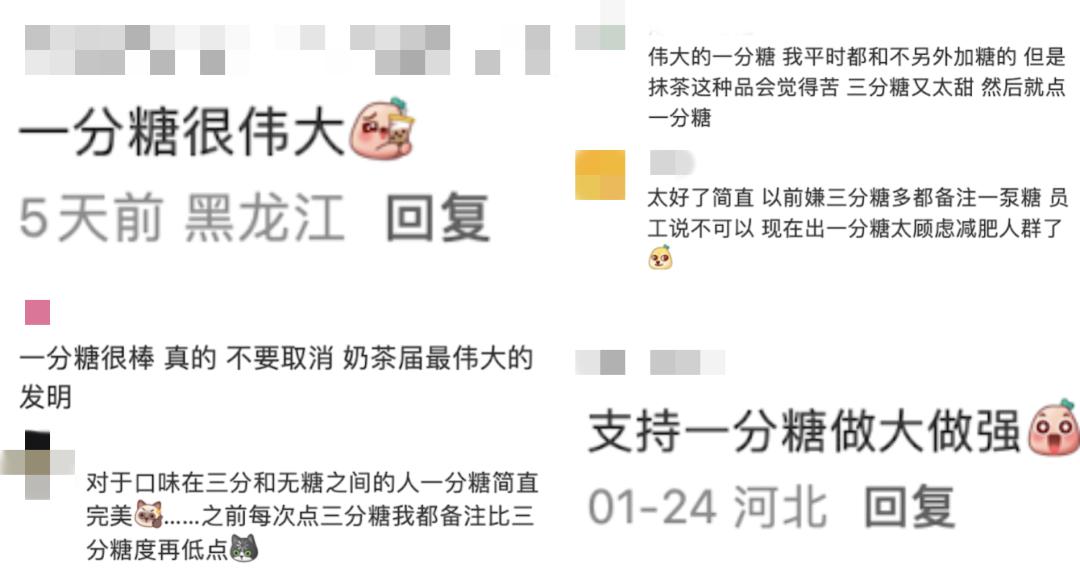
Core Insights - The introduction of the "1 Sugar" option by Chao Pao Bu, a brand under Hu Shang A Yi, has been hailed as a significant innovation in the milk tea industry, with consumers praising it as the "greatest invention" in the sector [1][7] - A trend of "quietly reducing sugar" is emerging across various brands, with some eliminating full-sugar options and others adopting low-GI sweeteners [3][5] Brand Innovations - Chao Pao Bu has launched a "1 Sugar" option, adding only 5g of sugar per cup, which has received positive feedback from consumers [1][7] - The Nanjing brand Dongfang Molan had already implemented a "1 Sugar" option in 2024, noting that full-sugar orders are minimal among customers [2] - Li Cha, a brand known in Beijing, has removed full-sugar and partial sugar options, offering only "no added sugar" or "30% Arabic sugar" [3] - The brand Niu Cha has introduced a "low GI syrup" made from a blend of rock sugar, cane sugar, and Arabic sugar to achieve a lower glycemic index [5] Consumer Behavior - Over half of consumers are shifting towards less sugar or no sugar options, with approximately 3% of users opting for the "1 Sugar" choice within two weeks of its launch [7] - Dongfang Molan reports that 7% of its customers choose the "1 Sugar" option, while 6% opt for "no added sugar" [9] - Starbucks has successfully promoted its "no sugar" series, with over 50% of customers selecting no added sugar or less sugar versions [11] Industry Trends - The industry is exploring three main paths to reduce sugar while maintaining flavor: 1. Using real fruit juice to replace sugar, balancing sweetness with natural flavors [13] 2. Extracting natural floral essences and fruit oils to enhance flavor without added sugar [15] 3. Experimenting with healthier alternative sweeteners and low-GI sugars, such as D-allulose, which has been approved for use [19] Conclusion - The trend of sugar reduction is evolving from standard sugar to options like "1 Sugar" or "0-calorie sugar," reflecting a growing consumer demand for healthier choices [20] - The focus is on genuine health benefits rather than merely adjusting sugar levels, emphasizing the importance of nutritional awareness in consumer choices [20]
一杯封神?古茗的“苦尽柑来”成全网爆火年会咖啡
3 6 Ke· 2026-01-30 00:42
Core Insights - The newly launched "Bitter Sweet" coffee by Guming has quickly gained popularity, leading to nationwide shortages and high demand on social media platforms [1][2] - This special coffee features a unique blend of award-winning coffee beans, fresh milk, and real citrus juice, topped with a cheese foam and cocoa powder, making it competitive with premium specialty coffees priced over 30 yuan, while being sold at only 13.9 yuan [4][2] Group 1: Product Popularity and Market Response - Guming's "Bitter Sweet" coffee has sold out across multiple cities for three consecutive days, with consumers actively seeking restocks on social media [2][4] - The product's success is attributed to its appealing taste and presentation, which resonates with consumers' emotional experiences, making it a symbol of year-end reflection and celebration [4][5] Group 2: The Evolution of Chinese Coffee - The concept of "Chinese coffee" lacks a standardized definition, with various interpretations emerging over the years, including fruit coffee and tea-infused coffee [6][8] - Guming's success with its flavored coffee indicates a shift in the market, with a focus on innovative flavor combinations and creative recipes, as seen in their upcoming product launches [9][11] Group 3: Market Trends and Consumer Preferences - The trend towards flavored and creative coffees is becoming the preferred choice among consumers in China, contrasting with the more traditional coffee preferences seen in Western markets [14][16] - The emotional and health aspects of coffee consumption are increasingly important, with products like fruit and vegetable coffees gaining traction as healthier alternatives [16][18] Group 4: Cultural Significance and Future Outlook - The development of Chinese coffee reflects a blend of global influences and local traditions, creating a dynamic and evolving coffee culture that is inclusive and innovative [18][20] - The future of Chinese coffee is characterized by continuous experimentation and adaptation, with consumers playing a significant role in shaping its identity [20]