英伟达 H100 GPU

Search documents
地球快养不起 AI 了,谷歌英伟达被逼上太空,结果便宜了马斯克
Sou Hu Cai Jing· 2025-11-05 07:22
Core Viewpoint - Google has officially launched its lunar data center initiative named Project Suncatcher, aiming to establish a solar-powered AI infrastructure in space to alleviate resource competition on Earth [2][5]. Group 1: Project Overview - The initiative seeks to create a scalable AI infrastructure powered by solar energy in space, addressing the increasing demand for energy and resources for AI operations on Earth [5][9]. - The project is a response to the challenges faced by AI companies regarding energy supply and data center capacity, as highlighted by OpenAI and Microsoft CEOs [5][9]. Group 2: Technical Advantages - Space offers significant advantages for data centers, including: 1. **Efficiency**: Solar panels in space can achieve 8 times the efficiency compared to those on Earth [11]. 2. **Continuous Power Supply**: Unlike Earth, space provides uninterrupted solar energy without the interference of night or clouds [11]. 3. **Resource Conservation**: Space data centers would not consume Earth's limited land or water resources for cooling [12] . Group 3: Technical Challenges - Google identifies three major challenges for the space-based AI data center: 1. **Local Network**: High bandwidth and low latency are required for AI training, which Google plans to achieve through close formation flying and laser communication between satellites [14][15]. 2. **Radiation**: The harsh space environment poses risks to sensitive chips, but Google’s TPU chips have shown surprising resistance to radiation [20][21]. 3. **Data Transmission**: Efficiently transmitting data back to Earth remains a significant challenge, with current ground-to-space communication bandwidth being insufficient for the needs of a space AI data center [24][26]. Group 4: Economic Considerations - The cost of launching payloads into space is a critical factor; Google estimates that if launch costs drop to $200/kg by 2035, the cost of power in space could become competitive with terrestrial data centers [27][32]. - SpaceX is positioned as a key player in making this vision feasible, with its launch cost reduction strategy potentially supporting Google's economic model for space data centers [28][32]. Group 5: Industry Implications - The emergence of space-based data centers could shift the competitive landscape, with companies like SpaceX potentially dominating the space computing market, similar to how NVIDIA dominates the terrestrial GPU market [34][39]. - The recent launch of NVIDIA's H100 GPU into space signifies the growing interest and investment in space-based computing capabilities [34][39].




AI 芯片烧到 1000W!碳化硅成 “救命稻草”,3 家核心企业已卡位
Hu Xiu· 2025-09-17 04:05
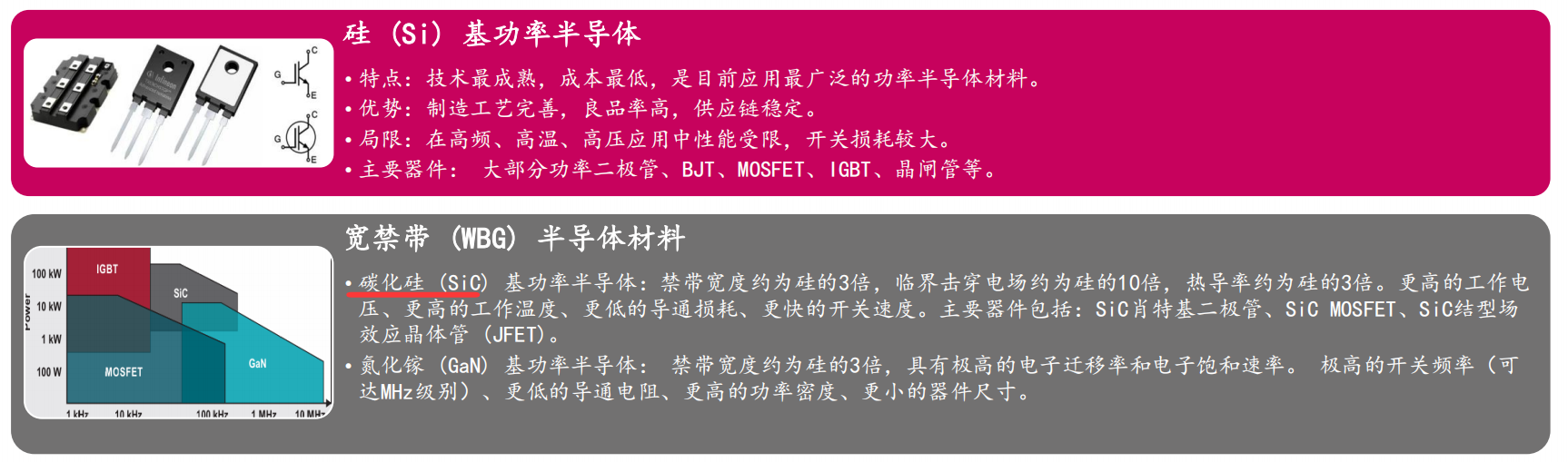
Group 1 - Silicon carbide (SiC) is a third-generation wide bandgap semiconductor material that significantly outperforms traditional silicon-based devices in high-temperature, high-voltage, and high-frequency applications, making it widely used in electric vehicles, photovoltaic energy storage, and 5G communication [1] - The explosive growth of AI computing power has created a new demand for SiC, which addresses the heat dissipation challenges of high-power chips and supports energy efficiency upgrades in data centers [2][4] - SiC's thermal conductivity reaches 490W/mK, over three times that of silicon, and its thermal expansion coefficient is well-matched with chip materials, enhancing heat dissipation and packaging stability [4] Group 2 - NVIDIA's H100 GPU has a power consumption of 700W, with the next-generation Rubin processor expected to exceed 1000W, highlighting the limitations of traditional silicon intermediates [2] - NVIDIA plans to replace silicon intermediates in its CoWoS packaging with SiC, resulting in a temperature drop from 95°C to 75°C for the H100 chip, reducing cooling costs by 30% and doubling chip lifespan [4] - By 2027, SiC intermediates are expected to meet 10% of high-end GPU demand, as TSMC advances SiC packaging technology [6] Group 3 - The demand for electricity in AI data centers is projected to increase nearly 100-fold, necessitating a shift from traditional 54V power supply architectures to an 800V high-voltage direct current (HVDC) framework [7] - Implementing SiC devices in data centers can reduce copper usage by 45% and save over $100,000 in electricity costs annually for every 10MW data center, significantly improving energy efficiency [7] Group 4 - The silicon carbide supply chain has the highest technical barriers and value concentration in the substrate segment, which accounts for 47% of total device costs [11] - Tianyue Advanced is a leading domestic supplier of SiC substrates, holding over 50% market share in China and 22.8% globally, focusing on automotive-grade and power device sectors [12] - Tianjie Heda, another key player, has a significant market share in 6-inch substrates and is positioned to benefit from the growing demand in the photovoltaic sector [13] Group 5 - Jing Sheng Mechanical and Electrical is a leading domestic semiconductor equipment manufacturer, achieving a dual advantage in equipment manufacturing and material production in the SiC sector [15] - The company has developed core equipment for the entire substrate processing chain, enabling a 30% reduction in substrate processing costs [16] - By 2025, Jing Sheng plans to expand its production capacity significantly, supported by substantial investments from national funds [16]