英伟达H800计算卡

Search documents
AI算力需求涌向模型推理,国产芯片站上竞技台了
Di Yi Cai Jing· 2025-05-28 07:22
Core Insights - The Chinese data center accelerator card market is experiencing a significant shift, with domestic computing power expected to exceed 40% in the first half of 2024, up from approximately 30% last year [1][2] - NVIDIA's CEO highlighted the ongoing AI investment trend, indicating that the demand for AI computing power is evolving, particularly with the rise of inference chips [1][8] - The introduction of DeepSeek has led to a notable increase in the demand for inference chips, which are expected to constitute over 57.6% of the market by 2024 [8][11] Market Dynamics - The construction of data centers is accelerating, with a projected 97.3% year-on-year growth in China's accelerated computing server market in 2024 [4] - The number of successful bids for intelligent computing centers in China has increased significantly, indicating a robust demand for computing resources [4] - Universities and enterprises are increasingly seeking computing power, with many opting for cloud solutions or purchasing their own computing cards [5][6] Technological Shifts - The demand for inference capabilities is reshaping the chip composition in the market, allowing domestic chips to gain traction as they are suitable for inference tasks [11][12] - The performance requirements for inference chips are lower, enabling a broader range of domestic chips to compete effectively against NVIDIA [10][11] - Companies like Tencent are adapting to the changing landscape by increasing their focus on inference needs, indicating a shift in AI application strategies [9][13] Competitive Landscape - NVIDIA's market share in China's data center accelerator card market has decreased from 95% to around 65.2%, while domestic chip manufacturers are gaining ground [11][13] - The introduction of export controls on NVIDIA's chips has prompted the company to consider launching a new AI chip tailored for the Chinese market [13] - Domestic AI chip manufacturers, such as Cambricon, are beginning to report profitability, reflecting a positive trend in the domestic chip market [12]



近一年有9所知名高校成立AI学院,AI学者称“不担心过热”
Di Yi Cai Jing· 2025-05-09 14:49
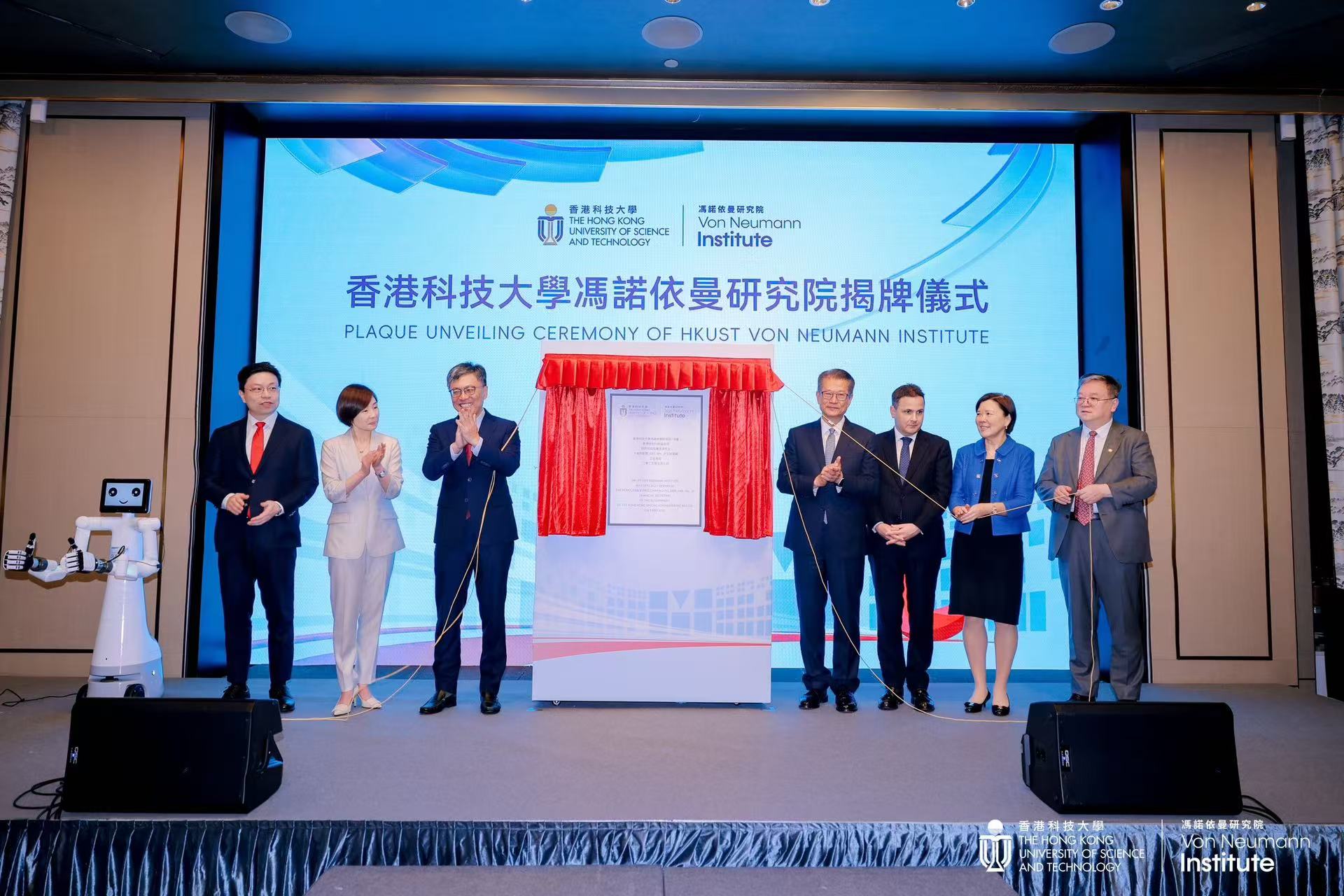
Core Insights - The establishment of the Von Neumann Research Institute at Hong Kong University of Science and Technology (HKUST) reflects a growing trend among universities to create AI-related research institutes, with at least nine notable institutions in China having done so in the past year [1][4][6] - The research institute will focus on five key areas: embodied intelligence, generative AI, advanced supercomputing, AI-driven healthcare reform, and the development of intelligent robotics [2][4] - The institute aims to train over 100 PhD students and enhance collaboration between academia and industry [2][4] Summary by Sections Establishment of AI Institutes - HKUST's Von Neumann Research Institute is the latest addition to a wave of AI institutes established by universities, with at least nine notable institutions launching AI-related programs since April 2023 [1][4] - Other universities, including Tsinghua University and Shanghai Jiao Tong University, have also established AI institutes focusing on various aspects of artificial intelligence [4][6] Research Focus and Goals - The Von Neumann Research Institute will concentrate on integrating technologies such as embodied intelligence and generative AI, aiming for breakthroughs in key areas like multi-modal AI systems and trustworthy AI [2][4] - HKUST's goal is to accelerate the transformation of research outcomes into practical applications, particularly in critical fields [2][4] Industry Collaboration and Startup Ecosystem - The close relationship between academic research and the AI industry has led to the emergence of numerous startups, with many founders being university professors [6][9] - HKUST has a history of fostering startups, having incubated over 1,800 companies, including four unicorns, benefiting from its proximity to the Greater Bay Area [9] Characteristics of Hong Kong's AI Ecosystem - Hong Kong's research ecosystem is characterized by a decentralized approach, with many small but specialized companies emerging rather than large-scale projects [8] - The region's unique position allows for collaboration with nearby cities, enhancing the potential for startup growth [9]