荣耀青海湖电池

Search documents
探访荣耀智能工厂:全链条协同创新,“人工智能+制造”活力涌现
Huan Qiu Wang Zi Xun· 2026-02-03 10:51
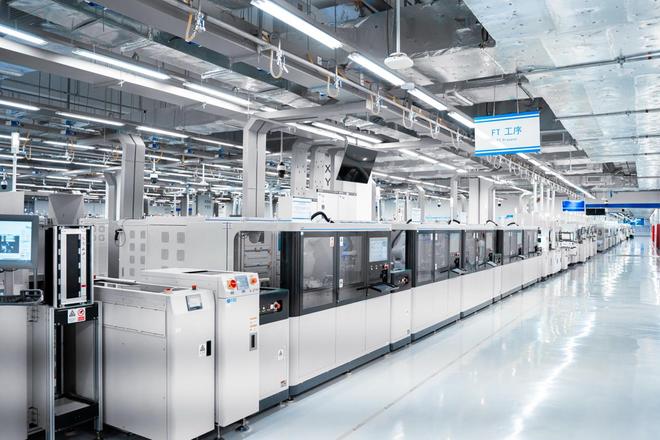
Core Insights - The article highlights the advancements in smart manufacturing and battery technology by Honor, showcasing its commitment to high-end manufacturing and innovation in the smartphone industry [1][3]. Group 1: Smart Manufacturing Innovations - Honor's smart manufacturing factory in Shenzhen utilizes self-developed "Luban" industrial models to analyze nearly 500 component features at a rate of 125,000 analyses per second, enhancing production precision from millimeter to sub-micron levels [1][7]. - The AI vision system employs 3D algorithms to achieve extremely high precision in controlling adhesive weight to 0.001 milligrams, ensuring the stability of advanced material applications [7]. Group 2: Battery Technology Development - Honor focuses on battery technology as a key differentiator, addressing consumer concerns about battery life and safety, which are critical for user experience [5][10]. - The company has developed the "Qinghai Lake" battery, which incorporates silicon-carbon anode materials to enhance energy density, despite challenges related to material expansion during charge and discharge cycles [6][10]. - Honor's battery management system, "Dujiangyan," integrates proprietary algorithms for real-time monitoring and risk prevention, ensuring safety in high-capacity batteries [10]. Group 3: Industry Impact and Future Outlook - The innovations in Honor's battery technology extend beyond individual products, contributing to a broader understanding of user experience and trust in battery performance [11]. - The integration of AI in manufacturing processes positions Honor as a leading example of how Chinese technology companies are advancing from application innovation to foundational materials and precision manufacturing [11].

苹果折叠屏手机将装载硅碳负极电池
高工锂电· 2025-03-10 10:52
Core Viewpoint - Silicon-carbon anode batteries are becoming the mainstream choice for new smartphones [1] Group 1: Industry Trends - Apple's first foldable phone will feature a silicon-carbon anode battery supplied exclusively by CATL, with a capacity exceeding 5000mAh [2] - Huawei's Mate XT foldable phone, set to launch in September 2024, will utilize a silicon anode battery with a thickness of only 1.9mm and a capacity of 5600mAh, reducing thickness by over 30% compared to traditional graphite anode batteries [2] - Other brands like Honor, Xiaomi, and Vivo are also adopting silicon-carbon anode technology, with battery capacities generally exceeding 5000mAh [2] - Samsung plans to introduce silicon-carbon battery technology in its S26 series, aiming for a battery capacity of around 6000mAh for the S26 Ultra, while the standard S26 may maintain a capacity of around 5000mAh [2] Group 2: Market Dynamics - The explosion of silicon-carbon anodes is attributed to their theoretical capacity being ten times that of graphite anodes (4200mAh/g), significantly enhancing energy density [3] - The demand for lightweight and long-lasting consumer electronics has made silicon-carbon anodes the first large-scale market for this technology [3] - From early 2024 to March 2025, domestic silicon-carbon anode planned production capacity is expected to exceed 400,000 tons, with total investments surpassing 20 billion yuan [3] - Companies like Shanshan and Silan Microelectronics are accelerating project implementation, with Shanshan's first-phase capacity expected to reach full production by the end of 2024 [3] Group 3: Cost and Production - Companies are integrating upstream raw material production lines to reduce costs, as seen with Zhongning Silicon Industry and Anhui Bond Rui [4] - The cost of porous silicon-carbon preparation has dropped to below 200,000 yuan per ton, which is 30% lower than the silicon-oxygen route [3][4] - Despite the strong foothold of silicon-carbon anodes in consumer electronics, their penetration in power batteries remains low due to issues with cycle life and cost [4] Group 4: Future Outlook - GGII previously predicted that by 2030, China's silicon-based composite material shipments will exceed 300,000 tons [5] - The large-scale application in consumer electronics has opened a market window for silicon-carbon anodes, and as the technology matures, there is potential for significant growth [5]