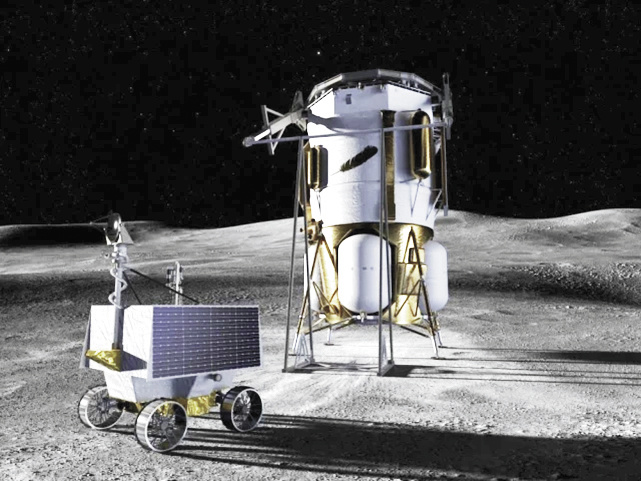
蓝月亮着陆器

Search documents
一张黑白乌龟照,让世界首富马斯克破防了?贝索斯这招“阴阳怪气”才是顶级商战
3 6 Ke· 2026-02-11 07:30
Core Viewpoint - The article discusses the contrasting philosophies of space exploration between Jeff Bezos's Blue Origin and Elon Musk's SpaceX, highlighting a recent shift in Musk's focus from Mars to the Moon due to competitive pressures [2][12][24]. Group 1: Company Philosophies - Bezos's Blue Origin emphasizes a cautious and methodical approach to space exploration, symbolized by the tortoise, focusing on reliability and engineering validation [3][6]. - Musk's SpaceX is characterized by rapid experimentation and high-risk strategies, likened to the hare, aiming for ambitious goals like colonizing Mars [3][6]. - The interaction between Musk and Bezos reflects deeper ideological divides in their respective approaches to space technology and exploration [5][27]. Group 2: Recent Developments - Musk's recent announcement to shift SpaceX's focus back to the Moon is seen as a response to Blue Origin's advancements, particularly with the New Glenn rocket and the development of the Blue Moon lander [12][24]. - Blue Origin's Blue Moon lander is designed to meet NASA's requirements for lunar missions, emphasizing stability and reliability [6][14]. - SpaceX's Starship, with its unprecedented payload capacity, is positioned as a game-changer for lunar missions, potentially benefiting NASA and commercial interests on the Moon [24]. Group 3: Strategic Implications - The Moon is viewed as a critical resource for future space infrastructure, with its potential for in-situ resource utilization, such as water and materials for fuel [19][21]. - Musk's plans for a lunar city by 2035 and the establishment of a space-based data center using AI highlight the strategic importance of the Moon in advancing human civilization [15][22]. - The competition between SpaceX and Blue Origin is expected to accelerate advancements in space technology, ultimately benefiting humanity's exploration of space [27].


NASA代理局长:SpaceX进度落后,将让其他美企竞争月球着陆器合同
Huan Qiu Shi Bao· 2025-10-21 22:57
Core Viewpoint - NASA is considering alternatives to SpaceX for its Artemis lunar missions due to significant delays in the development of SpaceX's Starship, which could hinder the goal of returning astronauts to the Moon before China [1][2] Group 1: NASA and Artemis Program - NASA's Artemis 3 mission is scheduled for 2027, but delays from SpaceX may impact the timeline [1] - NASA has a $2.9 billion contract with SpaceX for a lunar lander, but the Starship is still in early development stages with multiple flight failures [1] - NASA's acting administrator, Duffy, indicated that the agency may open contracts to other companies if SpaceX cannot meet deadlines [1] Group 2: Competitors and Industry Response - Blue Origin, founded by Jeff Bezos, is seen as a potential competitor for the lunar lander contract, having previously lost to SpaceX for Artemis 3 but won a similar project for Artemis 5 [1] - NASA has requested both SpaceX and Blue Origin to submit accelerated lunar landing plans by October 29 [2] - Other aerospace companies, including Lockheed Martin and Dynetics, are also being considered for potential contracts, indicating a broader competitive landscape [2] Group 3: SpaceX's Position - Elon Musk stated that SpaceX's progress is significantly faster compared to other companies [2] - Blue Origin's Blue Moon MK2 lander aims for a crewed lunar landing in the early 2030s, but it faces challenges in catching up to SpaceX's timeline [2]
美媒:力争2027年登月,NASA复活“毒蛇”月球车
Huan Qiu Shi Bao· 2025-09-21 22:53
Core Points - NASA has revived the "VIPER" lunar rover project, aiming for a 2027 launch alongside Blue Origin's "Blue Moon" lander to explore the lunar south pole [1][4] - The lunar south pole is believed to contain significant water ice resources, which could support human survival and be converted into rocket fuel [3][4] - The project was initially canceled in 2024 after incurring costs of approximately $450 million, with plans to save about $84 million by halting it [3][4] Summary by Sections - **Project Revival** - NASA has entered a new agreement with Blue Origin worth $190 million to integrate and deliver the VIPER rover to the lunar south pole by the end of 2027 [4] - The mission will last for 100 days, focusing on mapping ice deposits and collecting samples for data accuracy [4] - **Challenges and Delays** - NASA officials have warned that the Artemis crewed lunar landing program may face delays due to setbacks in SpaceX's Starship development, potentially impacting the timeline and allowing China to gain an advantage in lunar exploration [4] - **Global Lunar Exploration Context** - The lunar south pole has become a hotspot for exploration, with India's Chandrayaan-3 being the first to land there, although it did not confirm the presence of water ice [5] - Upcoming missions include China's Chang'e 7 in 2026, which aims to conduct flyby exploration to locate water ice [5]