卡尔达肖夫文明等级

Search documents
一张黑白乌龟照,让世界首富马斯克破防了?贝索斯这招“阴阳怪气”才是顶级商战
3 6 Ke· 2026-02-11 07:30
Core Viewpoint - The article discusses the contrasting philosophies of space exploration between Jeff Bezos's Blue Origin and Elon Musk's SpaceX, highlighting a recent shift in Musk's focus from Mars to the Moon due to competitive pressures [2][12][24]. Group 1: Company Philosophies - Bezos's Blue Origin emphasizes a cautious and methodical approach to space exploration, symbolized by the tortoise, focusing on reliability and engineering validation [3][6]. - Musk's SpaceX is characterized by rapid experimentation and high-risk strategies, likened to the hare, aiming for ambitious goals like colonizing Mars [3][6]. - The interaction between Musk and Bezos reflects deeper ideological divides in their respective approaches to space technology and exploration [5][27]. Group 2: Recent Developments - Musk's recent announcement to shift SpaceX's focus back to the Moon is seen as a response to Blue Origin's advancements, particularly with the New Glenn rocket and the development of the Blue Moon lander [12][24]. - Blue Origin's Blue Moon lander is designed to meet NASA's requirements for lunar missions, emphasizing stability and reliability [6][14]. - SpaceX's Starship, with its unprecedented payload capacity, is positioned as a game-changer for lunar missions, potentially benefiting NASA and commercial interests on the Moon [24]. Group 3: Strategic Implications - The Moon is viewed as a critical resource for future space infrastructure, with its potential for in-situ resource utilization, such as water and materials for fuel [19][21]. - Musk's plans for a lunar city by 2035 and the establishment of a space-based data center using AI highlight the strategic importance of the Moon in advancing human civilization [15][22]. - The competition between SpaceX and Blue Origin is expected to accelerate advancements in space technology, ultimately benefiting humanity's exploration of space [27].


速递 | SpaceX收购xAI:2026最危险信号,马斯克根本不是在套现
未可知人工智能研究院· 2026-02-03 04:41
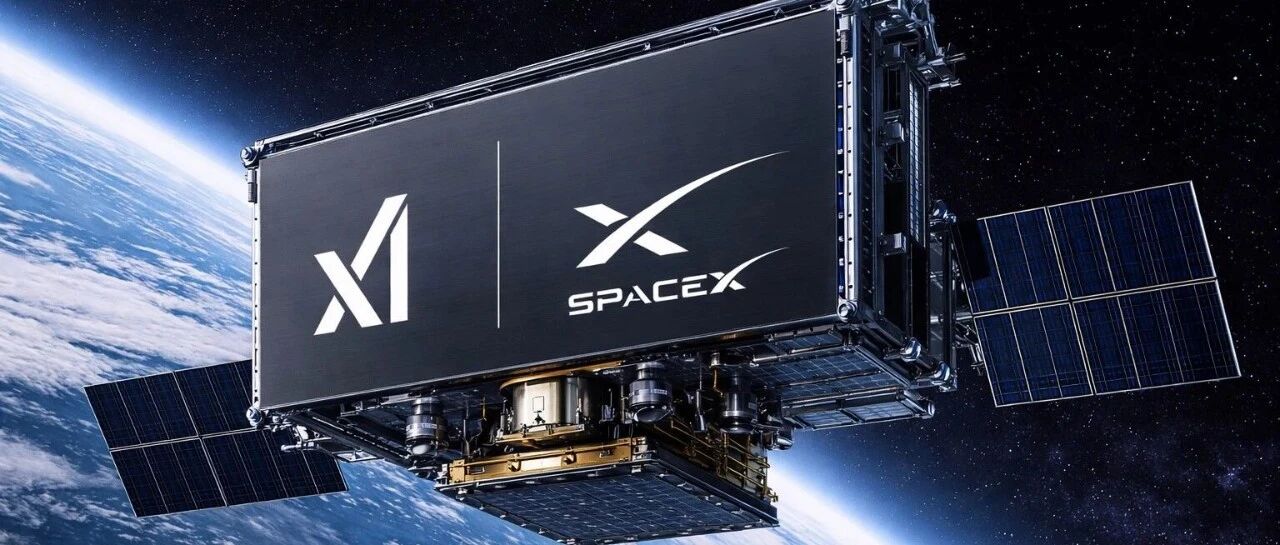
Core Viewpoint - The acquisition of xAI by SpaceX is not merely a financial maneuver but a significant shift in the paradigm of human civilization, indicating the beginning of a new era in space-based AI capabilities [1][3]. Group 1: SpaceX and xAI Acquisition - The mainstream narrative suggests that the acquisition is a cash-out strategy for Musk, but this perspective misses the larger implications of the move [3]. - SpaceX plans to launch 1 million satellites, significantly increasing the current number of operational satellites from around 10,000 to 1 million, which will create a massive space-based data center [4]. - Each satellite is expected to provide 100 kilowatts of computing power, leading to an annual addition of 100 gigawatts of AI computing capacity, a substantial increase compared to existing data centers [4]. Group 2: Energy and AI Competition - The current limitations faced by AI companies are primarily energy-related, with the costs of training advanced models like GPT-5 reaching billions of dollars, highlighting the physical constraints on Earth [6]. - Musk's vision includes utilizing solar energy in space, which could provide a constant, pollution-free energy supply, potentially reducing costs below those of terrestrial data centers within two to three years [6]. Group 3: Strategic Positioning of SpaceX - SpaceX is positioned uniquely compared to Tesla, as it operates outside the constraints of terrestrial resources and regulations, allowing it to build foundational infrastructure for future civilization [7]. - The merger of space and AI industries is seen as the beginning of a new competitive landscape, where companies with low-cost launch capabilities will dominate the AI sector [9]. Group 4: Future Implications and Recommendations - The acquisition signals a merging of the aerospace and AI sectors, suggesting that future developments will not see these industries as separate but as interconnected [9]. - The article emphasizes the importance of understanding the evolving landscape of commercial space and AI, encouraging stakeholders to focus on the emerging "space computing" technologies and related job opportunities [11][12]. - The date February 2, 2026, is highlighted as a pivotal moment marking the beginning of the "space AI era" [13].