蜡布

Search documents
一“纺”风采“家”倍出色
Xin Lang Cai Jing· 2026-02-12 06:09
Core Viewpoint - The article highlights the transformation of Yuyue Home Textile Co., Ltd. under the leadership of Chief Quality Officer Zhang Guoqing, focusing on quality control, technological innovation, and industry collaboration to enhance product quality and drive sustainable growth in the textile industry [1][6]. Group 1: Quality Control System - The company has restructured its quality control system from "passive inspection" to "active quality control," emphasizing that quality is an inherent part of every process [1]. - A dual-driven model of "CQI groups" and "KPI performance indicators" has been implemented, allowing for the quantification of quality targets across all positions, ensuring raw material quality remains stable at over 99.8% [2]. - The company has maintained a product pass rate of 99.8% for five consecutive years, demonstrating the effectiveness of its systematic quality control [2]. Group 2: Technological Innovation - Zhang Guoqing emphasizes that quality competition in the home textile industry has evolved into a contest of core technologies, leading to significant investments in R&D, totaling over 900 million yuan in the past three years [3]. - The development of a salt-free dyeing technology has improved dye utilization by 30% and achieved near-zero wastewater discharge, earning a first-class award in Shandong Province [3]. - New materials such as nano-carbon far-infrared fibers and herbal antibacterial fibers have been developed, achieving over 99% antibacterial rates and generating over 1 billion yuan in annual economic benefits [3]. Group 3: Digital Transformation - The company has established the first generative AI technology platform in the home textile industry, which has produced nearly 100,000 original design patterns in one year, reducing product development cycles by 40% [4]. - Breakthroughs in smart digital color spinning technology have allowed for the creation of "ten thousand meters without color repetition," saving 67% of water compared to traditional methods [4]. - The company has accumulated 418 national patents and achieved a high scientific research conversion rate of 80% [4]. Group 4: Industry Collaboration - Zhang Guoqing aims to elevate the entire industry chain by establishing a collaborative mechanism with academic institutions and sharing quality standards and management experiences with suppliers [6][7]. - The establishment of a quality alliance has led to an average reduction of 18% in quality loss rates among key upstream suppliers [6]. - The company has actively participated in the formulation of seven industry standards, contributing to the establishment of a green low-carbon evaluation system for home textile products [7]. Group 5: Recognition and Future Outlook - Yuyue Home Textile has been recognized as a model enterprise in Shandong and has received a nomination for the Shandong Provincial Quality Award, showcasing its successful transformation from a textile manufacturer to a life science enterprise [7]. - The company is committed to continuing its efforts in health technology and green low-carbon initiatives, aiming to inject ongoing momentum into the high-quality development of the Chinese home textile industry [7].
【开局“十五五” 奋斗正当时·一线报道】今年滨州首批出口非洲蜡布起运
Xin Lang Cai Jing· 2026-01-14 15:33
Core Viewpoint - The textile industry in Binzhou is experiencing a strong start to the year with significant export activities, particularly to Africa, showcasing the region's integration into the global market and the success of "Binzhou manufacturing" [1][5]. Group 1: Export Performance - The first batch of textile products worth over 5 million USD has been shipped to Africa, marking the beginning of Binzhou's export trade for the year [1]. - The textile industry continues to hold a significant share of the city's total foreign trade, with overseas orders already scheduled until July [2]. - The company, Yuyue Home Textile, has reported an impressive annual sales figure of 1.7 billion RMB from wax fabric alone, reflecting its strong market position [2]. Group 2: Innovation and Competitiveness - Continuous technological innovation and craftsmanship improvements have been crucial for the company's success in the African market, overcoming initial challenges related to cultural adaptation [3]. - The company invested 50 million RMB to upgrade its wax dyeing technology, addressing issues such as fabric hardness and color fading [3]. - The development of a unique wax pattern formula, tailored to African consumer preferences, has significantly enhanced product appeal [3]. Group 3: Government Support and Infrastructure - Local government and customs authorities have played a vital role in supporting the textile industry's export efforts through proactive services and regulatory support [4]. - The Binzhou Customs has improved the efficiency of cotton import inspections by over 30% through smart inspection systems [4]. - The establishment of AEO certification for leading companies has facilitated smoother international trade processes [4]. Group 4: Future Outlook - Binzhou's textile enterprises are transitioning from merely exporting products to establishing their brands and standards internationally, aligning with the "Belt and Road" initiative [5]. - The companies are poised to leverage their strong industrial foundation and innovative capabilities to secure more overseas contracts in the coming year [5]. - The ongoing enhancement of product quality, technology, and brand influence is expected to elevate Binzhou's presence on the global stage [6].
山东:一根纱线“织出”17亿元海外市场
Yang Shi Wang· 2025-11-05 07:02
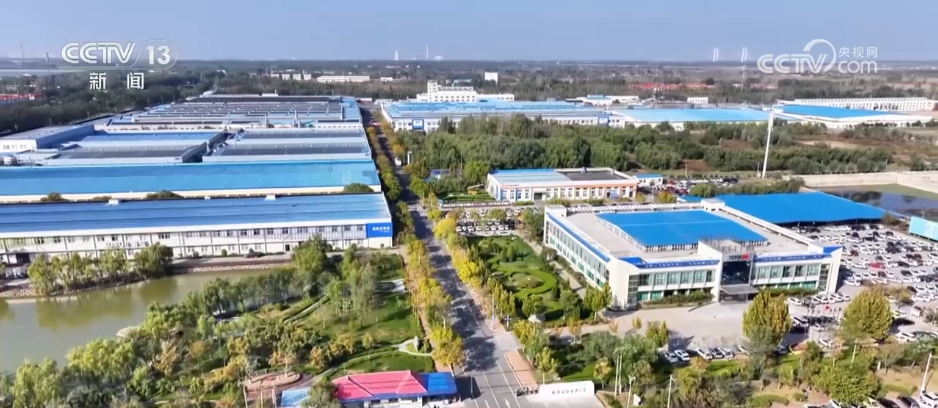
Core Viewpoint - The article highlights the transformation of the traditional textile industry in Shandong, China, through technological upgrades and innovations, leading to significant market expansion and environmental benefits. Group 1: Market Expansion - A textile company in Shandong secured a contract worth 130 million yuan for wax cloth exports to Africa, achieving a market share of over 70% in the high-end wax cloth segment after entering the Nigerian market in 2008 [1][2] - The company invested 50 million yuan to improve wax dyeing technology, resulting in the development of a preferred wax pattern for African customers, leading to annual sales of 1.7 billion yuan for wax cloth products across 23 African countries [2][3] Group 2: Environmental Sustainability - The company utilizes waste textile materials to produce logistics pallets, contributing to a circular economy and reducing waste [3][4] - By recycling 1 ton of waste textiles, the company saves 0.5 tons of standard coal and reduces carbon dioxide emissions by 1.6 tons, aligning with global trends in emission control [4] Group 3: Technological Innovation - The introduction of smart digital color spinning technology allows for the production of colorful fabrics without traditional dyeing processes, achieving a 67% reduction in water usage [5] - The company has established a generative AI technology platform for design, producing nearly 100,000 original design patterns within a year [5][6] - Over 90% of textile companies in Shandong have undergone digital transformation, creating several national-level design demonstration parks and industrial clusters [6]
一线调研 | 一根纱线“织出”17亿元海外市场
Yang Shi Wang· 2025-11-05 03:38
Core Viewpoint - The article emphasizes the transformation and modernization of the traditional textile industry in China, particularly in Shandong, through technological upgrades and digitalization, which have opened new markets and opportunities for growth [1]. Group 1: Market Expansion - A textile company in Shandong secured a contract worth 130 million yuan for wax cloth exports to Africa, achieving a market share of over 70% in the high-end wax cloth segment since entering Nigeria in 2008 [3][5]. - The company invested 50 million yuan to improve wax dyeing technology, leading to the development of preferred wax patterns for African consumers, resulting in annual sales of 1.7 billion yuan for wax cloth products across 23 African countries [9][11]. Group 2: Sustainability and Innovation - The company has repurposed waste textiles into logistics pallets, demonstrating a commitment to recycling and sustainability, with plans to add a new production line due to increasing sales [11][13]. - Utilizing recycled textiles not only reduces costs but also contributes to environmental goals, saving 0.5 tons of standard coal and 1.6 tons of CO2 emissions per ton of recycled material [13][15]. Group 3: Technological Advancements - The introduction of smart digital color spinning technology allows for the production of colorful fabrics without traditional dyeing processes, achieving a 67% reduction in water usage [19][21]. - The establishment of a generative AI technology platform has enabled the creation of nearly 100,000 original design patterns in less than a year, enhancing design efficiency and creativity in the textile sector [24][25].