行业垂直大模型

Search documents
建设数字中国支撑新质生产力发展
Jing Ji Ri Bao· 2026-02-24 22:07
Core Viewpoint - The article emphasizes the importance of developing new quality productivity through digital China construction, which is essential for promoting high-quality economic development during the 14th Five-Year Plan period [1]. Group 1: New Quality Productivity Development - New quality productivity is driven by technological breakthroughs, innovative allocation of production factors, and deep industrial transformation [2]. - The development and application of intelligent technologies, such as artificial intelligence, significantly enhance labor productivity and reshape production paradigms, leading to more efficient and precise production processes [2]. - The agricultural sector benefits from intelligent agricultural equipment that utilizes data analysis for precise irrigation and fertilization, resulting in increased crop yields and a shift from traditional farming to data-driven practices [2]. Group 2: Industrial System Transformation - The transformation of traditional industries towards intelligence, greenness, and integration is crucial for developing new quality productivity [3]. - The application of intelligent technologies in manufacturing leads to a shift from "manufacturing" to "intelligent manufacturing," enhancing customization and elevating the value chain [3]. - Emerging industries, such as virtual reality and intelligent robotics, are vital carriers for the growth of new quality productivity, created through the integration of digital technologies with existing industries [3]. Group 3: Systematic Relationship Management - A systematic approach is necessary to balance technological and institutional innovation, development and security, as well as autonomy and openness, to establish a solid foundation for new quality productivity [4][5]. - Continuous investment in cutting-edge technologies and reforms in administrative, economic, and scientific systems are essential to remove barriers to the free flow of production factors and deep integration of technology and industry [4]. - The development of responsible artificial intelligence and robust legal frameworks for data and network security is critical to mitigate risks associated with the digital economy [4]. Group 4: Digital Ecosystem Construction - The construction of a comprehensive digital ecosystem that integrates computing power supply, factor empowerment, industrial support, and talent assurance is essential for supporting new quality productivity [6]. - The establishment of advanced digital infrastructure and a unified data market is necessary to facilitate the orderly flow and application of data across various sectors [6]. - Promoting high-quality data supply and creating valuable data sets in key areas like artificial intelligence and biotechnology will enhance the application of data as a productive factor [6]. Group 5: Talent Development and Integration - The integration of artificial intelligence with the real economy, particularly in key sectors like manufacturing and agriculture, is crucial for driving innovation [7]. - A robust talent development mechanism that aligns with digital economic growth is needed to cultivate skilled professionals capable of bridging technology and industry [7]. - Enhancing digital literacy and skills across the population is vital to address disparities and ensure inclusive participation in the digital economy [7].
辽宁:对低空飞行器整机等项目 按照贷款本金年化利率1.5%给予贴息支持
Sou Hu Cai Jing· 2026-02-24 00:42
Core Viewpoint - The Liaoning Provincial Government has issued a series of policy measures aimed at promoting economic growth and transformation, focusing on key industries, technological innovation, and financial support for various sectors [4]. Group 1: Financial Support for Key Industries - Annual funding support of up to 2 million yuan is available for enterprises, universities, and research institutions in key industries for purchasing computing power services [5][6]. - Interest subsidies for loans at an annual rate of 1.5% are provided for projects related to low-altitude aircraft and key components, with a maximum annual subsidy of 1 million yuan per project and 5 million yuan per enterprise [6]. - Financial support of up to 200,000 yuan is available for projects that integrate modern services with advanced manufacturing [6]. Group 2: Technological Innovation and Development - Special funds are allocated to support the digital transformation of enterprises, including free diagnostic services and tailored transformation plans [5]. - Funding support is provided for artificial intelligence development, including computing power usage and application scenarios, with a maximum of 2 million yuan for eligible projects [5][6]. - Support for the establishment of technology innovation platforms and specialized verification platforms is available, with funding up to 300,000 yuan for cutting-edge technology research projects [8]. Group 3: Support for Emerging Industries - The government encourages the establishment of national and provincial quality inspection centers, with funding support of up to 100,000 yuan for expanding industrial scale and service capabilities [2]. - Financial support is available for new agricultural business entities, with interest subsidies for loans related to grain and oil planting, modern facility agriculture, and marine fishing vessel upgrades [7]. - Support for cross-border e-commerce development includes funding for platform entry, marketing, and independent site construction, with a maximum of 300,000 yuan per enterprise [10]. Group 4: Infrastructure and Logistics - The government is implementing differentiated toll policies for transportation vehicles, offering discounts for those using ETC systems [7]. - Efforts to reduce port fees and streamline transportation permit processes are underway to enhance logistics efficiency [7]. - Support for the mining industry includes facilitating exploration and development of mineral resources, with a focus on green approval processes [8]. Group 5: Policy Implementation and Evaluation - The policies are effective from the date of issuance, with a general execution period of one year, and specific implementation details will be clarified by the provincial development and reform commission [13]. - Continuous evaluation of policy effectiveness will be conducted, with adjustments made to policies that do not yield significant results [13].
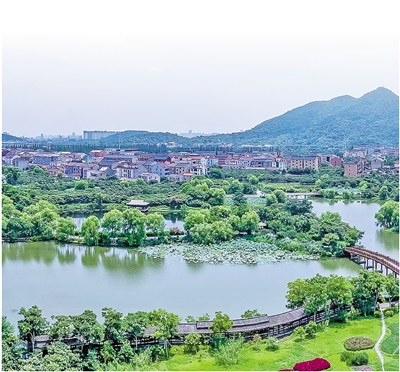
临平从“融”出发 启“十五五”新程
Hang Zhou Ri Bao· 2026-02-11 05:01
Core Viewpoint - The report emphasizes "integration" as a key theme for the development of Linping District, aiming to establish itself as a hub for deep integration with Shanghai and a model for industry-city integration by 2025 [3][4]. Economic Goals - By 2025, Linping aims to achieve a regional GDP of 121.63 billion yuan, representing a growth of 5.1%. The district also targets a total fiscal revenue of 25.42 billion yuan and a general public budget revenue of 14.63 billion yuan, showcasing the benefits of integration [3]. Infrastructure Development - Significant transportation projects, including the Shanghai-Hangzhou high-speed railway and the fourth phase of Hangzhou Metro, are set to enhance Linping's status as a transportation hub during the 14th Five-Year Plan period [4]. Industry-City Integration - Linping plans to advance its "industry-city integration demonstration zone" by 2026, with a focus on developing three new industry vertical models and targeting an AI industry revenue of 11 billion yuan. The district aims to establish one national-level intelligent factory and one provincial-level future factory pilot enterprise [4][5]. Talent and Human Resources - A new initiative will be launched in 2026 to support the integration of education, science, and talent, including an innovative "AI+OPC" entrepreneurship support model aimed at energizing the local workforce [5]. Rural Development - Linping will deepen urban-rural integration by extending quality public services and promoting rural industry revitalization. Plans include the construction of 19 school projects and various healthcare facilities, as well as initiatives to attract young talent back to rural areas [5].