
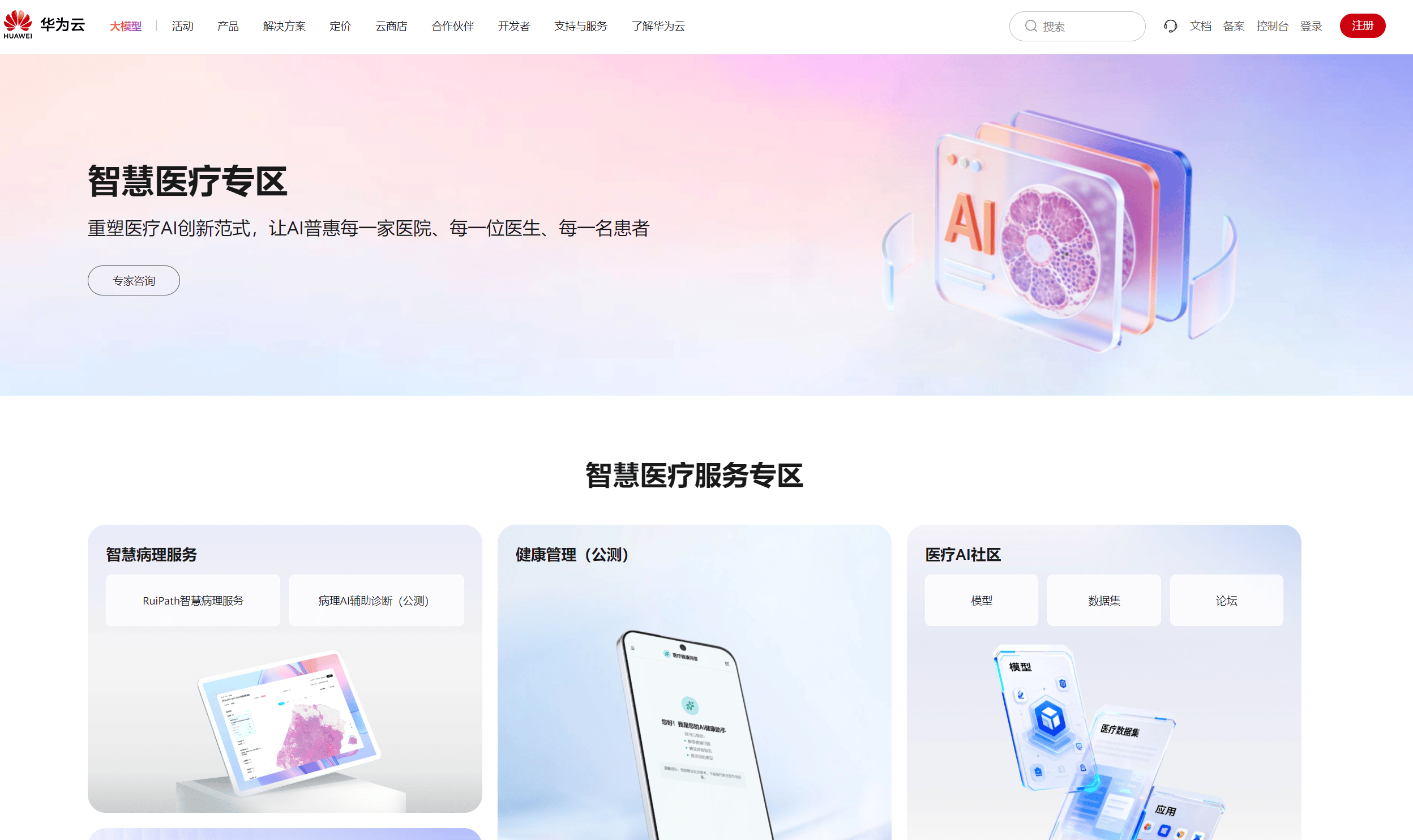
行业AI梦工厂智慧医疗专区

Search documents
华为云CEO周跃峰:聚产业之力,让医疗AI创新更简单
Sou Hu Cai Jing· 2026-02-03 06:56
Core Insights - The core focus of the event was the launch of Huawei's "Industry AI Dream Factory" with a dedicated section for smart healthcare, aimed at addressing the imbalance of medical resources through technological innovation [1][5]. Group 1: Key Initiatives - Huawei announced three major initiatives during the conference. The first is to establish a digital foundation for smart healthcare, leveraging its secure products and solutions, along with experience from over 1,800 tertiary hospitals, to build a sustainable data infrastructure [5]. - The second initiative is the official launch of the smart healthcare section within the "Industry AI Dream Factory," which integrates advanced clinical experiences from leading medical institutions like Ruijin Hospital with Huawei's expertise in ICT, cloud, and AI [5]. - The third initiative focuses on ecosystem development, emphasizing that the widespread adoption of medical AI requires collaboration among various stakeholders, including medical institutions, tech companies, and developers [6]. Group 2: Vision and Future Outlook - Huawei's comprehensive approach, from solidifying the digital foundation to creating the smart healthcare section and building an ecosystem, outlines a complete logic for empowering medical AI [6]. - The vision for the future includes a gradual realization of the blueprint for widespread medical AI, contributing to the overarching goal of "Healthy China" [6].

华为云发布“行业AI梦工厂”智慧医疗专区!规模最大的医疗设备ETF(159873)获资金逆势布局,实时净申购1100万份
Sou Hu Cai Jing· 2026-02-02 07:01
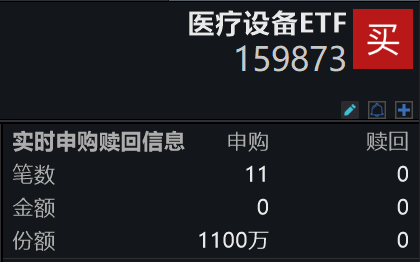
Group 1: ETF Performance - As of February 2, 2026, the Medical Equipment ETF (159873) had a turnover of 5.82% with a transaction volume of 14.6087 million yuan, while the tracked index, the CSI All Share Healthcare Equipment and Services Index (H30178), fell by 1.44% [1] - The Medical Equipment ETF (159873) saw a net subscription of 11 million shares during the trading session [2] - The Biopharmaceutical ETF (159859) had a turnover of 3.87% with a transaction volume of 142 million yuan, and the corresponding index, the National Biopharmaceutical Index (399441), decreased by 2.18% [2] Group 2: Fund Flows - The Medical Equipment ETF (159873) experienced a net inflow of 4.2585 million yuan, with a total of 22.8076 million yuan net inflow over the last five trading days [2] - The Biopharmaceutical ETF (159859) achieved a new high in scale at 3.705 billion yuan and a new high in shares at 9.396 billion shares as of January 30 [3] - The Biopharmaceutical ETF (159859) has seen continuous net inflows over the past ten days, totaling 425 million yuan [3] Group 3: Sector Insights - The Medical Equipment ETF (159873) has a high content of brain-computer interface technology, accounting for over 17%, indicating strong technological attributes [3] - The overall industry landscape for medical devices is improving, with leading companies showing performance recovery in Q3, suggesting potential for future capital inflows [6] - The innovative drug sector is expected to see a recovery phase, with a focus on domestic innovation and increased global participation, indicating a positive outlook for investment opportunities [7]
华为联合智慧病理一体机,AI医疗加速实际应用
Xuan Gu Bao· 2026-02-02 00:21
Group 1 - Huawei launched the "Industry AI Dream Factory" smart medical area and the RuiPath smart pathology integration machine in collaboration with Ruijin Hospital at the Medical AI Collaborative Innovation Forum on February 1 [1] - The global healthcare system is facing unprecedented structural contradictions, with an aging population increasing demand for medical services while there is a severe shortage of medical resources, with WHO predicting a shortage of millions of healthcare workers by 2030 [1] - New generation information technologies such as 5G, IoT, cloud computing, big data, and artificial intelligence are becoming essential to alleviate the supply-demand imbalance in healthcare [1] Group 2 - AI in healthcare is transitioning from concept to practical application, with medical information companies embedding AI capabilities into case management and infection control [1] - According to Toubao Research Institute, China's AI healthcare market is expected to reach 97.6 billion yuan by 2028, with deep integration of AI in areas such as consultation dialogue, health assessment, and structured medical report generation [1] - Chuangyi Huikang signed a "Smart Medical Industry Integration Cooperation Agreement" with Huawei, successfully piloting its AI product MedCopilot and BsoftGPT platform at Ruian People's Hospital [2] - RunDa Medical, in collaboration with West China Hospital and Huawei, launched the RuiBin 2, which includes the "LunJie" intelligent agent [3]