RuiPath智慧病理一体机

Search documents
华为,AI医疗又一重磅产品!
Xin Lang Cai Jing· 2026-02-03 12:52
Core Insights - Huawei Cloud has launched its first specialized area in the "Industry AI Dream Factory" focusing on smart healthcare, providing a collaborative AI pathology solution for grassroots hospitals and doctors [1][5] - The RuiPath Smart Pathology Integrated Machine, co-developed with Ruijin Hospital, features pre-integrated pathology models and AI software, aimed at enhancing diagnostic capabilities [1][3] Group 1: Strategic Developments - This launch marks the first substantial implementation of Huawei Cloud's "Industry AI Dream Factory" strategy in the healthcare sector, previously explored in areas like autonomous driving and embodied intelligence [3][7] - Huawei's 2026 New Year address highlighted the company's commitment to deepening its industry engagement, particularly in medical pathology and other sectors [3][7] Group 2: Technological Advancements - The RuiPath Smart Pathology Integrated Machine utilizes the RuiPath pathology model, significantly reducing data processing and model training time to just two months, requiring only 16 computing cards [3][7] - The RuiPath model covers 90% of cancer types in China, including lung, breast, colorectal, and gastric cancers, and can assist in diagnosing various rare diseases [3][7] Group 3: Collaborative Efforts - Huawei has established a medical health division, focusing on three main areas: AI imaging, medical large models, and agents, collaborating with leading companies to enhance imaging correction and pathology analysis [3][7] - Partnerships with companies like RunDa Medical and iFlytek aim to develop AI medical models and intelligent medical assistants, supporting features like voice medical records and smart ward rounds [4][8] Group 4: Future Plans - Huawei Cloud plans to collaborate with industry leaders to create 30 specialized models, 10 high-quality industry datasets, and 50 ecological applications and tools in the first half of this year, positioning the smart healthcare area as a premier platform for AI innovation in the medical field [5][9]


ETF盘中资讯|AI医疗概念异动,方舟健客盘初狂飙20%!港股通医疗ETF华宝(159137)冲上2%终结三连跌,医疗ETF巨量吸金
Sou Hu Cai Jing· 2026-02-03 02:41
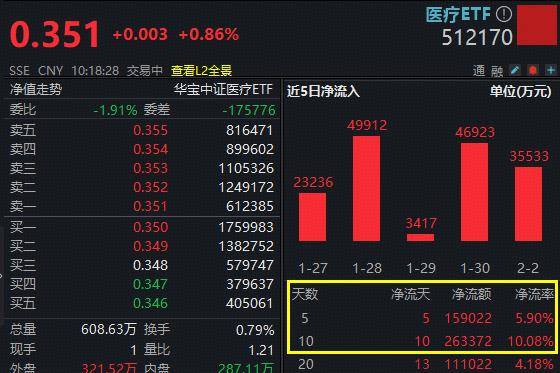
Group 1 - The core viewpoint of the news is that the healthcare sector, particularly in A-shares and Hong Kong stocks, is experiencing significant activity and investment interest, driven by AI healthcare and CXO concepts [1][5][6] - The largest healthcare ETF in A-shares (512170) saw a net subscription of 2.633 billion yuan over the past 10 days, indicating strong investor interest [1][6] - The Hong Kong healthcare ETF (159137) rose by 2%, ending a three-day decline, with notable performances from stocks like Ark Health and BeiGene, which increased by over 20% and 4% respectively [1][4] Group 2 - Ark Health raised approximately 144 million HKD through a placement of about 45.181 million shares, with 90% of the funds allocated to accelerate the development of an AI-driven chronic disease management platform [3] - Huawei Cloud launched a dedicated "Smart Healthcare" section aimed at grassroots hospitals, providing AI pathology solutions, in collaboration with Ruijin Hospital [4] - By 2026, AI applications are expected to evolve from usable to highly effective, with a focus on diversified business models in sectors like healthcare, finance, and education [5]
AI医疗概念异动,方舟健客盘初狂飙20%!港股通医疗ETF华宝(159137)冲上2%终结三连跌,医疗ETF巨量吸金
Xin Lang Cai Jing· 2026-02-03 02:35
Core Viewpoint - The healthcare sector in A-shares is experiencing a significant rally, driven by AI healthcare and CXO concepts, with notable inflows into medical ETFs [1][8]. Group 1: ETF Performance - The largest medical ETF in A-shares (512170) saw an intraday increase of over 1%, recovering its annual line, with a net subscription of 2.633 billion yuan over the past 10 days as of February 2 [1][8]. - The medical ETF fund size reached 27 billion yuan, making it the largest in the market for medical ETFs [6][13]. Group 2: Individual Stock Movements - The Hong Kong medical ETF (159137) surged by 2%, ending a three-day decline, with Ark Health rising over 20% and BeiGene increasing by more than 4% [10]. - Ark Health raised approximately 144 million HKD through a placement of about 45.181 million shares, with 90% of the funds allocated to accelerate the development of an AI-driven chronic disease management platform [3][10]. Group 3: Industry Developments - Huawei Cloud launched the first section of its industry AI "Dream Factory" focused on smart healthcare, providing a collaborative pathology solution for grassroots hospitals [5][12]. - Institutions predict that by 2026, AI applications will transition from usable to highly effective, becoming a core theme in the AI industry, particularly in healthcare, finance, and education sectors [6][12].

华为云发布“行业AI梦工厂”智慧医疗专区!规模最大的医疗设备ETF(159873)获资金逆势布局,实时净申购1100万份
Sou Hu Cai Jing· 2026-02-02 07:01
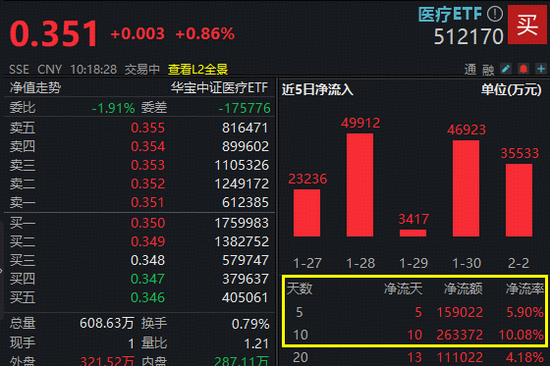
Group 1: ETF Performance - As of February 2, 2026, the Medical Equipment ETF (159873) had a turnover of 5.82% with a transaction volume of 14.6087 million yuan, while the tracked index, the CSI All Share Healthcare Equipment and Services Index (H30178), fell by 1.44% [1] - The Medical Equipment ETF (159873) saw a net subscription of 11 million shares during the trading session [2] - The Biopharmaceutical ETF (159859) had a turnover of 3.87% with a transaction volume of 142 million yuan, and the corresponding index, the National Biopharmaceutical Index (399441), decreased by 2.18% [2] Group 2: Fund Flows - The Medical Equipment ETF (159873) experienced a net inflow of 4.2585 million yuan, with a total of 22.8076 million yuan net inflow over the last five trading days [2] - The Biopharmaceutical ETF (159859) achieved a new high in scale at 3.705 billion yuan and a new high in shares at 9.396 billion shares as of January 30 [3] - The Biopharmaceutical ETF (159859) has seen continuous net inflows over the past ten days, totaling 425 million yuan [3] Group 3: Sector Insights - The Medical Equipment ETF (159873) has a high content of brain-computer interface technology, accounting for over 17%, indicating strong technological attributes [3] - The overall industry landscape for medical devices is improving, with leading companies showing performance recovery in Q3, suggesting potential for future capital inflows [6] - The innovative drug sector is expected to see a recovery phase, with a focus on domestic innovation and increased global participation, indicating a positive outlook for investment opportunities [7]
科创100ETF华夏(588800)盘中成交1.74亿,AI加速赋能医疗产业
Xin Lang Cai Jing· 2026-02-02 03:13
Group 1 - The core viewpoint is that AI is accelerating the transformation of the healthcare industry, with significant growth potential in companies like Huaxi Biological, which expects a net profit increase of 54.93%-83.63% by 2025 [1] - Huaxi Biological's stock led the gains in the Sci-Tech Innovation Board, rising by 7.70%, indicating strong market interest and confidence in its future performance [1] - The Sci-Tech 100 ETF has shown significant liquidity and growth, with a recent trading volume of 1.74 billion yuan and a 1.32 billion yuan increase in scale over the past two weeks [1] Group 2 - According to Everbright Securities, AI has become a core productivity driver in the new infrastructure of healthcare, with AI drug development and AI medical imaging being the most mature sectors [2] - The future competition in the AI healthcare space will focus on exclusive high-quality private data and the ability to create closed-loop business scenarios [2] - The Sci-Tech 100 ETF closely tracks the Sci-Tech 100 Index, which focuses on high-growth sectors including semiconductors, pharmaceuticals, and new energy [2]

如何加速医疗AI大模型进入临床诊疗流程?
Guo Ji Jin Rong Bao· 2026-02-02 02:00
Core Insights - China faces a significant cancer challenge, with approximately 4.82 million new cancer cases reported in 2022, the highest globally, and 2.57 million deaths, accounting for over a quarter of global cancer deaths [1] - The launch of Huawei Cloud's "Smart Medical Zone" aims to leverage AI technology to enhance medical diagnostics, particularly in pathology, and improve access to quality healthcare resources in underserved areas [1][3] Group 1: Cancer Statistics and Challenges - In 2022, China reported around 4.82 million new cancer cases, translating to about 9.2 diagnoses per minute, and 2.57 million cancer-related deaths [1] - The country faces challenges such as a shortage of pathologists, uneven distribution of medical resources, and inadequate initial diagnosis rates in grassroots hospitals [1] Group 2: Huawei Cloud's Smart Medical Zone - Huawei Cloud has launched a "Smart Medical Zone" as part of its "Industry AI Dream Factory" initiative, focusing on the healthcare sector to promote the widespread application of AI technology [1][3] - The Smart Medical Zone collaborates with Shanghai Ruijin Hospital to integrate AI and cloud computing with pathology diagnostics, enabling scalable diagnostic capabilities for grassroots medical institutions [3][9] Group 3: AI and Healthcare Transformation - The application of AI is expected to fundamentally transform traditional healthcare service models, making high-quality medical resources more efficiently utilized [4] - The Smart Medical Zone aims to address issues such as insufficient diagnostic capabilities in grassroots healthcare, data silos, and challenges in implementing AI solutions [7] Group 4: Implementation and Community Building - The Smart Medical Zone provides a collaborative platform for hospitals and healthcare professionals, offering tools for training and deploying AI pathology models without the need for expensive equipment [8] - Huawei Cloud plans to establish a national AI community for the healthcare sector, bringing together validated medical models, high-quality datasets, and intelligent applications to facilitate AI implementation [8] Group 5: Impact on Cancer Diagnosis - The initial focus of the Smart Medical Zone is on cancer pathology diagnosis, which is crucial for early screening and diagnosis of cancer cases in China [9] - AI-assisted diagnostics are expected to enhance the level of grassroots medical care and make quality healthcare services more accessible, effectively bringing "tertiary hospital diagnostics" closer to the public [9]
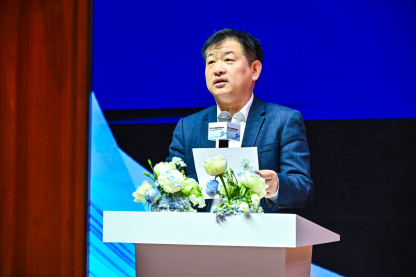
华为联合智慧病理一体机,AI医疗加速实际应用
Xuan Gu Bao· 2026-02-02 00:21
Group 1 - Huawei launched the "Industry AI Dream Factory" smart medical area and the RuiPath smart pathology integration machine in collaboration with Ruijin Hospital at the Medical AI Collaborative Innovation Forum on February 1 [1] - The global healthcare system is facing unprecedented structural contradictions, with an aging population increasing demand for medical services while there is a severe shortage of medical resources, with WHO predicting a shortage of millions of healthcare workers by 2030 [1] - New generation information technologies such as 5G, IoT, cloud computing, big data, and artificial intelligence are becoming essential to alleviate the supply-demand imbalance in healthcare [1] Group 2 - AI in healthcare is transitioning from concept to practical application, with medical information companies embedding AI capabilities into case management and infection control [1] - According to Toubao Research Institute, China's AI healthcare market is expected to reach 97.6 billion yuan by 2028, with deep integration of AI in areas such as consultation dialogue, health assessment, and structured medical report generation [1] - Chuangyi Huikang signed a "Smart Medical Industry Integration Cooperation Agreement" with Huawei, successfully piloting its AI product MedCopilot and BsoftGPT platform at Ruian People's Hospital [2] - RunDa Medical, in collaboration with West China Hospital and Huawei, launched the RuiBin 2, which includes the "LunJie" intelligent agent [3]
影响市场重大事件:美国FCC:SpaceX申请部署百万颗卫星,欲建轨道AI数据中心;美国宇航局开始进行载人绕月飞行前的关键测试;3D打印市场需求旺盛,头部企业积极扩产
Mei Ri Jing Ji Xin Wen· 2026-02-01 23:46
Group 1: NASA and Space Exploration - NASA has begun a critical two-day countdown simulation for its new lunar rocket, which will determine when four astronauts will embark on a lunar mission, marking the first human flight to the Moon since 1972 [1] Group 2: SpaceX and Satellite Deployment - The FCC has revealed that SpaceX is applying to launch and operate a constellation of up to 1 million satellites, designed to support advanced AI applications with unprecedented computational capabilities [2] Group 3: 3D Printing Market - The demand for 3D printing is increasing due to the recovery in the aerospace sector and growing consumer market needs, leading major companies to expand production capacity [3] Group 4: Transformer Market Growth - The domestic transformer market is expected to grow by over 20% year-on-year by 2025, driven by the surge in AI computing power and high-end product orders related to ultra-high voltage [4] - Orders for transformer factories in China are extending to 2027 due to the explosive growth of global AI computing centers, with the delivery cycle in the U.S. increasing from 50 weeks to 127 weeks [5] Group 5: Integrated Industry Base in China - A world-class integrated storage and computing industry base is set to be established in Optics Valley, with an investment of 8 billion yuan planned for completion by 2028 [7] Group 6: AI and 6G Integration - Beijing Economic-Technological Development Area is advancing the construction of a 6G+AI integration testing platform, aiming to enhance collaboration between cutting-edge technologies and artificial intelligence [8] Group 7: Shipbuilding Industry Performance - China's shipbuilding industry continues to lead globally, with a completion volume of 53.69 million deadweight tons in 2025, a year-on-year increase of 11.4%, and holding 56.1% of the global market share [9] Group 8: Huawei's Healthcare Solutions - Huawei has launched its first cloud-collaborative smart pathology solution for grassroots hospitals, integrating AI capabilities to assist doctors in pathology inference [10]
华为云CEO周跃峰:以场景驱动创新,让医疗AI真正普惠
Huan Qiu Wang· 2026-02-01 14:14
Core Viewpoint - Huawei emphasizes the transformative potential of AI in reshaping traditional medical service models, aiming to enhance the efficient utilization of scarce quality medical resources in China [1]. Group 1: Strategic Initiatives - Huawei Cloud has launched the "Industry AI Dream Factory" smart medical section and the RuiPath smart pathology integrated machine, marking a significant step in the practical application of medical AI [1][5]. - The company has served over 1,800 tertiary hospitals across China, building a solid understanding and practical experience in the healthcare sector [5]. Group 2: Technological Framework - The RuiPath smart pathology integrated machine utilizes a "cloud-edge-end" collaborative architecture, enabling advanced pathology capabilities from top hospitals to be accessible at the grassroots level, thus lowering the barriers for AI pathology technology adoption [5]. - Huawei's smart medical section integrates clinical experiences from top medical institutions with its expertise in ICT, cloud computing, and AI, creating an end-to-end medical AI support system covering "scenarios-models-platforms-communities" [6]. Group 3: Collaborative Ecosystem - The development of medical AI is presented as a collective effort requiring participation from various stakeholders, including medical institutions, tech companies, research units, and developers [7]. - Huawei aims to simplify medical AI innovation, ensuring that every hospital, doctor, and patient can benefit from these advancements [7].
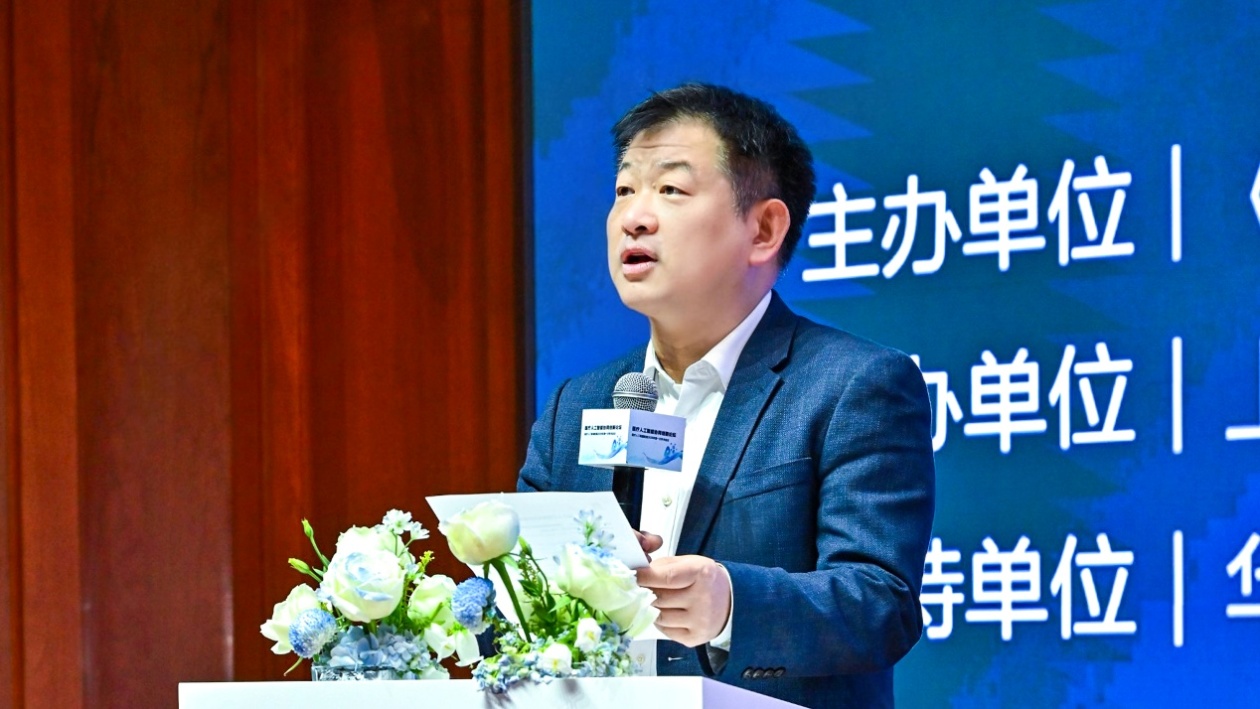
科技周报|阿里平头哥上线自研AI芯片;亚马逊开启新一轮裁员
Di Yi Cai Jing· 2026-02-01 04:03
Group 1 - Alibaba's AI triangle, consisting of Tongyi Lab, Alibaba Cloud, and Pingtouge, has officially emerged with the launch of the self-developed AI chip "Zhenwu 810E" [2] - The "Zhenwu" PPU features a 96G HBM2e memory and an inter-chip bandwidth of 700 GB/s, suitable for AI training, inference, and autonomous driving [2] - The launch of the "Zhenwu" chip enhances Pingtouge's influence in the chip sector, indicating a potential for independent development and market validation [2] Group 2 - Amazon has initiated a new round of layoffs affecting 16,000 positions, providing transition support for employees unable to find new roles [3] - The trend indicates that AI is replacing certain jobs, with Amazon's CEO noting that the company will require fewer employees for some tasks while needing more for others due to AI advancements [3] Group 3 - Tencent has launched a cash red envelope campaign worth 1 billion yuan during the Spring Festival, reminiscent of its previous successful marketing strategy [6][7] - The campaign aims to enhance user engagement and expand the user base for WeChat payment services [7] Group 4 - Four robotics companies have partnered with the Central Broadcasting Television to participate in the 2026 Spring Festival Gala, marking a shift towards commercial applications of robotics [8] - This collaboration reflects the industry's transition from experimental technology to commercial viability [8] Group 5 - The National Press and Publication Administration has approved 182 game licenses in January 2026, including 177 domestic and 5 imported games, indicating a steady approval pace [9] - In 2025, a total of 1,771 game licenses were issued, marking a 20% increase from 2024, with a significant portion being domestic games [9] Group 6 - Huawei has announced a collaboration with Ruijin Hospital to launch the RuiPath smart pathology integrated machine, aimed at enhancing diagnostic capabilities in grassroots hospitals [10] - The initiative highlights the accelerating adoption of AI-assisted diagnostics in the healthcare sector [10] Group 7 - Qingcheng Jizhi and Huqing Puzhi have released an industry analysis report on large model API services, indicating that DeepSeek and Qwen series models dominate the market [11] - The report emphasizes the shift in AI infrastructure focus from model training to efficient and stable usage in real business applications [11] Group 8 - Tuo Zhu Technology has reported annual revenue exceeding 10 billion yuan within five years of its establishment, reflecting rapid growth in the consumer-grade 3D printing market [12] - The global consumer-grade 3D printing market is projected to grow significantly, with increasing competition among manufacturers as the technology becomes more accessible [12]