睿宾2

Search documents
华为联合智慧病理一体机,AI医疗加速实际应用
Xuan Gu Bao· 2026-02-02 00:21
Group 1 - Huawei launched the "Industry AI Dream Factory" smart medical area and the RuiPath smart pathology integration machine in collaboration with Ruijin Hospital at the Medical AI Collaborative Innovation Forum on February 1 [1] - The global healthcare system is facing unprecedented structural contradictions, with an aging population increasing demand for medical services while there is a severe shortage of medical resources, with WHO predicting a shortage of millions of healthcare workers by 2030 [1] - New generation information technologies such as 5G, IoT, cloud computing, big data, and artificial intelligence are becoming essential to alleviate the supply-demand imbalance in healthcare [1] Group 2 - AI in healthcare is transitioning from concept to practical application, with medical information companies embedding AI capabilities into case management and infection control [1] - According to Toubao Research Institute, China's AI healthcare market is expected to reach 97.6 billion yuan by 2028, with deep integration of AI in areas such as consultation dialogue, health assessment, and structured medical report generation [1] - Chuangyi Huikang signed a "Smart Medical Industry Integration Cooperation Agreement" with Huawei, successfully piloting its AI product MedCopilot and BsoftGPT platform at Ruian People's Hospital [2] - RunDa Medical, in collaboration with West China Hospital and Huawei, launched the RuiBin 2, which includes the "LunJie" intelligent agent [3]
万亿级AI医疗市场,科技巨头接连出手(附概念股)
Zheng Quan Shi Bao Wang· 2026-01-09 01:03
Group 1 - Major tech companies are increasingly focusing on the AI healthcare sector, with OpenAI launching the ChatGPT Health feature to address health-related inquiries and connect with smart devices, aiming to create a safer environment for health discussions [2] - Alibaba's Ant Group has also made significant strides in AI healthcare, with its AI health assistant "Antifor" connecting to 5,000 hospitals and 300,000 real doctors for online consultations, achieving 30 million monthly active users shortly after launch [2] - The AI healthcare market is projected to grow significantly, with a global market size expected to reach approximately $50.56 billion by 2033, reflecting a compound annual growth rate (CAGR) of 38.8% from $2.665 billion in 2024 [4] Group 2 - The Chinese government is actively promoting AI healthcare applications, with policies aimed at establishing over 100 typical application scenarios by 2027 and ensuring widespread adoption of AI products in healthcare institutions by 2027 [3] - Companies like Zhongke Information and Anbiping are receiving attention from institutional investors, with Anbiping's AI-assisted diagnostic tools currently in the registration process, indicating a growing market for AI applications in healthcare [6][7] - Recent data shows that 12 AI healthcare-related stocks have been under institutional research, with companies like Lianying Medical and Kailing Medical seeing significant interest and investment [5][7] Group 3 - The commercial aerospace sector is facing challenges, as evidenced by LeKai Film's announcement of a potential annual loss despite a recent stock price surge driven by speculation in the commercial aerospace market [9] - LeKai Film reported a revenue of 960 million yuan and a net loss of 86 million yuan for the first three quarters of 2025, highlighting the risks associated with speculative trading in the commercial aerospace sector [9]

两连板后,商业航天概念股,突曝利空
Zheng Quan Shi Bao· 2026-01-09 00:30
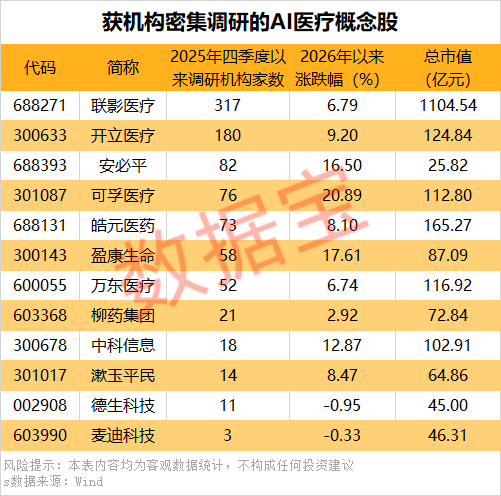
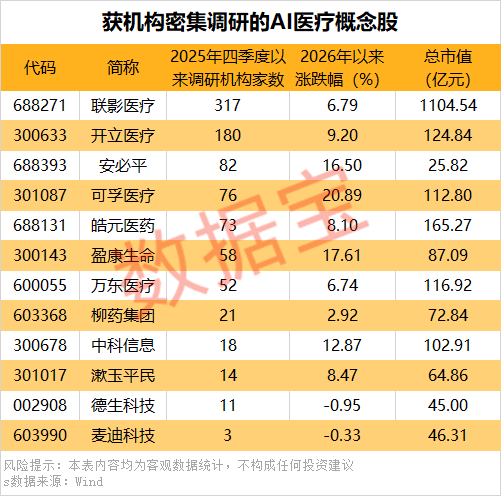
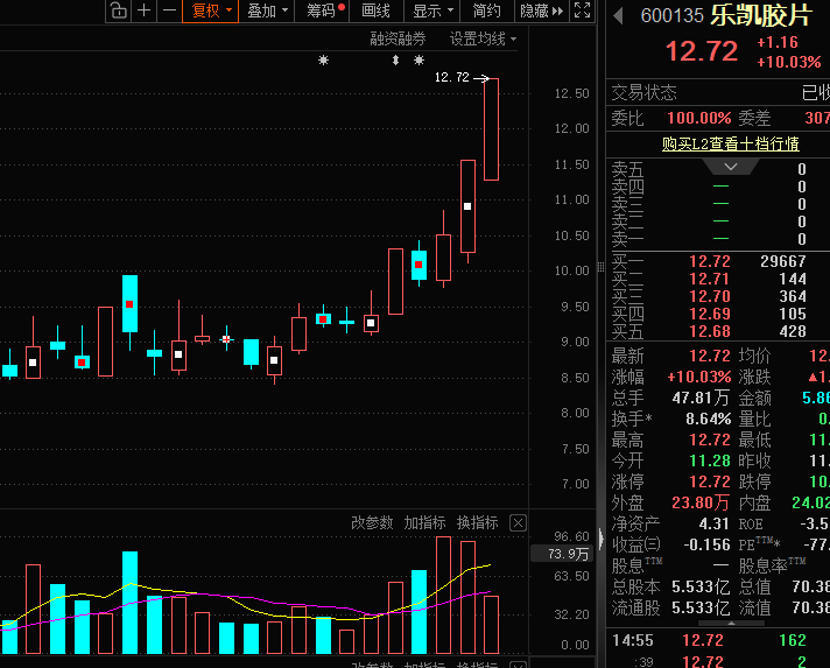
Group 1: Company Performance - LeKai Film reported a revenue of 960 million yuan and a net profit of -86 million yuan for the first three quarters of 2025, indicating a potential annual loss [1] - The company stated that its main business remains unchanged and that production activities are operating normally without significant external changes [1] - LeKai Film's stock has seen a significant increase of over 35% since December 31, 2025, primarily driven by speculation in the commercial aerospace sector [1] Group 2: Industry Developments - OpenAI launched the ChatGPT Health feature to address health-related inquiries, linking smart devices and planning diet and exercise, similar to Alibaba's Ant Aifuku [4][5] - The global AI healthcare market is projected to grow from approximately 26.65 billion USD in 2024 to about 505.59 billion USD by 2033, with a compound annual growth rate of 38.8% [8] - AI healthcare applications are expected to accelerate due to ongoing policy support and technological advancements, with significant investment opportunities emerging in the sector [7] Group 3: Institutional Interest - Over 30 AI healthcare-related stocks have been identified, with several companies actively engaging with investors regarding their AI healthcare strategies [9] - Notable companies like Lingying Medical and Kailing Medical have received substantial institutional attention, with Lingying Medical being surveyed by 317 institutions [12] - Financing activities have increased for companies such as Haoyuan Pharmaceutical and Shuyupingmin, with over 50 million yuan in additional funding since the fourth quarter of 2025 [12]
万亿级AI医疗市场 科技巨头接连出手 获机构密集调研的概念股出炉
Zheng Quan Shi Bao Wang· 2026-01-08 23:48
Group 1 - OpenAI launched the ChatGPT Health feature on January 8, which aims to provide health-related answers, connect smart devices, and plan diet and exercise, similar to Alibaba's "Ant Aifu" [1] - The ChatGPT Health feature is expected to be rolled out to users in the coming weeks, as over 230 million health-related inquiries are made weekly on the platform [1] - Ant Group's "Ant Aifu" has already connected with 5,000 hospitals and 300,000 real doctors for online consultations, achieving 30 million monthly active users and over 10 million daily inquiries within a month of its launch [1] Group 2 - AI healthcare is gaining significant policy attention, with plans to create over 100 typical application scenarios by 2027 as outlined in the "Implementation Plan for the Digital Transformation of the Pharmaceutical Industry" [2] - The "Implementation Opinions on Promoting and Regulating the Application of 'Artificial Intelligence + Healthcare'" set development goals for 2027 and 2030, focusing on key applications, safety regulation, and organizational support [2] - Beijing's health commission aims for widespread AI product application in healthcare institutions by 2027 to ensure safety and increase effective supply [2] Group 3 - According to Grand View Research, the global AI healthcare market is projected to reach approximately $26.65 billion (about 186.1 billion yuan) in 2024 and is expected to soar to around $505.59 billion (about 3.5 trillion yuan) by 2033, with a compound annual growth rate of 38.8% [3] Group 4 - Over 30 AI healthcare-related concept stocks have been identified, with companies like Chuangye Huikang and Desheng Technology actively engaging with investors about their AI healthcare strategies [4] - Companies are integrating AI into healthcare services, with Chuangye Huikang promoting its "Huikang Cloud Hub" and Desheng Technology implementing "seamless payment" solutions in major hospitals [4] Group 5 - Institutions are closely monitoring innovations in the "AI + healthcare" sector, with companies like Runda Medical and Yuyupingmin launching AI-driven tools for clinical support [5] - A total of 12 concept stocks have received institutional research attention since Q4 2025, with significant interest in companies like Union Medical and Kairui Medical [5][6] - Kairui Medical plans to launch three new AI-integrated ventilators and masks in 2026, which will analyze sleep states and identify sleep events accurately [5]