袋鼠杰克婴童植萃舒鼻膏

Search documents
袋鼠杰克舒鼻膏调查追踪:监管部门已立案,直播间仍暗示功效
Bei Ke Cai Jing· 2026-01-06 10:13
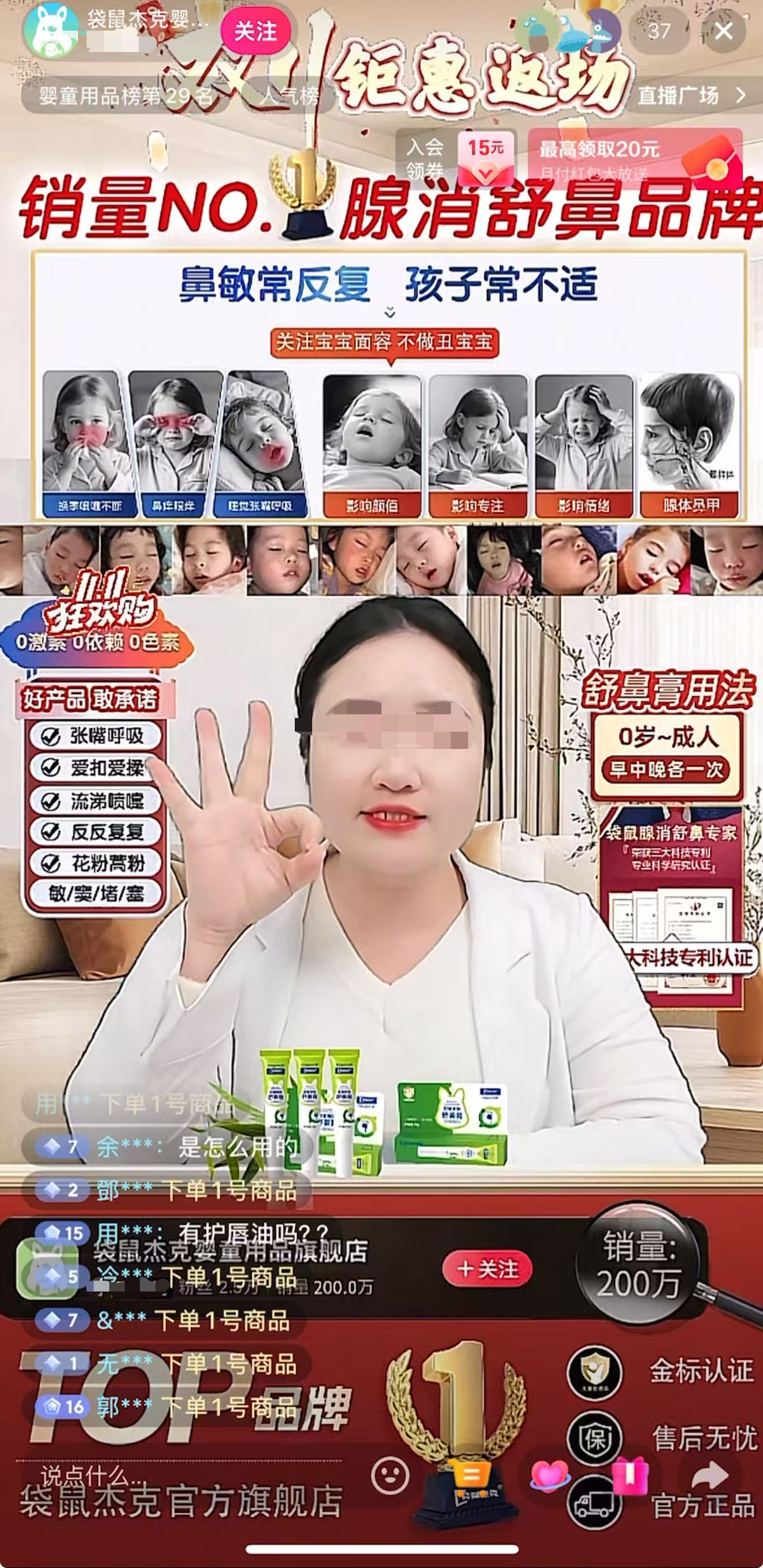
Core Viewpoint - The investigation reveals that the product "Kangaroo Jack Baby Plant Extract Nasal Balm" is being falsely marketed as a solution for adenoid facial features and various nasal discomforts in children, leading to regulatory scrutiny [1][2]. Regulatory Actions - The Shenzhen Market Supervision Administration has initiated an investigation into the misleading advertising practices of the "Kangaroo Jack Baby Products Flagship Store" [4]. - The live stream has removed content suggesting improvements to adenoid facial features, but continues to imply benefits for nasal discomfort and allergic rhinitis [5]. Product Misrepresentation - The product is classified as a children's cosmetic, and its claimed effects do not align with its registered information, which states its purpose is for moisturizing and soothing the facial area, not for nasal issues [3]. - Legal experts indicate that the promotion of the product as having medical benefits violates multiple regulations, including the Cosmetics Supervision and Administration Regulations and the Advertising Law [3]. Advertising Practices - The live stream previously featured images and phrases that reinforced the product's supposed effectiveness for adenoid facial features, but has since altered its messaging while still hinting at benefits for nasal discomfort [2][5]. - The product's packaging and promotional materials have been criticized for misleading consumers regarding its intended use and benefits, particularly in relation to its application in the nasal cavity [3][9]. Consumer Misleading Claims - The term "baby gold standard filing" used in promotions is misleading, as it suggests a special certification that does not exist; the "small gold shield" merely indicates the product is a children's cosmetic [10]. - The National Medical Products Administration has clarified that the "small gold shield" is not a quality certification but a distinguishing mark for children's cosmetics [10].

别被产品的“专利认证”忽悠丨2025消费问题高发区③
Bei Ke Cai Jing· 2025-12-29 03:09
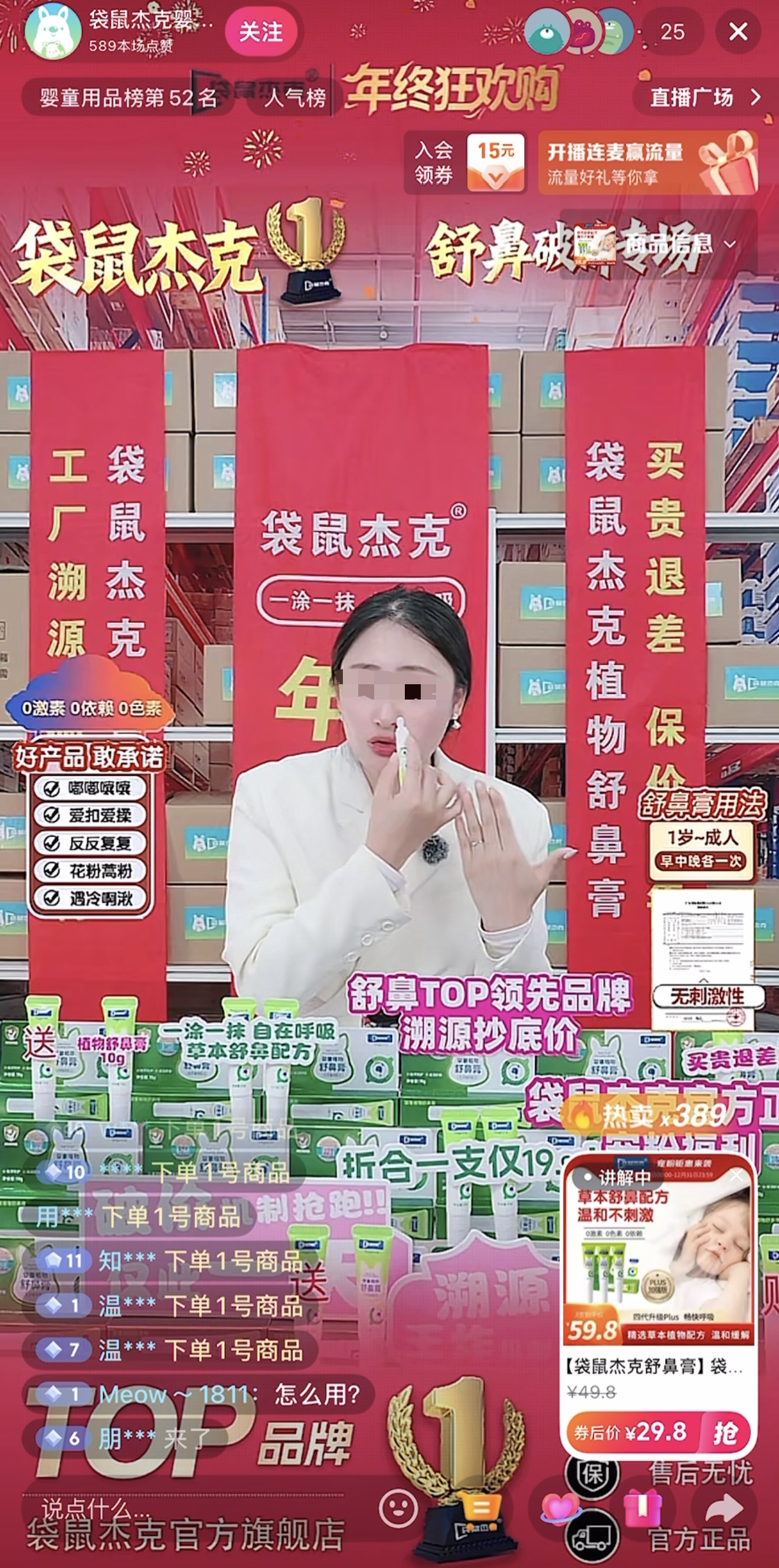
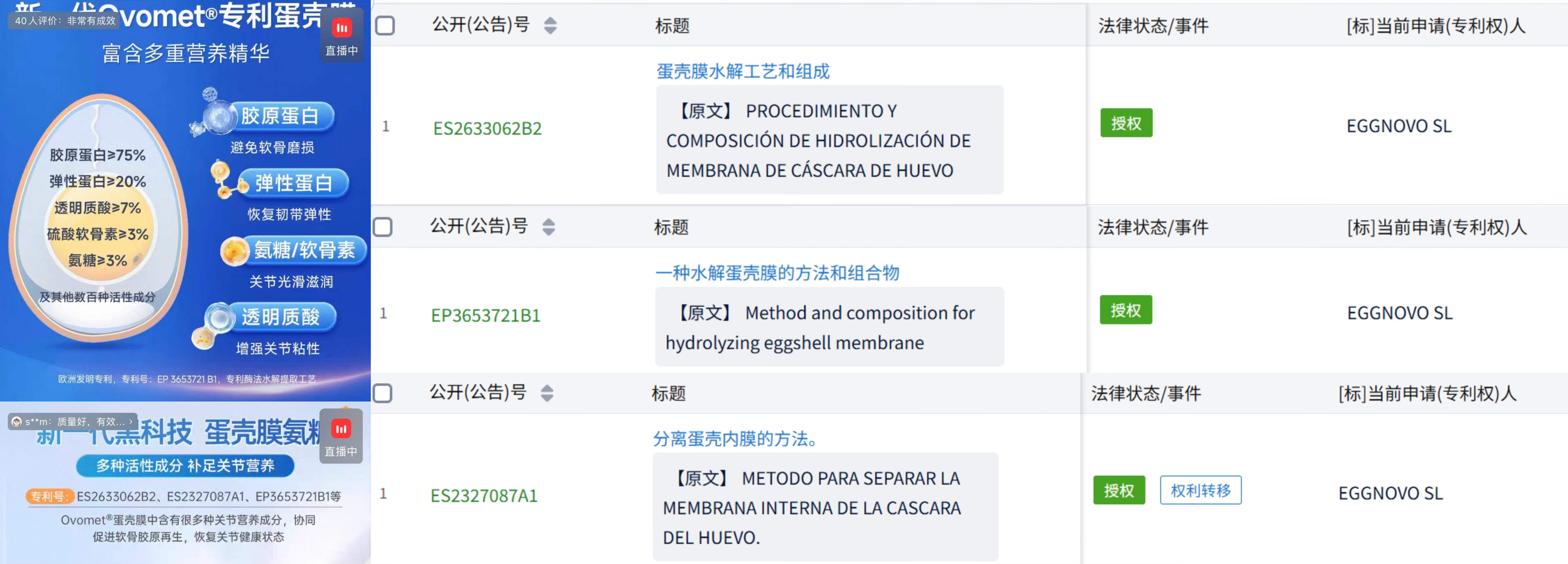
Core Viewpoint - The article highlights the misuse of "patent certification" by some merchants as a marketing tool, misleading consumers about the efficacy and quality of products, particularly in categories like children's lutein and glucosamine products [1][12]. Group 1: Misleading Patent Claims - Some merchants are using patents unrelated to the claimed benefits of their products to mislead consumers, creating a false sense of security regarding product efficacy [1][12]. - An investigation revealed that certain children's lutein products claimed to have patents that do not correlate with their advertised near-sightedness prevention benefits [2][12]. - Specific examples include NaturElan's lutein gummies listing patents related to lutein composition and visual function improvement, which do not support the product's claims [2]. Group 2: Product-Specific Investigations - GreenLife's children's lutein eye protection tablets have patents related to glare prevention and treatment methods for eye diseases, but these do not directly support the product's marketed benefits [3]. - Brieyeye's DHA lutein gummies claimed to have patents for treating eye diseases, but the patents primarily focus on antioxidant compositions, not directly on the product's advertised effects [3]. - Similar misleading claims were found in products like "袋鼠杰克婴童植萃舒鼻膏," where the patents cited were related to manufacturing processes rather than the claimed benefits [4]. Group 3: Legal and Regulatory Insights - Legal experts indicate that using unrelated patents as endorsements for product efficacy may constitute misleading commercial advertising, violating China's Anti-Unfair Competition Law [12]. - The article emphasizes the importance of verifying patent authenticity and relevance to product claims, advising consumers to check patent details on official platforms [14]. - Instances of merchants falsely claiming patents or using expired patents have been documented, leading to legal actions and penalties [13][14].
宣称可改善腺样体面容,袋鼠杰克舒鼻膏何以变成“消腺神器”?
Bei Ke Cai Jing· 2025-11-28 07:23
Core Viewpoint - The product "Kangaroo Jack Baby Plant Extract Nasal Cream" is marketed as a solution for nasal discomfort and improving adenoid facial features, but its actual registered efficacy is limited to moisturizing and soothing the skin, raising concerns about misleading advertising and potential legal violations [2][10][12]. Group 1: Product Claims and Misrepresentation - The product is presented in live streams as a remedy for adenoid facial features and nasal discomfort, despite being classified as a cosmetic with no medical claims [2][3][11]. - The live stream emphasizes phrases like "No.1 nasal comfort brand" and uses images of children with adenoid facial features to promote the product [4][7]. - The product's actual registration indicates it is intended for facial use only, with no mention of nasal application, contradicting the promotional claims [12][19]. Group 2: Legal and Regulatory Concerns - The marketing practices suggest the product can treat conditions like adenoid hypertrophy and allergic rhinitis, which may violate multiple legal regulations regarding cosmetic advertising [10][31]. - The company falsely claims a 35-year history as a brand, while it was actually established only 6 years ago, which constitutes false advertising [29][31]. - The product's claims of having "three major technology patents" are misleading, as they pertain to production processes rather than therapeutic benefits [24][25]. Group 3: Consumer Rights and Misleading Information - Consumers are entitled to accurate information about the products they purchase, and misleading claims can infringe on their rights [17]. - The use of the "small gold shield" certification is misrepresented as a quality assurance mark, which could mislead consumers into believing the product has undergone special safety evaluations [16][17]. - The inconsistency in product usage recommendations between live stream hosts and customer service raises further concerns about consumer protection and accurate information dissemination [10][14].