
袜品

Search documents
南极人跑了,雅鹿们还在狂欢:起底5毛一个的吊牌生意
Xin Lang Cai Jing· 2025-12-27 21:27
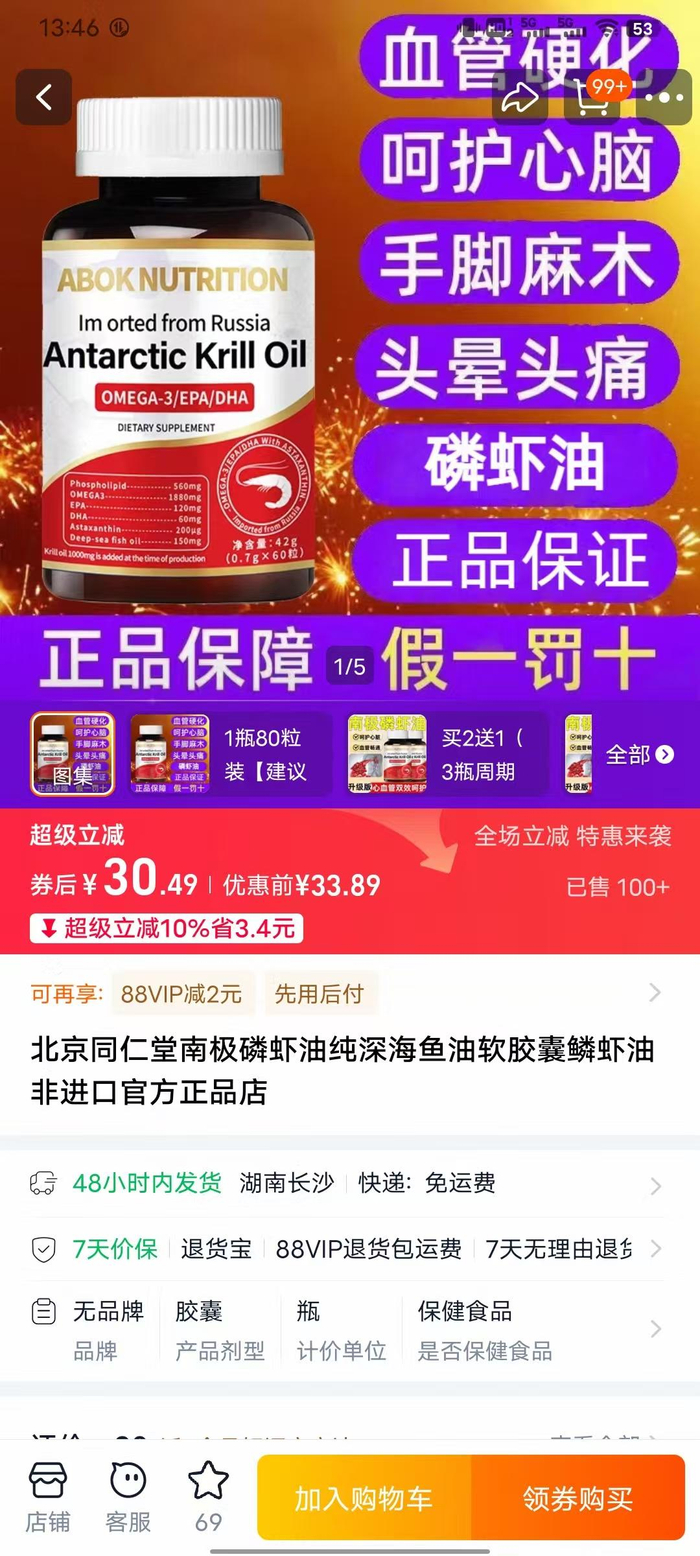
Core Viewpoint - The article highlights the issue of brand dilution and consumer confusion caused by the "label-selling" business model, particularly in the case of products claiming to be from "Beijing Tongrentang" that do not meet quality standards [1][6]. Group 1: Brand Misrepresentation - A product labeled as "Beijing Tongrentang 99% high-purity Antarctic krill oil" was found to have a phospholipid content of zero, despite claims of 43% [1]. - The involved manufacturer, Beijing Tongrentang (Sichuan) Health Pharmaceutical Co., Ltd., was ordered to remove the product from sale, yet it remained available on some e-commerce platforms [1][5]. - The company has warned consumers to recognize the authentic "Double Dragon Trademark" and noted that unauthorized use of their trademarks constitutes infringement [5]. Group 2: Trademark Confusion - Multiple similar trademarks, such as "Neiting Shangyong" and "Zhenhuang," have been registered by affiliated companies, leading to consumer confusion regarding the authenticity of products [5][6]. - The complexity of brand identification on e-commerce platforms results in a mix of products from different affiliated companies, which can mislead consumers about the quality and origin of the products [6]. Group 3: Business Model Shift - The brand "Nanji Ren" transitioned from a manufacturer to a brand licensing company in 2008, capitalizing on the e-commerce boom [7]. - In 2023, "Nanji Ren" announced a shift away from the "label-selling" model, ceasing to charge licensing fees and focusing on self-developed products [7]. - Despite "Nanji Ren" exiting the label-selling business, other brands like "Yalu" continue to thrive in this model, with low barriers to entry for obtaining brand licenses [8]. Group 4: Consumer Complaints and Quality Issues - The "label-only" business model has led to a surge in consumer complaints, with over 2,400 complaints related to the "Yalu" brand alone, citing issues like counterfeit products and poor workmanship [9]. - "Nanji Ren" has also faced significant consumer complaints, indicating a disconnect between brand identity and product quality [11]. Group 5: Regulatory and Legal Implications - Legal experts emphasize that trademark owners have a responsibility to supervise the quality of products bearing their trademarks, and failure to do so can lead to liability for damages caused by defective products [12]. - The lack of stringent quality checks on e-commerce platforms exacerbates the issue, as they primarily focus on verifying seller qualifications rather than product quality [12].


辽宁纺织服装时尚优品推广活动启幕
Liao Ning Ri Bao· 2025-10-24 01:01
Core Viewpoint - The Liaoning Textile and Apparel Fashion Promotion Event aims to enhance communication and cooperation between enterprises, distributors, retailers, and consumers, promoting the advantages and quality products of the Liaoning textile and apparel industry [1] Group 1: Event Overview - The event lasts for three days and is held at the Xinhua Tianxi Center in Shenyang [1] - Activities include enterprise matchmaking and centralized exhibitions, featuring around 50 companies showcasing products such as outdoor sportswear, tussah silk, and "Guochao" fashion [1] - The theme of the event is "Silk Road Liaoyun: Weaving the Future," coinciding with the International Silk Consumption Season, which includes fashion shows, intangible cultural heritage performances, and industry promotion meetings [1] Group 2: Industry Significance - Liaoning is a key textile and apparel industry base in China, recognized for 11 national-level characteristic cities and towns, including "China's Swimwear City (Xingcheng)" and "China's Cotton Clothing Town (Xiliu)" [1] - The region is known for its distinctive products such as swimwear, socks, custom clothing, outdoor sportswear, and tussah silk, which are well-regarded both domestically and internationally [1] Group 3: Marketing and Promotion - To enhance the influence of the "Fashion Liaoning" brand, the event utilizes various platforms including Douyin, video accounts, and online live streaming, with network anchors visiting enterprises for live broadcasts [1] - The strategy aims to achieve a synchronized resonance between online and offline marketing efforts [1]