觅小卫

Search documents
锁仓再加码!Mirxes创始人+基石集体陪跑,解码背后价值与增长底气
Ge Long Hui· 2026-02-11 11:29
Core Viewpoint - Mirxes has announced a new voluntary lock-up plan initiated by its co-founders and cornerstone investors, signaling a strong commitment to the company's long-term growth and value, rather than merely stabilizing the stock price in the short term [1][3][4] Group 1: Lock-Up Plan Significance - The recent lock-up announcement is viewed as a proactive endorsement of the company's value and market potential by its co-founders and cornerstone investors, rather than a passive measure to stabilize the stock [2][3] - The commitment includes a promise from co-founders not to sell any shares and a commitment from cornerstone investors to hold at least 80% of their shares for an additional 12 months [3][4] Group 2: Financial Perspective - Early investors lack immediate incentives to sell their shares due to the cost structure and potential returns, creating a significant barrier between the concepts of "unlocking" and "selling" [5][6] - C-round investors' holding cost is approximately 22.21 HKD per share, while D-round investors' cost is around 22.92 HKD per share, indicating limited profit margins at the current stock price of 24.00 HKD [6][7][8] Group 3: Long-Term Capital Support - The investor structure of Mirxes, which includes long-term capital from various institutional investors, provides a solid foundation for future growth [9][10] - Notable long-term investors include state-owned funds and specialized healthcare investment firms, which not only provide financial backing but also strategic support for commercialization and international expansion [10][11] Group 4: Conclusion - The lock-up plan, combined with the financial rationale of early investors and the backing of long-term capital, reinforces the confidence in Mirxes' future growth potential [12][13] - The company's core product, "Mi Xiao Wei," has received regulatory approval and is expanding into multiple cancer screening markets, further solidifying its position in the industry [13][14]
晶泰科技砸下重金入股Mirxes!解锁癌症早筛与精准治疗新可能
Xin Lang Cai Jing· 2026-02-04 06:17
Core Insights - JingTai Technology, a leader in AI pharmaceuticals, has announced a strategic investment in Mirxes, participating in a new share placement and establishing a joint venture in China and Singapore to launch a "Gastric Cancer Elimination Plan" [1][3] Group 1: Strategic Collaboration - The collaboration marks a significant shift in Mirxes' strategic blueprint, evolving from a leading early screening company to a potential ecosystem builder for "AI early screening + precision treatment" [3] - The partnership is structured in three phases: strategic anchoring, capital binding, and entity integration, each focusing on amplifying value [4] - The first phase involved a memorandum of understanding signed in December 2025, leveraging Mirxes' extensive clinical data to create an AI-enabled "integrated diagnosis and treatment" platform [4] - The second phase saw JingTai invest in Mirxes at a price above the IPO issuance, reinforcing their strategic partnership and aligning interests [5] Group 2: Value Reassessment - The collaboration will fundamentally reshape Mirxes' valuation logic across three dimensions: market transition, model upgrade, and ecological positioning [6] - Mirxes' core product, "Mi Xiao Wei," has established a foothold in the billion-dollar early screening market, but the partnership allows it to expand into the larger precision treatment sector [6] - The partnership activates Mirxes' extensive cancer multi-omics database, enhancing its early screening algorithms and enabling new drug target discoveries [6][7] - This shift transforms Mirxes' business model from providing "testing services" to offering comprehensive solutions from detection to treatment, significantly broadening its market potential [6] Group 3: Ecosystem Positioning - Mirxes is positioned to become a key player in the healthcare industry by connecting critical resources and establishing industry standards [7] - The collaboration creates a strong closed-loop ecosystem, integrating data, algorithms, drugs, and clinical applications, which could lead to significant network effects and ecological stickiness [7] Conclusion - JingTai's strategic investment and the establishment of a joint venture signal a deep commitment to Mirxes' core value, addressing market concerns regarding the recent HKD 2 billion financing [8] - Investors need to reassess Mirxes' framework, focusing on short-term commercialization of "Mi Xiao Wei," mid-term integration with JingTai's AI platform, and long-term operational effectiveness of the joint venture [9] - The substantial financing and strategic partnership are seen as catalysts for transforming Mirxes from a "technical tool" to an "ecological platform," highlighting its unique value transition [9]

上市8个月再获资本青睐!Mirxes觅瑞超7亿港元融资落地,配售价较上市价溢价近40%
Sou Hu Cai Jing· 2026-01-29 05:37
Group 1: Company Overview - Mirxes, a Singapore-based RNA biotechnology company, is the only listed early screening enterprise in Asia, focusing on the development and commercialization of non-invasive blood miRNA tests for early cancer detection [3] - The company has a rich product pipeline, including products for gastric, lung, colorectal, and breast cancer screening, with the colorectal cancer screening product expected to launch soon [3] - Mirxes has received regulatory approval for its core product, the miRNA-based gastric cancer screening test, marking a significant milestone in its commercialization journey [3] Group 2: Recent Developments - On January 29, Mirxes announced the completion of a new share placement, issuing 21.88 million shares, which represents approximately 7.34% of the expanded share capital, raising about HKD 711 million at a price of HKD 32.5 per share, a nearly 40% premium over its IPO price [1] - The funds raised will focus on core strategic development areas, including investment and acquisition activities, continuous R&D upgrades, accelerated global commercialization, and optimization of the technology innovation platform [1] - Mirxes signed a strategic cooperation memorandum with Jingtai Technology to create an AI-enabled integrated diagnosis and treatment platform, leveraging its advantages in cancer data and early detection [4] Group 3: Industry Context - The global cancer early screening sector is entering a phase of deep integration between capital and industry, with significant growth potential, as evidenced by major investments and acquisitions from international healthcare giants [2] - Policies and payment systems worldwide are increasingly favoring early screening, with the U.S. pushing for multi-cancer early detection products to be included in federal insurance reimbursements, and China incorporating various tumor screenings into its healthcare insurance [2] - The commercialization potential of global cancer early screening products is entering a concentrated release phase, supported by both clinical and market recognition [2] Group 4: Competitive Position - Mirxes has established a strong competitive edge in the Hong Kong biopharmaceutical sector, characterized by its unique regulatory approval for molecular gastric cancer screening and a clear technological barrier [4] - The company is well-positioned in the rapidly growing cancer early screening and precision medicine market, supported by its solid technical foundation, diverse product pipeline, and strategic industry collaborations [4]
觅瑞生物:觅小卫 血液胃癌分子诊断 填补无创早筛空白
Jing Ji Guan Cha Wang· 2026-01-13 07:52
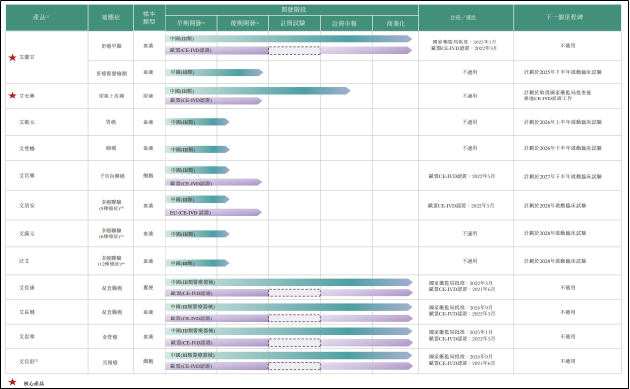
Core Insights - Mirxes, established in 2014, is a Singapore-based RNA biotechnology company focusing on early screening and diagnosis of high-incidence cancers globally, with a pipeline that also includes cardiovascular, metabolic, and infectious diseases [1] - The company's core product, MiXiaoWei, received regulatory approval in September 2025 as China's first non-invasive gastric cancer screening diagnostic tool, addressing a significant gap in early detection methods in the country [1] - The product utilizes proprietary RNA biomarker detection technology to analyze the relative content of 12 types of miRNA in blood serum samples, providing a precise screening method for high-risk gastric cancer populations [1] Product Performance - Clinical trials for MiXiaoWei involved approximately 10,000 participants, demonstrating a sensitivity of 85%, which effectively enhances the identification of early gastric cancer and precancerous lesions [2] - The negative predictive value of 99.4% significantly reduces the likelihood of false positives, thereby minimizing unnecessary follow-up examinations and alleviating the burden on healthcare resources and individuals [2] - MiXiaoWei has received multiple international approvals, including from the Singapore Health Sciences Authority, EU CE certification, FDA breakthrough device designation in the U.S., and approval from Thailand's FDA [2]
昔日“明星”正式退市!基金抢购赛道竞品
券商中国· 2025-10-29 03:53
Core Viewpoint - Despite the delisting of the first cancer early screening stock in Hong Kong, fund managers are still aggressively purchasing related assets, indicating a strong interest in the cancer early screening sector [1][2]. Industry Overview - Noblue Health, a prominent player in the cancer early screening market, was officially delisted on October 27 due to financial issues and long-term suspension, with its stock valuation adjusted to 0.01 HKD by several public funds [2][3]. - The cancer early screening sector, which integrates genomics and AI medical technology, has gained significant attention from public funds, especially in the context of rising interest in innovative drugs and AI medical assets [2][4]. Market Dynamics - The delisting of Noblue Health has created a scarcity of cancer early screening assets in the Hong Kong market, prompting fund managers to seek alternatives in the U.S. market [4][6]. - Mirxes, a competitor, successfully launched an IPO in Hong Kong, becoming the only cancer early screening stock in the market after Noblue Health's exit [5]. Investment Opportunities - Fund managers are optimistic about the potential of the AI medical sector, with expectations of sustained growth driven by technological advancements and favorable policy support [7][8]. - Investment opportunities in the AI medical sector are identified in three main areas: AI drug development, AI medical applications, and data production and utilization [8].

癌症早筛公司艾米森IPO:营收额不足千万靠缩减费用减亏 关联方或股东贡献超6成营收
Xin Lang Zheng Quan· 2025-10-24 02:40
Core Viewpoint - Wuhan Aimesen Life Science Technology Co., Ltd. has submitted its prospectus to the Hong Kong Stock Exchange, aiming to become a leader in early cancer screening, but faces significant challenges including low revenue, high losses, and reliance on related party transactions [1][2][3]. Financial Performance - Aimesen's revenue for 2023, 2024, and the first half of 2025 was 6.233 million, 7.238 million, and 6.513 million yuan respectively, with a year-on-year growth of 103% in the first half of 2025, yet overall revenue remains below 10 million yuan [1][2]. - The company reported net losses of 67.922 million, 38.63 million, and 13.906 million yuan for the same periods, with a high operating loss rate of 328.7% in 2024 [2]. - Aimesen has reduced its operating expenses, with total expenses decreasing by 36.42% in 2024 compared to 2023, and further declining by 38.63% in the first half of 2025 compared to the same period in 2024 [2]. Customer Structure - The largest customer, Wuhan Aino Medical Laboratory, accounted for 44.5% and 52.1% of Aimesen's total revenue in 2023 and 2024, respectively, raising concerns about revenue sustainability due to high reliance on related party transactions [2][3]. - The second-largest customer, Cap Bio, contributed 8.9% and 9.3% of revenue in 2023 and 2024, respectively, indicating that over 60% of Aimesen's revenue comes from related parties or shareholders [3]. Product Development and Market Challenges - Aimesen has over 20 cancer screening products, with five approved as Class III medical devices, but these products are primarily for symptomatic patients rather than healthy individuals [4][6]. - New regulatory standards for cancer screening products require evidence of benefits in reducing cancer mortality and multi-center clinical trials, which Aimesen currently lacks [6]. - The market penetration for liver cancer screening in China is only 0.7%, and for urinary tract cancer screening, it is as low as 0.5%, indicating a significant challenge in consumer acceptance and willingness to pay for early screening [6]. Industry Context - The early cancer screening industry is characterized by high investment and slow returns, with market acceptance being a critical factor for development [6]. - The recent financial scandal involving Nohui Health, a leading company in the early screening sector, has damaged industry credibility and may lead to stricter scrutiny from capital markets [7].