计算基础设施

Search documents
不请投行,不请律所:OpenAI“独立完成”1.5万亿美元的交易
Hua Er Jie Jian Wen· 2025-10-27 09:49
Core Insights - OpenAI's CEO Sam Altman and his core executive team have led a significant chip supply deal valued at $1.5 trillion, bypassing external advisors to expedite the process [1][2] - The urgency of the AI arms race has overshadowed traditional business prudence, with OpenAI prioritizing chip acquisition over financial and legal details [2] Group 1: Transaction Leadership - Altman envisioned the partnerships, while CFO Sarah Friar and President Greg Brockman executed the structural design and governance arrangements [3] - Brockman, a founding member since 2015, and Friar, who joined from Nextdoor, played crucial roles in ensuring financing support for these transactions [3] - Hoeschele leads a small team focused on enhancing computational supply to meet Altman's ambitious goal of 1 gigawatt per week [4] Group 2: CoreWeave Model - OpenAI's recent negotiations stem from a $11.9 billion agreement with CoreWeave, which has since expanded to over $22 billion, reflecting a significant increase in CoreWeave's stock price [5] - Subsequent deals often initiated by chip companies seeking collaboration highlight the trust established between Altman and his counterparts [5] Group 3: Direct Engagement with Chip Giants - OpenAI and Nvidia reached a deal without external advice, with Nvidia agreeing to invest up to $100 billion in exchange for OpenAI's commitment to spend up to $350 billion on chips [6] - The agreement with AMD followed years of discussions, resulting in AMD granting OpenAI warrants to purchase up to 10% of its shares at a nominal price [6] - OpenAI's $300 billion partnership with Oracle originated from a chance opportunity when a data center site became available [7] Group 4: Expansion of Advisory Team - Altman has expanded his advisory team by hiring Mike Liberatore, former CFO of xAI, to lead financing efforts for AI infrastructure [8]


甲骨文3000亿美元订单再敲响“人工智能泡沫”警钟
财富FORTUNE· 2025-09-22 13:09
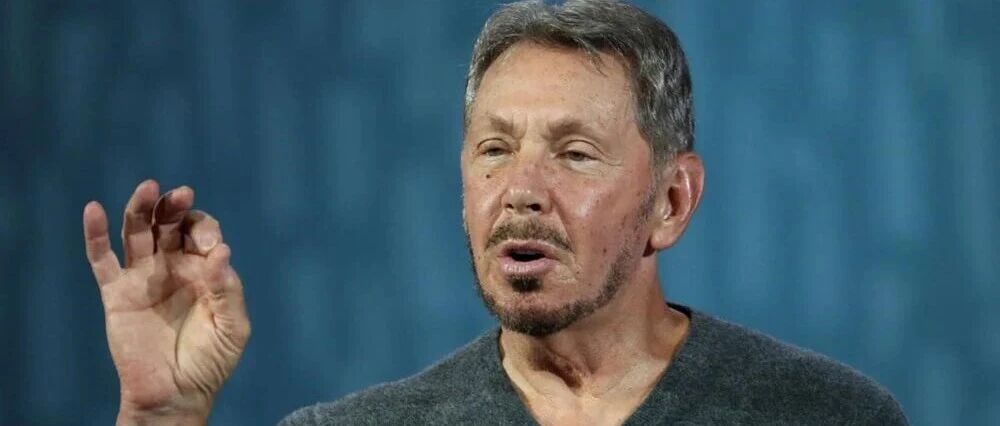
Core Viewpoint - Oracle's $300 billion partnership with OpenAI has raised concerns about a potential AI bubble, despite the significant boost in Oracle's stock price and optimistic financial forecasts [2][4]. Group 1: Oracle's Financial Performance - Oracle's total contract value is projected to reach $455 billion, a 359% increase year-over-year, leading to a 36% surge in stock price, marking the largest single-day increase in its history [2]. - The CEO, Larry Ellison, briefly became the world's richest person following this stock price increase, which is part of a broader 45% rise in Oracle's stock this year [2]. Group 2: Partnership with OpenAI - The $300 billion agreement with OpenAI is the largest cloud computing contract ever signed, with OpenAI committing to use Oracle's computing infrastructure [4]. - A significant portion of Oracle's remaining performance obligations, amounting to $455 billion, is tied to this agreement with OpenAI, raising concerns about reliance on a single, unproven client [4][5]. Group 3: Concerns About AI Bubble - Analysts have expressed concerns regarding the financial viability of the partnership, noting that OpenAI's annual revenue is only $12 billion, which is insufficient to support the $300 billion contract [4][9]. - A study from MIT indicates that 95% of AI pilot projects have not yielded substantial returns, intensifying fears of a disconnect between investment hype and actual outcomes [7]. Group 4: Expert Opinions - AI expert Gary Marcus labeled the Oracle-OpenAI deal as a "bubble peak," criticizing the absurdity of Oracle's market valuation driven by a non-binding agreement [8]. - Other industry voices, including Ed Zirtron, have questioned the feasibility of the contract, suggesting that both companies are misleading investors about the contract's viability [8][9].