
谷子(徽章

Search documents
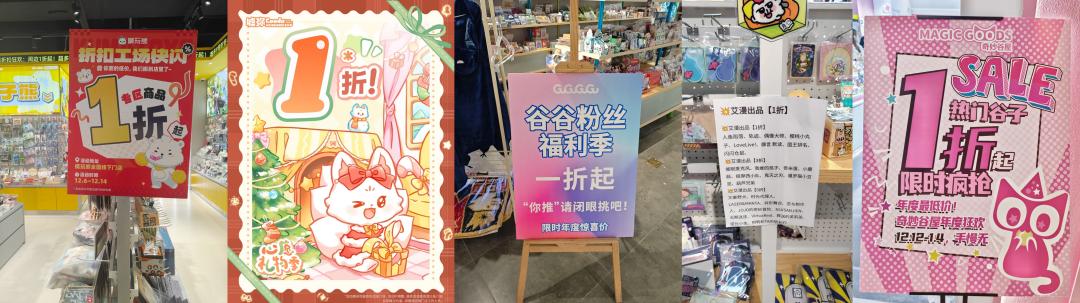
谷子大逃杀?“一折清仓”成风,市场洗牌新生
3 6 Ke· 2025-12-23 00:22
Core Insights - The "millet market" is experiencing a significant downturn, with many stores reporting sales insufficient to cover basic expenses like electricity bills [1][2] - A trend of deep discounts has emerged, with products being sold at prices as low as one yuan, indicating a market collapse [2][21] - Major brands and stores are participating in clearance sales, leading to a saturation of discounted products in the market [1][4] Group 1: Market Dynamics - The phenomenon of "one yuan millet" is becoming common, with some stores advertising prices as low as 9.9 yuan per kilogram [2] - The market has seen a shift where even well-known brands are struggling, leading to a reduction in store numbers and a pivot towards different product lines [14][15] - The initial boom in the millet economy was driven by the popularity of blind box products, which has now led to overproduction and subsequent market saturation [12][22] Group 2: Consumer Behavior - Consumers are increasingly aware of the declining value of previously sought-after products, leading to a decrease in purchasing willingness [21][22] - The market is witnessing a shift in consumer focus, with some stores moving away from millet products to other categories like K-pop and accessories [7][10] - The perception of value has changed, with consumers now viewing early purchases as mistakes due to the drastic price drops [1][2] Group 3: Brand Strategies - Some brands are adapting by recruiting franchisees and slowing down the expansion of self-operated stores [14][19] - The market is seeing a consolidation phase where only brands with strong product offerings and IP management will survive [35][45] - The trend of "one yuan millet" reflects a broader issue of overproduction and the need for brands to focus on quality and scarcity to regain consumer trust [32][33]

“小谷子拉动大消费”:谷子经济发展特征、趋势与相关建议
Zhong Guo Yin Hang· 2025-09-04 07:39
Group 1: Market Growth and Trends - The "Guzi economy" market size in China is projected to grow from 58 billion yuan in 2020 to 168.9 billion yuan by 2024, nearly tripling in size[9] - By 2029, the overall market size is expected to reach 308.9 billion yuan[9] - The number of related enterprises in the Guzi economy has increased from 78,900 in 2015 to nearly 7 million by mid-2025, an increase of 87 times[9] Group 2: Consumer Demographics - Consumers aged 18 to 40 account for over 78% of Guzi product purchases, with the Gen Z demographic contributing more than 50%[13] - Female consumers' share in the Guzi economy is projected to rise from 67% in 2023 to 78% by 2025[13] - High-tier cities account for over 80% of Guzi consumption, indicating potential growth in lower-tier markets[13] Group 3: Challenges and Recommendations - Insufficient copyright protection is harming the interests of original creators and consumers, necessitating stronger IP protection measures[34] - Market disorder due to irrational speculation is disrupting the Guzi economy, highlighting the need for regulatory oversight[34] - The industry faces challenges from homogenized competition, which limits growth potential, suggesting a need for innovation in IP development and product differentiation[36]
