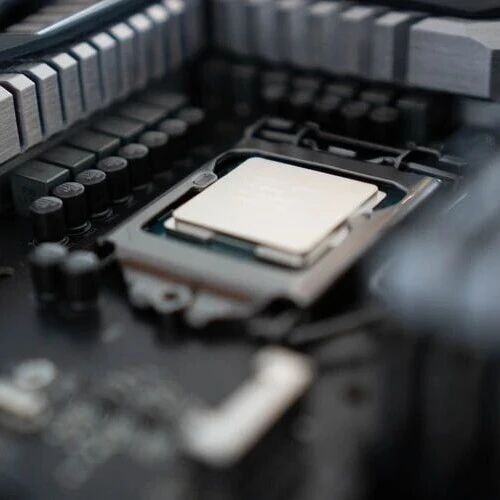
谷歌张量处理器(TPU)

Search documents
英伟达:2026年或将是盘整之年
美股研究社· 2025-12-24 07:13
Core Viewpoint - 2026 is expected to be a year of consolidation for Nvidia's stock price as the AI industry transitions from explosive growth to a mature infrastructure phase, facing both opportunities and challenges due to global trade uncertainties and intensified competition among large cloud service providers [1] Group 1: China Market Developments - Nvidia plans to start shipping H200 series graphics cards to China in mid-February, pending approval, with expanded production expected to generate orders in the second quarter [2] - Despite the positive outlook, analysts express concerns about the actual benefits to Nvidia, as sales in China account for only about 13% of total revenue, and the 25% transaction fee along with other costs may further diminish profit margins [2] - The H200 series is technically inferior to the Blackwell series, leading to expectations of lower profit margins for these exports [2] Group 2: Competitive Threats - The primary threat to Nvidia comes from large cloud service providers like Google and Amazon, rather than competitors like AMD [3] - Google's launch of the Gemini 3 model, trained on its custom Tensor Processing Units (TPUs), marks a significant milestone in chip development, posing a substantial threat to Nvidia's AI graphics cards [5] - The total cost of ownership for Google's TPUv7 is estimated to be about 40% lower than Nvidia's GB200 series chips, indicating a competitive edge for Google [6] Group 3: Stock Performance and Valuation - Nvidia's stock has been fluctuating around the 20-day moving average since August, indicating a loss of upward momentum, with a descending wedge pattern forming between approximately $210 and $170 [6] - From a valuation perspective, Nvidia's forward P/E ratio of 39.17 is among the highest compared to major tech peers, suggesting that the stock is overvalued [6] - Analysts maintain a neutral outlook on Nvidia's prospects, anticipating a range-bound trading pattern in 2026 due to high valuation risks and the aforementioned competitive dynamics [7]


消息称联发科拿下两代谷歌TPU定制大单
Ge Long Hui A P P· 2025-12-15 03:13
Core Viewpoint - The demand for Google's Tensor Processing Units (TPUs) has significantly increased, leading to a substantial rise in orders for the next-generation TPU v7e from MediaTek, with order volumes surging several times compared to initial plans [1] Group 1: Company Developments - Google has expanded its collaboration with MediaTek to customize the new generation TPU v7e, with orders increasing dramatically [1] - MediaTek's first TPU v7e is set to enter risk trial production by the end of the next quarter [1] - MediaTek has also secured orders for Google's next-generation TPU v8e [1] Group 2: Industry Impact - TSMC is providing advanced packaging capacity support for MediaTek's large orders, with a projected increase of over 7 times in CoWoS capacity for the Google project by 2027 [1] - TSMC has refrained from commenting on specific customer business details [1]


关于AI芯片,美国又出幺蛾子
半导体芯闻· 2025-12-05 10:21
如果您希望可以时常见面,欢迎标星收藏哦~ 就在英伟达首席执行官黄仁勋敦促白宫允许向中国出口先进芯片的第二天,美国国会议员便采取行动阻止此类芯片出口,加剧了华盛顿与硅谷在人 工智能技术领域的冲突。 周四,六位共和党和民主党参议员共同提出《安全可行芯片出口法案》(SAFE Chips Act),该法案要求美国当局在至少30个月内拒绝任何性能 高于现有许可芯片的出口许可申请。该法案还规定,政府在修改出口规则前需提前30天通知国会。 "美国之所以能在人工智能竞赛中领先于中国,很大程度上是因为我们在全球计算能力方面占据主导地位,"内布拉斯加州共和党参议员皮特·里基茨 (Pete Ricketts)说道,他是该法案的共同发起人之一。 "最好的人工智能芯片是由美国公司制造的。阻止北京获取这些人工智能芯片对我们的国家安全至关重要。" "这项两党共同提出的法案将保护美国在计算能力方面的优势,确保全球最先进的人工智能模型由美国公司在国内研发,全球基础设施也建立在美 国的技术栈之上,"特拉华州民主党参议员克里斯·库恩斯补充道。 英伟达和AMD表示,更严格的管控可能会加速中国建立完全自主芯片产业的进程。AMD首席执行官苏姿丰周四表示 ...