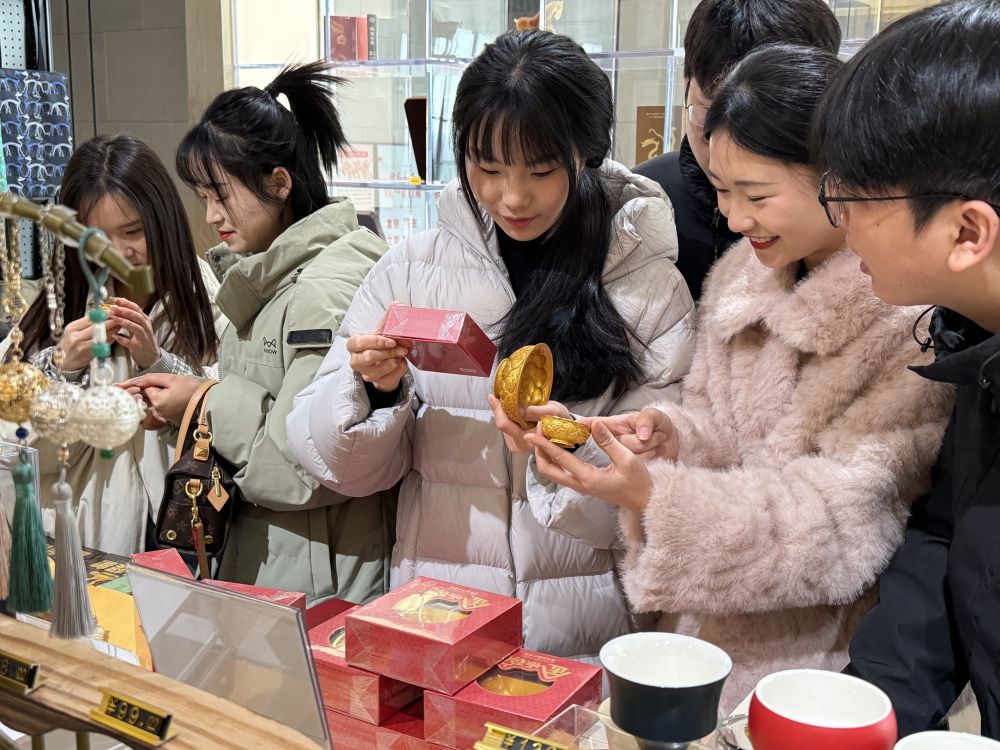
贺岁款功夫茶具套装

Search documents
从“馆藏”到“潮流”,陕西让文化资源变消费动力
Xin Hua She· 2026-01-13 13:36
Core Insights - The integration of cultural and tourism industries in Shaanxi is being emphasized, with a focus on innovative cultural products that enhance consumer engagement and drive economic growth [1][4] Group 1: Cultural Product Development - The "Golden Rice Bowl" refrigerator magnet, inspired by a Tang Dynasty gold bowl, has sold over 200,000 units since its launch in August 2024, highlighting the success of cultural creative products [1] - The Shaanxi History Museum has developed over 300 cultural products based on six major thematic IPs, including "National Treasure Imprint" and "Flower Dance of the Tang Dynasty" [2] - The design of cultural products is evolving to incorporate deeper cultural meanings and practical applications, moving beyond traditional limitations [1] Group 2: Technological Integration - The Xi'an Beilin Museum is utilizing digital technology to create interactive experiences, allowing visitors to engage with historical artifacts in innovative ways [2][3] - The "Empire Code - Qin Shi Huang's Tomb" XR experience exhibition is transforming historical narratives into immersive experiences, with the first overseas authorized experience store opening in Vancouver [3] - The shift from product sales to experience economy is driving a multiplier effect in cultural tourism consumption [3] Group 3: Economic Impact - In the first half of 2025, the added value of the cultural tourism industry in Shaanxi accounted for 6.81% of the province's GDP, indicating its strategic importance [4] - The Shaanxi Provincial Cultural and Tourism Department is committed to deepening the integration of cultural heritage with various sectors, including non-heritage, scenic areas, film, and gaming [4] - A series of initiatives are being implemented to accelerate the transformation of cultural resources into cultural assets, including the release of blueprints for cultural creative industries [3][4]
四中全会精神在基层 | 从“馆藏”到“潮流”,陕西让文化资源变消费动力
Xin Hua She· 2026-01-13 07:48
Core Insights - The article highlights the integration of cultural and tourism industries in Shaanxi, emphasizing the development of cultural tourism as a means to drive economic growth and consumer engagement [1][6]. Group 1: Cultural Products and Innovations - The "Golden Rice Bowl" refrigerator magnet, inspired by a Tang Dynasty gold bowl, has sold over 200,000 units since its launch in August 2024, becoming a cultural product star for the museum [1]. - The Shaanxi History Museum has introduced a new line of cultural products, including a tea set inspired by a national treasure, showcasing a shift towards innovative expressions of cultural heritage [3]. - The museum plans to launch over 300 cultural products under six thematic IPs by 2025, including "National Treasure Imprint" and "Flower Dance of the Tang Dynasty" [3]. Group 2: Digital and Interactive Experiences - The Xi'an Beilin Museum is enhancing visitor engagement through digital technology, allowing guests to interact with historical artifacts via screens and create personalized calligraphy [5]. - The "Horse to Chang'an" cultural market in Xi'an will provide hands-on experiences with cultural artifacts, transforming historical appreciation into interactive enjoyment [5]. - The "Empire Code - Qin Shi Huang's Tomb" XR experience exhibition utilizes advanced technology to create immersive historical experiences, with the first overseas authorized store opening in Vancouver by the end of November 2025 [5][6]. Group 3: Economic Impact and Strategic Development - In the first half of 2025, the cultural and tourism industry's added value accounted for 6.81% of Shaanxi's GDP, indicating its growing strategic importance [6]. - The Shaanxi government is implementing a "Museum+" strategy to integrate cultural resources with various industries, supported by the release of blueprints for cultural creative industries [6]. - The province aims to explore new paths for cultural empowerment in economic and social development by fostering deep integration of cultural creativity with non-heritage, scenic areas, film, and gaming sectors [6].