
金饭碗冰箱贴

Search documents
从“馆藏”到“潮流”,陕西让文化资源变消费动力
Xin Hua She· 2026-01-13 13:36
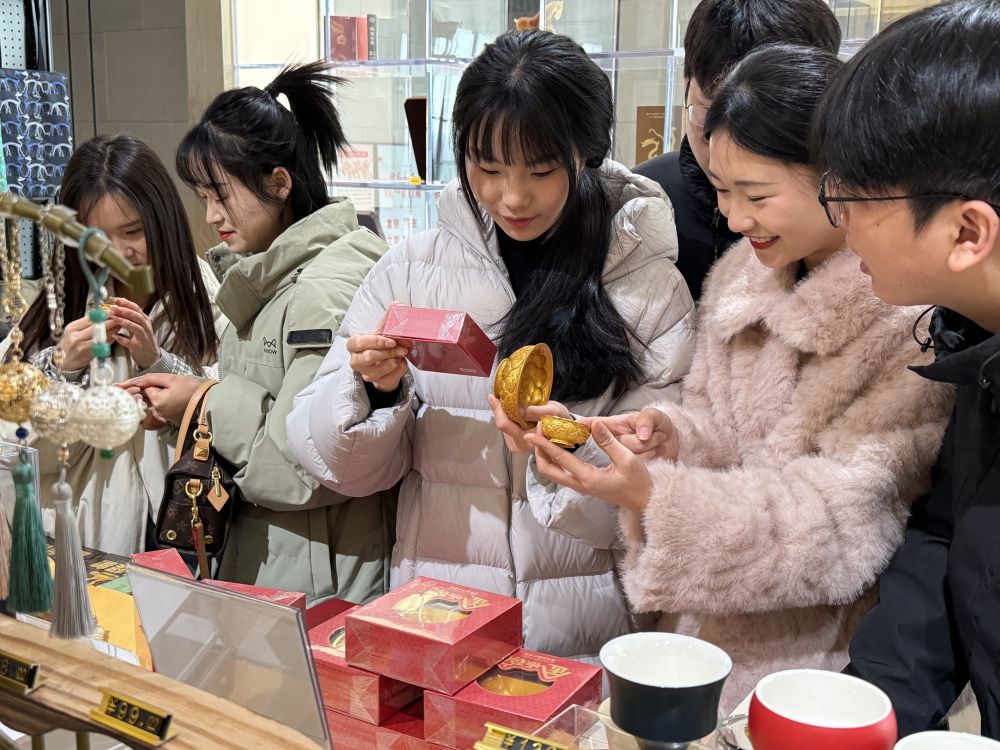
Core Insights - The integration of cultural and tourism industries in Shaanxi is being emphasized, with a focus on innovative cultural products that enhance consumer engagement and drive economic growth [1][4] Group 1: Cultural Product Development - The "Golden Rice Bowl" refrigerator magnet, inspired by a Tang Dynasty gold bowl, has sold over 200,000 units since its launch in August 2024, highlighting the success of cultural creative products [1] - The Shaanxi History Museum has developed over 300 cultural products based on six major thematic IPs, including "National Treasure Imprint" and "Flower Dance of the Tang Dynasty" [2] - The design of cultural products is evolving to incorporate deeper cultural meanings and practical applications, moving beyond traditional limitations [1] Group 2: Technological Integration - The Xi'an Beilin Museum is utilizing digital technology to create interactive experiences, allowing visitors to engage with historical artifacts in innovative ways [2][3] - The "Empire Code - Qin Shi Huang's Tomb" XR experience exhibition is transforming historical narratives into immersive experiences, with the first overseas authorized experience store opening in Vancouver [3] - The shift from product sales to experience economy is driving a multiplier effect in cultural tourism consumption [3] Group 3: Economic Impact - In the first half of 2025, the added value of the cultural tourism industry in Shaanxi accounted for 6.81% of the province's GDP, indicating its strategic importance [4] - The Shaanxi Provincial Cultural and Tourism Department is committed to deepening the integration of cultural heritage with various sectors, including non-heritage, scenic areas, film, and gaming [4] - A series of initiatives are being implemented to accelerate the transformation of cultural resources into cultural assets, including the release of blueprints for cultural creative industries [3][4]
四中全会精神在基层 | 从“馆藏”到“潮流”,陕西让文化资源变消费动力
Xin Hua She· 2026-01-13 07:48
Core Insights - The article highlights the integration of cultural and tourism industries in Shaanxi, emphasizing the development of cultural tourism as a means to drive economic growth and consumer engagement [1][6]. Group 1: Cultural Products and Innovations - The "Golden Rice Bowl" refrigerator magnet, inspired by a Tang Dynasty gold bowl, has sold over 200,000 units since its launch in August 2024, becoming a cultural product star for the museum [1]. - The Shaanxi History Museum has introduced a new line of cultural products, including a tea set inspired by a national treasure, showcasing a shift towards innovative expressions of cultural heritage [3]. - The museum plans to launch over 300 cultural products under six thematic IPs by 2025, including "National Treasure Imprint" and "Flower Dance of the Tang Dynasty" [3]. Group 2: Digital and Interactive Experiences - The Xi'an Beilin Museum is enhancing visitor engagement through digital technology, allowing guests to interact with historical artifacts via screens and create personalized calligraphy [5]. - The "Horse to Chang'an" cultural market in Xi'an will provide hands-on experiences with cultural artifacts, transforming historical appreciation into interactive enjoyment [5]. - The "Empire Code - Qin Shi Huang's Tomb" XR experience exhibition utilizes advanced technology to create immersive historical experiences, with the first overseas authorized store opening in Vancouver by the end of November 2025 [5][6]. Group 3: Economic Impact and Strategic Development - In the first half of 2025, the cultural and tourism industry's added value accounted for 6.81% of Shaanxi's GDP, indicating its growing strategic importance [6]. - The Shaanxi government is implementing a "Museum+" strategy to integrate cultural resources with various industries, supported by the release of blueprints for cultural creative industries [6]. - The province aims to explore new paths for cultural empowerment in economic and social development by fostering deep integration of cultural creativity with non-heritage, scenic areas, film, and gaming sectors [6].

【省文物局】陕西文创的“出圈”密码
Shan Xi Ri Bao· 2025-07-14 00:28
Core Insights - The popularity of "Rongmomo" reflects the rapid development of the cultural and creative industry in Shaanxi, with over 5,800 cultural enterprises established in the province, ranking among the top in the country [2] - The cultural creative industry in Shaanxi is projected to generate revenue of 18.55 billion yuan in 2024, representing a year-on-year growth of 6% [2] - The success of "Rongmomo" is attributed to its innovative presentation of cultural consumption, combining plush toys with local culinary elements, appealing to younger consumers [4] Industry Development - The cultural creative industry in Shaanxi is evolving from basic cultural element integration into more sophisticated products, driven by technological advancements and product upgrades [4] - The first batch of "Rongmomo" products sold over 500,000 units since its launch in June 2024, with some products being exported overseas [4] - Shaanxi's museums are increasingly integrating ancient cultural symbols with modern design, resulting in a diverse range of over 1,000 cultural creative products developed by the Shaanxi History Museum [6] Consumer Engagement - The design and cultural significance of products like the "Golden Bowl" refrigerator magnet have contributed to their popularity, highlighting the importance of consumer participation in product promotion [6] - The collaboration between cultural institutions and businesses, such as the partnership between Xi'an Museum and Chang'an Dapaidang, creates new cultural tourism consumption experiences [8] Digital Transformation - The Shaanxi History Museum has developed a blockchain platform called "Huaxia Chain" to create a digital cultural product ecosystem, with over 40 digital cultural products launched and sales exceeding 50,000 units [9] - The province is implementing a "Museum+" strategy, integrating cultural resources with digital technology to enhance public engagement and promote cultural heritage [9]