超人形机器人美罗U(MIRO U)

Search documents
AI跨越宏大叙事 多领域拆解应用新图景
2 1 Shi Ji Jing Ji Bao Dao· 2025-12-16 23:53
Core Insights - The forum highlighted the transition of AI from a technological explosion to industrial application, focusing on the challenges of high computing costs and the need for industry-specific models [1] - Key discussions revolved around the integration of AI in various sectors, emphasizing the importance of hardware in AI deployment and the rising demand for AI-related products [2][3] Group 1: AI Development Challenges - AI's reliance on cloud computing is shifting towards edge devices, necessitating significant hardware capabilities, including at least 50GB of memory for mature AI models [2] - The high costs associated with AI inference and training are limiting widespread adoption, as these expenses ultimately impact companies' R&D investments [2] Group 2: Industry Opportunities - Chinese AI chip companies are positioned for growth as the integrated circuit sector accelerates, with a focus on domestic technology upgrades [3] - The PCB industry is experiencing unprecedented demand due to the AI boom, with major companies like Pengding Holdings seeing a significant increase in market valuation driven by high-end PCB production needs [3][4] Group 3: AI Integration in Robotics - The integration of AI with robotics is becoming a new paradigm, particularly in industrial and consumer applications, with companies like Midea Group leading the charge in developing humanoid robots [5][7] - The external skeleton robot market is evolving from specialized applications to more general uses, driven by aging populations and rising consumer demands [8] Group 4: Commercialization and Cost Control - The primary challenges in the AI sector include the lack of profitable business models and the rising costs associated with AI operations, as highlighted by companies like Hello [9] - The need for a commercial framework that supports large-scale AI applications is critical for the industry's sustainable growth [9] Group 5: Strategic Shifts in Enterprises - Companies are focusing on building competitive advantages through high-quality data and deep integration of AI technologies within their industries [11] - Traditional enterprises are undergoing strategic transformations to leverage technology for value reconstruction, with a notable shift towards the biopharmaceutical sector as a core growth area [12]



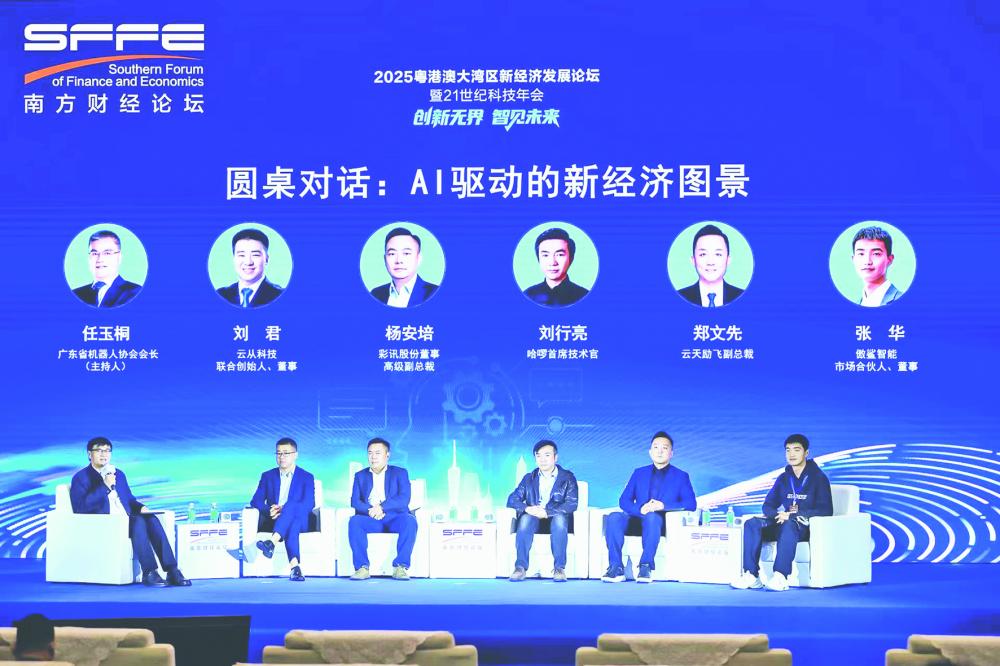
AI跨越宏大叙事,多领域拆解应用新图景
2 1 Shi Ji Jing Ji Bao Dao· 2025-12-15 10:51
Group 1: AI Industry Trends - The AI industry is transitioning from cloud-based computing to edge devices, with significant advancements in hardware capabilities being essential for practical applications [2][3] - High costs associated with AI inference and training are major barriers to widespread adoption, prompting a need for cost-effective solutions [3][4] - The demand for printed circuit boards (PCBs) is surging due to the AI boom, with leading companies like Pengding Holdings experiencing increased profitability and market valuation [4][5] Group 2: Company Innovations and Strategies - AMD has introduced solutions that reduce the cost of deploying AI models on edge devices, making advanced AI applications more accessible across various sectors [2] - Midea Group is focusing on the integration of AI and robotics, with a strong emphasis on developing humanoid robots for industrial and commercial applications [5][6] - Companies like Haalo are exploring the Robotaxi market, indicating a growing recognition of the commercial viability of AI-driven transportation solutions [9][10] Group 3: Challenges and Opportunities - The AI sector faces challenges in commercializing applications and controlling costs, with many companies yet to achieve profitability [8][9] - The integration of AI into traditional industries is seen as a strategic necessity for survival and growth, with companies like Liaoning Chengda pivoting towards technology-driven sectors [12] - The need for high-quality data and deep industry understanding is critical for companies to maintain a competitive edge in the evolving AI landscape [11][12]