
超级电容储能

Search documents
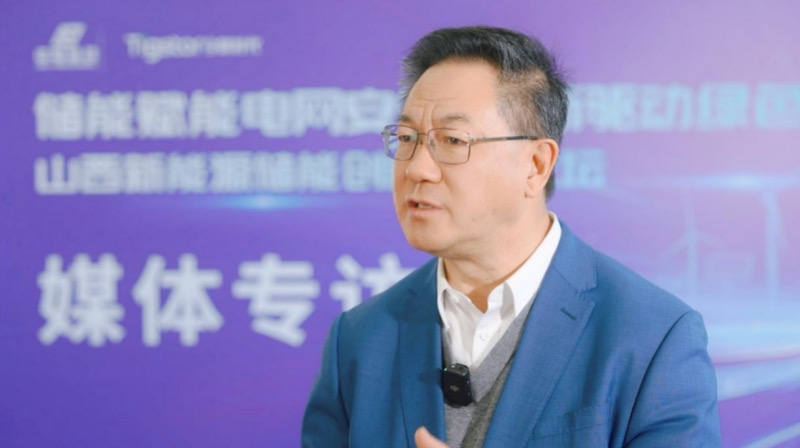
王中林院士:能源转型要靠 “大电网 + 毛细血管式能源” 双轨并行
Zhong Guo Neng Yuan Wang· 2025-12-31 03:00
Core Viewpoint - The Shanxi New Energy Storage Innovation Development Forum marks a significant step for Shanxi in advancing its new energy storage industry, emphasizing the importance of integrating traditional and green energy sources for a sustainable energy future [1][10]. Group 1: Forum Highlights - The forum gathered top industry experts and showcased Shanxi's commitment to scaling its new energy storage sector [1]. - Wang Zhonglin, an academician from the Chinese Academy of Sciences, delivered a keynote speech analyzing the core value and technological pathways of the energy storage industry, proposing a new vision for energy development that integrates AI, IoT, and new energy [3][4]. Group 2: Energy Dynamics - The current energy landscape is characterized by a competition between traditional fossil fuels and renewable energy, with each having distinct advantages and challenges [4]. - The integration of these energy types is essential for a successful energy transition, with energy storage playing a critical role in enhancing efficiency and stability [4][5]. Group 3: Storage Value and Functionality - Energy storage is not merely about storing and supplying electricity; it encompasses essential functions like peak shaving and frequency regulation, which are vital for the stable operation of power systems [5]. - Shanxi's diverse energy resources, including coal, wind, and solar, provide a strong foundation for developing its energy storage industry, enhancing both efficiency and safety [5][6]. Group 4: Technological Foundations - The successful implementation of AI in energy systems relies on accurate and continuous data collection, which is facilitated by advanced sensing technologies [6][7]. - The integration of sensing technology and AI is crucial for achieving a smart and efficient energy system, addressing the data collection challenges in energy production and utilization [7]. Group 5: Future Energy Paradigm - Wang Zhonglin proposed a dual-track energy paradigm that combines centralized and distributed energy systems, emphasizing the need for multi-energy complementarity to meet China's energy demands [8][9]. - This approach is particularly relevant for rural energy utilization in Shanxi, where distributed renewable energy sources can significantly reduce energy consumption and losses [9]. Group 6: Project Significance - The launch of Shanxi's first 100 MW hybrid energy storage project represents a landmark achievement in the region's energy storage development, showcasing innovative technology that addresses critical power system needs [10][11]. - The project utilizes supercapacitor technology, which complements traditional lithium battery storage by providing rapid charge and discharge capabilities essential for frequency regulation [11]. Group 7: Industry Standards and Future Directions - The release of the "Shanxi Province New Energy Storage Frequency Regulation Technology Application White Paper" aims to establish industry standards and guidelines, facilitating the transition from isolated advancements to a more standardized and scalable development phase [12]. - The insights and practices from Shanxi's energy sector are positioned to serve as a reference for national energy transition efforts, highlighting the province's innovative spirit and leadership in the energy field [12][13].

太阳能(000591) - 2025年6月25日 投资者关系活动记录表
2025-06-26 01:22
Group 1: Company Operations and Technology - The company currently has a total energy storage capacity of approximately 1500 MWh, primarily supporting photovoltaic power stations, including lithium iron phosphate, all-vanadium flow, and supercapacitor storage types [2] - The main technology for the company's operational power stations is TOPCon, with pilot projects using HJT technology and plans to trial BC and perovskite components as needed [3] Group 2: Financial Performance and Dividends - In 2024, the company received a total of 1.366 billion CNY in electricity subsidies, with 1.233 billion CNY from national subsidies [3] - The company has distributed approximately 1.512 billion CNY in cash dividends over the past three years, with a dividend payout ratio averaging 36% of annual net profit attributable to shareholders [3] Group 3: International Expansion - The company is in discussions with relevant departments in Sri Lanka, Indonesia, and Uzbekistan, with some projects having signed MOUs [3] - Future plans include accelerating investment in overseas photovoltaic projects, focusing on development and acquisition in countries along the "Belt and Road" initiative [3] Group 4: Information Disclosure Compliance - The company adhered to information disclosure management regulations during the investor meeting, ensuring no significant undisclosed information was leaked [3]

山东完善储能市场交易机制支持独立储能发展
Zhong Guo Chan Ye Jing Ji Xin Xi Wang· 2025-05-10 01:55
Core Insights - Shandong Province's Energy Bureau has issued the "Shandong Province 2025 New Energy High-Level Consumption Action Plan," aiming to enhance new energy storage capacity and maintain high utilization rates of renewable energy [1][2] Group 1: New Energy Storage Initiatives - The plan includes the construction of 3 million kilowatts of new energy storage capacity this year, with a focus on improving the trading mechanism for storage [1] - It proposes to relax price limits in the spot market to widen the price difference between charging and discharging, allowing storage to participate in real-time energy markets and auxiliary service markets [1] - Existing renewable energy stations will continue to implement capacity leasing and fulfill storage responsibilities based on grid connection commitments [1] Group 2: Development of Storage Technologies - The plan emphasizes the acceleration of compressed air energy storage development, particularly in areas rich in salt rock resources, with an additional capacity of around 1 million kilowatts expected this year [1] - It also highlights the scientific layout of electrochemical energy storage, targeting areas with concentrated renewable energy and load centers, aiming for over 2 million kilowatts of new capacity [1] Group 3: Encouragement of New Technologies and Applications - The document encourages the application of new storage technologies such as gravity, sodium-ion batteries, flywheels, and supercapacitors, promoting diversified development of energy storage [2] - It supports integrated pilot projects for source-grid-load-storage systems and the large-scale application of distributed storage to enhance flexible adjustment capabilities [2] Group 4: Independent Storage Development - The plan supports the development of independent storage systems, ensuring compliance with national electricity pricing policies [2] - Independent storage systems sending electricity to the grid will not bear transmission and distribution prices for their corresponding charging amounts, but must adhere to regulations regarding significant discrepancies between charging and discharging amounts [2]