跑道

Search documents
多地机场扩建项目接连投运
Zheng Quan Ri Bao· 2026-02-02 22:38
Core Insights - The recent launch of the T3 terminal at Sanya Phoenix International Airport marks a significant upgrade in China's airport infrastructure, reflecting a broader trend of expansion and modernization across multiple airports in the country [1][2] - The expansion of airport facilities is a direct response to the recovering demand in the civil aviation market, enhancing operational safety and service quality while laying a solid hardware foundation for the long-term development of the aviation industry [2] Infrastructure Developments - Sanya Phoenix International Airport's T3 terminal features 40 check-in counters, 23 security channels, and 7 boarding bridges, connecting with T1 and T2 terminals [1] - Guangzhou Baiyun International Airport's T3 terminal and fifth runway, with a total investment of 53.77 billion yuan, were officially put into operation on October 30, 2022, contributing to the construction of a world-class airport cluster [1] - Shenzhen Airport's third runway, measuring 3,600 meters in length, became operational on November 29, 2022, allowing for eight operational modes and improving overall efficiency [1] Market Recovery and Performance - Baiyun Airport forecasts a net profit of 1.28 billion to 1.564 billion yuan for 2025, representing a year-on-year growth of 38.21% to 68.92%, driven by the recovery in air travel demand [3] - The airport expects to handle 550,500 aircraft movements, 83.59 million passengers, and 2.4399 million tons of cargo in 2025, reflecting increases of 7.53%, 9.45%, and 2.41% respectively compared to the previous year [3] - The civil aviation industry is projected to achieve a total transport turnover of 1,640.8 billion ton-kilometers and a passenger transport volume of 770 million in 2025, with respective year-on-year growth rates of 10.5% and 5.5% [3] Future Opportunities - The aviation industry is poised to benefit from the recovery of international passenger flows, upgrades in cargo logistics, digital transformation, and the expansion of non-aviation businesses [4] - Companies are encouraged to optimize flight scheduling and transfer efficiency while developing non-aviation revenue streams such as duty-free and commercial services to improve profitability [4]


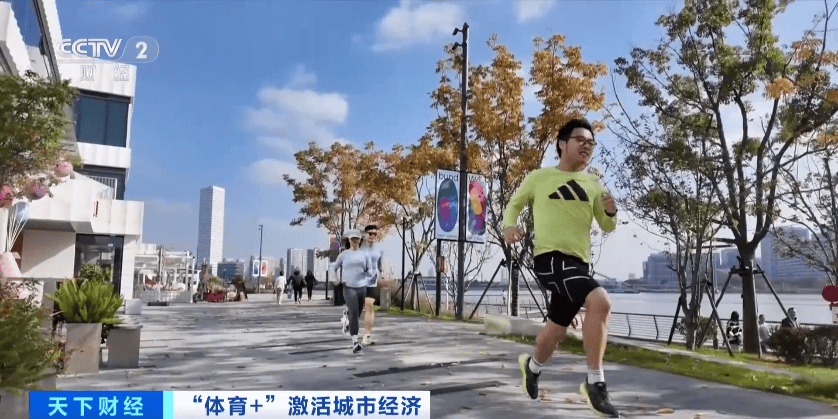
从“消费场”拓展为“社交场”,上海商圈打造“运动+”新场景
Sou Hu Cai Jing· 2025-11-17 13:36
Core Insights - The article highlights the transformation of Shanghai's commercial spaces, particularly along the Xuhui Riverside, into vibrant sports and social venues, enhancing urban consumption and foot traffic [1][9]. Group 1: Development of Sports Venues - Numerous commercial areas in Shanghai are utilizing idle spaces to create sports facilities, such as running tracks and skate parks, providing citizens and tourists with opportunities for exercise and social interaction [1]. - The West Bund Dream Center, previously a cement factory, has been redeveloped into a trendy landmark featuring a 10-kilometer riverside running track that attracts many running enthusiasts [3]. Group 2: Diverse Sports Offerings - The Xuhui Riverside area leverages its scenic views and space to attract flagship stores of outdoor brands, national first stores of skiing brands, and urban experience stores for sports watches, while also incorporating various sports activities like skateboarding, camping, rock climbing, and tennis [5]. - The combination of "sports brand matrix + scenario-based sports spaces" enhances consumer experience, with evening skateboarding club events drawing significant participation [7]. Group 3: Impact on Local Economy - The establishment of sports scenes in the West Bund Dream Center has led to a 30% increase in foot traffic for surrounding dining and coffee businesses, with weekend daily foot traffic exceeding 20,000 visitors [9].