车路云一体化基础设施

Search documents
智能网联行业再迎利好 助力上海打造世界级汽车产业中心
Zheng Quan Ri Bao Wang· 2026-02-12 04:28
Core Insights - Shanghai's intelligent connected vehicle industry is set to benefit from significant policy support as outlined in the "14th Five-Year Plan" [1][2] - The plan emphasizes the development of six emerging pillar industry clusters, focusing on the integration of software and hardware to accelerate the growth of intelligent connected new energy vehicles [1] Group 1: Policy and Development Plans - The "14th Five-Year Plan" aims to establish Shanghai as a world-class automotive industry center, with key areas including Jiading, Pudong, Lingang, and Jinshan [1] - The plan highlights the importance of core technologies such as intelligent driving, intelligent cockpits, intelligent chassis, and solid-state batteries to support the development of intelligent connected new energy vehicles [1][2] Group 2: Industry Growth and Infrastructure - By the end of 2025, Shanghai plans to open 3,173 roads totaling 5,238.82 kilometers for autonomous driving testing, covering about one-third of the city's area [1] - The city has issued 932 various testing and demonstration licenses to 41 companies, with total testing mileage exceeding 34.55 million kilometers [1] Group 3: Future Projections - The intelligent connected vehicle industry in Shanghai is expected to enter a new phase of "city-wide integration" during the "14th Five-Year" period, promoting cross-regional collaboration and a multi-level scenario layout [2] - From 2025 to 2027, the integration of vehicle-road-cloud infrastructure is anticipated to accelerate, potentially leading to an explosion in the smart transportation industry [2] - By 2030, Shanghai is projected to become a global innovation hub for intelligent connected vehicles, forming a trillion-yuan industry cluster and solidifying its position as a domestic leader and international player in the sector [2][3]
扩大新兴产业有效投资,前瞻布局未来产业项目,如何利好汽车业?
Zhong Guo Qi Che Bao Wang· 2025-12-18 07:20
Core Viewpoint - The article emphasizes the importance of expanding effective investment in emerging industries, particularly in the smart connected electric vehicle sector, as a significant driver for economic growth and technological innovation in China [3][4][9]. Group 1: Policy and Investment Direction - The National Development and Reform Commission's policy aims to optimize investment structure and expand investment space, particularly in emerging industries like smart connected electric vehicles [3]. - The policy framework outlines new industries such as renewable energy, new materials, and electric vehicles, which are seen as key areas for future investment [4]. - The focus on effective investment is expected to inject capital into technological innovation and facilitate the transition of the automotive industry towards smart, electric, and green solutions [4][5]. Group 2: Technological Advancements - Investment in emerging industries is expected to accelerate breakthroughs in key technologies for electric vehicles, such as solid-state batteries and high-power motors [4][7]. - The integration of new infrastructure for smart connected vehicles is creating a low-latency, high-reliability data transmission network essential for autonomous driving [5]. - Investments are also directed towards overcoming bottlenecks in critical areas like power systems, chip computing, and software algorithms, which are crucial for the automotive industry's technological competitiveness [7]. Group 3: Industry Transformation and Opportunities - The automotive industry is witnessing a shift towards cross-industry innovation, with companies exploring new avenues such as low-altitude travel and water-land-air mobility solutions [6]. - Hydrogen energy and electrification are emerging as dual engines driving the development of the automotive sector, with companies rapidly deploying comprehensive product matrices [6]. - The investment wave in emerging industries is enhancing regional industrial clusters, which are vital for establishing world-class automotive industry hubs [6]. Group 4: Globalization and Market Expansion - The investment in emerging industries is facilitating the globalization of China's automotive sector, transitioning from an "import" to an "export" model [8]. - Chinese automotive brands are increasingly gaining recognition in international markets, with a focus on expanding into Belt and Road Initiative regions where demand for electric vehicles is growing [8]. - The dual drive of capital and technology is reshaping the global automotive landscape, allowing Chinese companies to enhance their brand influence and competitiveness [8][9]. Group 5: Future Outlook - The convergence of effective investment and forward-looking strategies is expected to create a virtuous cycle in the automotive industry, enhancing research and development, practical applications, and global expansion [9]. - Key investment areas such as low-altitude travel, solid-state batteries, and smart connected core modules are identified as potential trillion-dollar growth sectors [9]. - The synergy between policy incentives and market dynamics is anticipated to optimize investment efficiency and focus resources on high-value segments within the smart connected electric vehicle industry [9].


填补新技术领域标准空白!12项新能源汽车团体标准解读
Yang Shi Xin Wen Ke Hu Duan· 2025-06-27 23:19
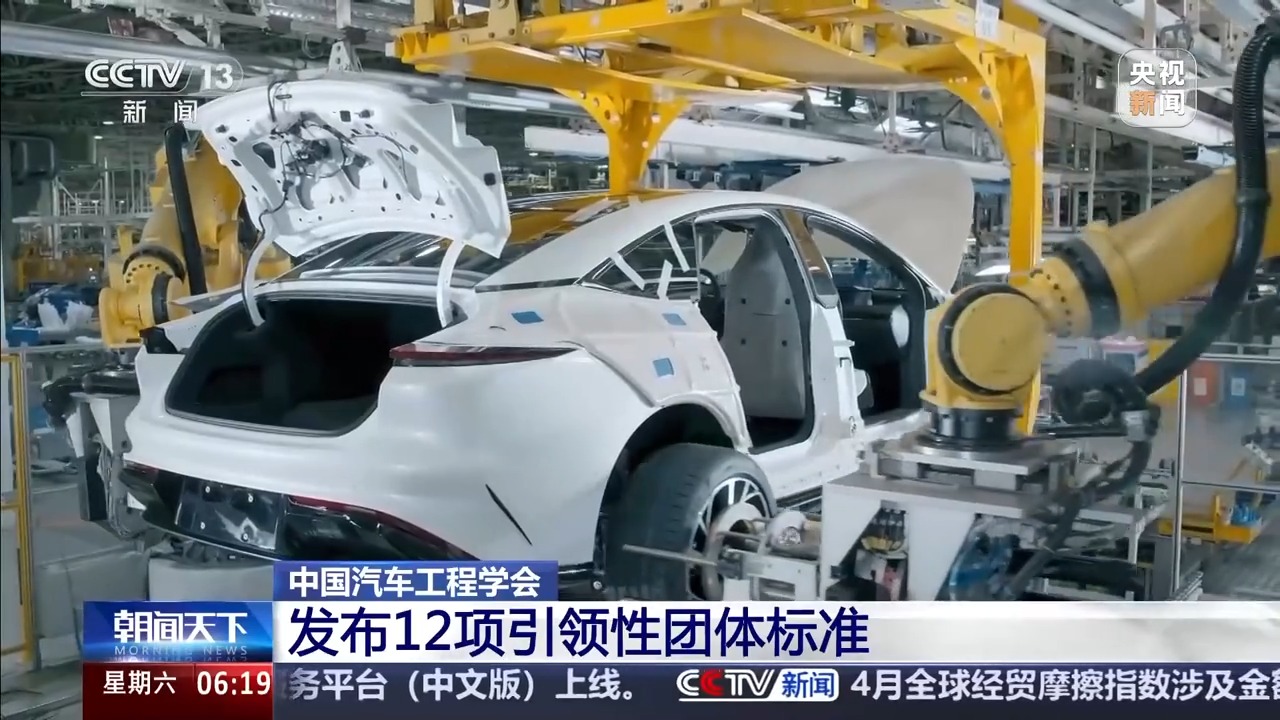
Group 1 - The core viewpoint of the article is the release of 12 leading group standards for intelligent connected new energy vehicles by the China Automotive Engineering Society, which will provide timely and precise standard support for industry innovation and upgrading [1][3]. - The standards focus on cutting-edge and key technological development directions in intelligent connected new energy vehicles, emphasizing their role in leading technological innovation, building a new industrial ecosystem, and serving government policy pilots [3][5]. - An example is provided with the standard for "All-Solid-State Battery Determination Method," which clarifies the definition of all-solid-state batteries and addresses issues related to the ambiguous concept and lack of testing methods in the industry [5][7]. Group 2 - The standards also include clear regulations on core components such as battery systems, battery exchange mechanisms, and electrical and cooling interfaces for pure electric passenger vehicle battery swapping [5][9]. - The "Car-Road-Cloud Integrated Infrastructure Classification" standard focuses on practical application needs and proposes a classification system for urban intelligent roads, guiding pilot city construction [5][9]. - Experts indicate that group standards can effectively fill the standard gaps in new technology fields, with technical requirements often exceeding national standards, thus promoting high-quality industry development [7][9].