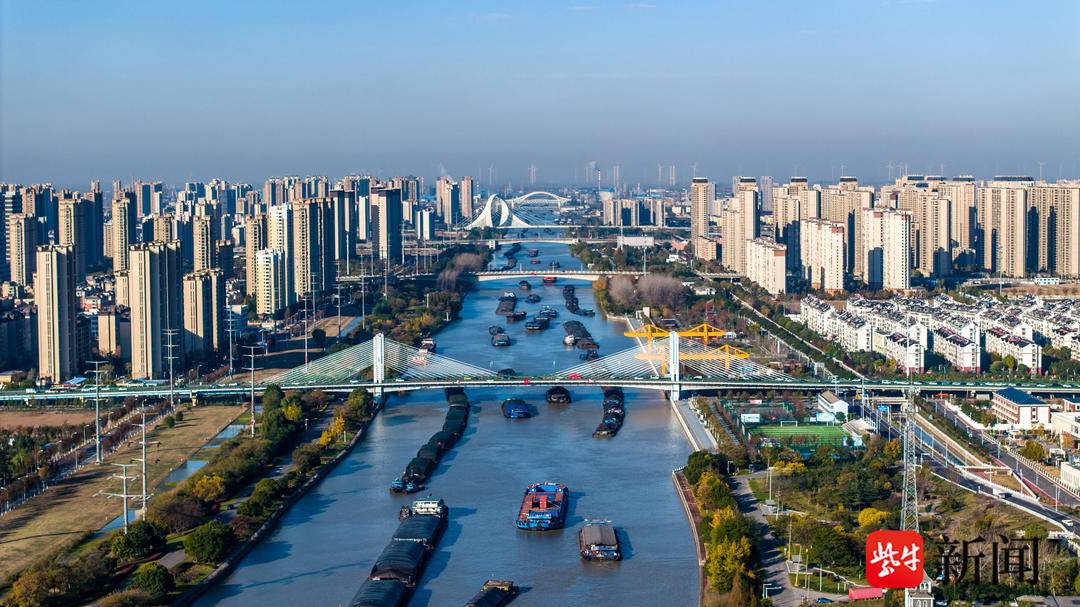
运河运输服务

Search documents
年货物运量 3.4亿吨!苏北运河彰显水运主通道优势
Yang Zi Wan Bao Wang· 2026-01-05 08:09
Core Insights - The core viewpoint of the articles highlights the steady growth of cargo transportation along the Northern Jiangsu Canal in 2025, with significant increases in both total cargo and container throughput, supported by advancements in smart canal technology and operational efficiency [2][3]. Group 1: Transportation Growth - In 2025, the Northern Jiangsu Canal achieved a cargo throughput of 340 million tons, representing a year-on-year increase of 5.2% [2] - Container throughput reached 752,000 TEUs, with a year-on-year growth of 2.8% [2] - The canal's operational efficiency has improved, providing robust support for regional logistics and high-quality economic development [2] Group 2: Smart Canal Development - The Northern Jiangsu Navigation Administration has made significant progress in the application of "smart canal" construction, integrating operational scheduling and monitoring systems across the province [2] - A unified APP service for lock passage has been implemented, resulting in a 10 million ton increase in annual vessel throughput [2] - The canal's operational safety and efficiency have been enhanced, with 292,000 lock openings and a vessel throughput of 2.27 billion tons, alongside a cargo throughput of 1.76 billion tons, reflecting year-on-year increases of 3.3% and 4.7% respectively [2] Group 3: Key Material Transportation - Coal transportation reached 11.7 million tons in 2025, marking an 11.1% increase year-on-year [2] - The transportation of construction materials remained stable at 10 million tons [2] - Despite a slower growth rate, container transportation continues to maintain a high volume [2] Group 4: Future Directions - The Northern Jiangsu Navigation Administration plans to focus on a "crew-centered, service-oriented" approach, promoting the integration of management and service [3] - The administration aims to transition from experience-based management to data-driven, smart decision-making [3] - The goal is to build a safer, greener, smarter, and more human-centered modern canal, contributing to the construction of a strong transportation nation [3]

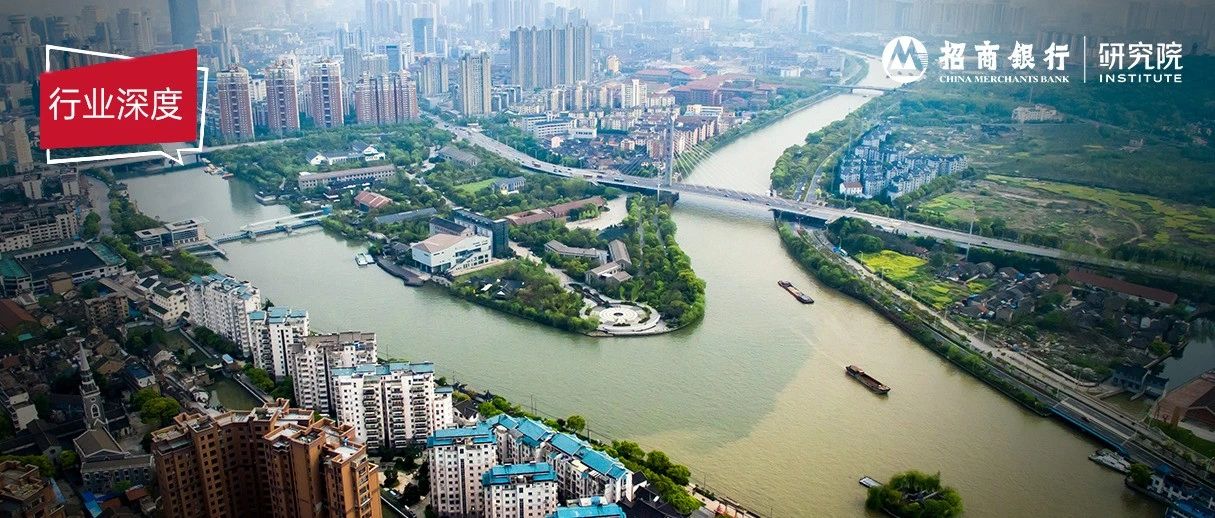
【招银研究|行业深度】新型物流基建篇①——我们为什么要投资建设运河?
招商银行研究· 2025-04-23 09:50
■ 我国物流成本高企的根源在于运输结构失衡与多式联运效率不足的长期矛盾。 公路运输虽承担着七成以上 的货运量, 但其单位成本和碳排放强度远高于水运。在此背景下,加快运河网络与高等级航道建设成为破局 关键——通过提升水运比重优化运输结构,配合智能化港口与自动化装卸设备强化铁水、公水联运的无缝衔 接,可系统性降低物流总成本。 ■ 内陆运河建设正悄然重塑中国经济地理格局。 当西江航道网将西南区域与大湾区的货运时效压缩至36小 时,西部地区低成本能源优势与东部地区沿海港口物流优势自此实现了跨区域联动,为未来优化产业布局提供 了基建基础。这种"空间折叠"效应不仅推动化工、冶金等产业向新能源富集区梯度转移,更促进生产要素在全 国范围内的优化重组,为构建多中心、网络化的产业布局奠定基础,最终推动东中西部从发展断层走向协同共 生的新格局。 ■ 我国水运体系正通过"高标基建—联运协同—智能节点"三层次布局, 支撑国家物流降本与经济一体化战 略:核心主线层面聚焦于高标准航道建设, 未来十年投资缺口 约1万亿元。由线向面的扩展指向多式联运体系 优化。地理条件受限下,需整合水运、铁路、公路等多方式协同。未来仍需进一步投入港口专用线网 ...
【招银研究|行业深度】新型物流基建篇①——我们为什么要投资建设运河?
招商银行研究· 2025-04-23 09:50
Core Viewpoint - The high logistics costs in China are rooted in the long-standing imbalance in transportation structure and insufficient efficiency of multimodal transport, necessitating the construction of canal networks and high-grade waterways to optimize transportation structure and reduce overall logistics costs [1][5]. Group 1: Logistics Cost Optimization and Transportation Structure Upgrade - The construction of canals can optimize national logistics costs, rationally allocate water resources, and support ecological restoration while helping inland areas break geographical constraints for industrial restructuring [5][8]. - In 2023, the ratio of social logistics costs to GDP in China was 14.4%, higher than the average level of developed countries, indicating a pressing need to lower logistics costs and enhance efficiency [8][10]. - The reliance on road transport, which accounts for over 70% of freight volume, results in higher unit costs and carbon emissions compared to water transport, highlighting the need for structural adjustments [11][13]. Group 2: Waterway Construction and Economic Geography - The construction of inland canals is reshaping China's economic geography, facilitating cross-regional linkages between low-cost energy in the west and logistics advantages in the east, thus providing a foundation for optimizing industrial layout [7][25]. - The West River waterway network compresses freight time between the southwest region and the Greater Bay Area to 36 hours, promoting a multi-center, networked industrial layout [7][31]. Group 3: Investment in Water Transport Infrastructure - China's water transport system is being developed through a three-tier layout of "high-standard infrastructure—coordinated transport—smart nodes," with a projected investment gap of approximately 1 trillion yuan over the next decade for high-standard waterway construction [2][34]. - The market size for upgrading smart ports, which are crucial for multimodal transport, is estimated to reach 1.3 trillion yuan, with about 80% of the 2,878 major berths nationwide facing the need for intelligent transformation [2][54]. Group 4: Ecological Restoration and Water Resource Allocation - Canals play a vital role in water resource allocation and ecological restoration, as demonstrated by the South-to-North Water Diversion Project, which has significantly improved water supply conditions in northern regions [17][19]. - The economic value of water resource allocation through canals has been validated, with significant reductions in agricultural water costs and improvements in groundwater levels in areas like Hebei [18][21]. Group 5: Multimodal Transport Development - The development of multimodal transport is essential for enhancing the efficiency of canal systems, with significant progress observed in rail-water intermodal transport, which has seen a 15% year-on-year increase in 2024 [49][50]. - The integration of various transport modes can effectively overcome geographical limitations, improve logistics efficiency, and promote high-quality development of the logistics system [45][49]. Group 6: Future Prospects and Strategic Importance - The construction of high-standard waterways is expected to improve the balance of regional industrial distribution in China, facilitating the development of energy-intensive industries in the west while alleviating pressures in the east [31][32]. - The strategic importance of developing smart ports and multimodal transport systems is underscored by the need for enhanced resource integration and operational efficiency in the logistics sector [54][53].