柔性电子技术

Search documents
苏炳添发表Cell子刊论文:系统解读各向异性水凝胶解码运动监测中的多维信号
生物世界· 2026-02-28 08:30
Core Viewpoint - The article discusses the advancements in Anisotropic Hydrogel Sensors (AHS) for motion monitoring, emphasizing their potential in wearable technology driven by the need for continuous real-time monitoring in sports, rehabilitation, and multifunctional electronic skin [2][3]. Group 1: Overview of AHS - AHS are designed to decode complex motion signals and improve monitoring efficiency through biomimetic design [2][3]. - The review paper published by researchers from Jinan University outlines the latest developments in AHS, including material types, performance tuning strategies, and synthesis methods [3][6]. Group 2: Importance of Motion Monitoring - Human movement is a complex biomechanical process that generates multidimensional signals crucial for competitive sports, rehabilitation, human-computer interaction, and advanced diagnostics [6]. - The demand for wearable devices that enable continuous and real-time monitoring is increasing to enhance athletic performance and assess health status [6]. Group 3: Challenges with Traditional Sensors - Traditional rigid electronic sensors face limitations such as mechanical modulus mismatch, poor comfort, and inability to capture micro-physiological signals, making them inadequate for next-generation wearable devices [6][7]. - AHS, based on hydrogels, offer a promising solution due to their flexibility and biocompatibility, mimicking natural tissue properties [7]. Group 4: AHS Design and Functionality - AHS are characterized by anisotropic properties, allowing them to capture and analyze motion signals directionally, thus improving accuracy and reliability in motion monitoring [8][26]. - The review categorizes AHS based on material types, performance tuning, and manufacturing strategies, highlighting their multi-scale applications in physiological signal capture and joint motion analysis [8][26]. Group 5: Future Directions and Challenges - Future advancements in AHS must balance mechanical performance and functional compatibility, addressing challenges such as signal reliability in complex environments and manufacturing scalability [26][28]. - The integration of self-healing, biodegradable, and multimodal sensing capabilities in advanced wearable health systems is expected to drive significant applications in sports medicine, competitive athletics, and aging health management [28].


清华大学团队研发柔性AI芯片,将填补相关领域空白
Xuan Gu Bao· 2026-02-03 14:59
Group 1 - Tsinghua University's research team has developed a flexible AI chip named FLEXI, designed for edge intelligence acceleration, filling a gap in flexible electronics technology [1] - FLEXI chip is manufactured using low-temperature polycrystalline silicon CMOS technology, offering advantages such as lightweight, low cost, and high energy efficiency [1] - The chip can withstand over 40,000 bending cycles at a radius of 1mm and 180° folding without significant performance degradation, demonstrating stability under high-frequency computing and extreme mechanical stress [1] Group 2 - The flexible chip industry is expected to undergo industrialization, with projections indicating that the global flexible electronics market could grow from $85 billion to over $173 billion between 2025 and 2030 [1] - China's flexible chip industry is anticipated to increase from 50 billion yuan to 150 billion yuan, with a compound annual growth rate exceeding 25% [1]
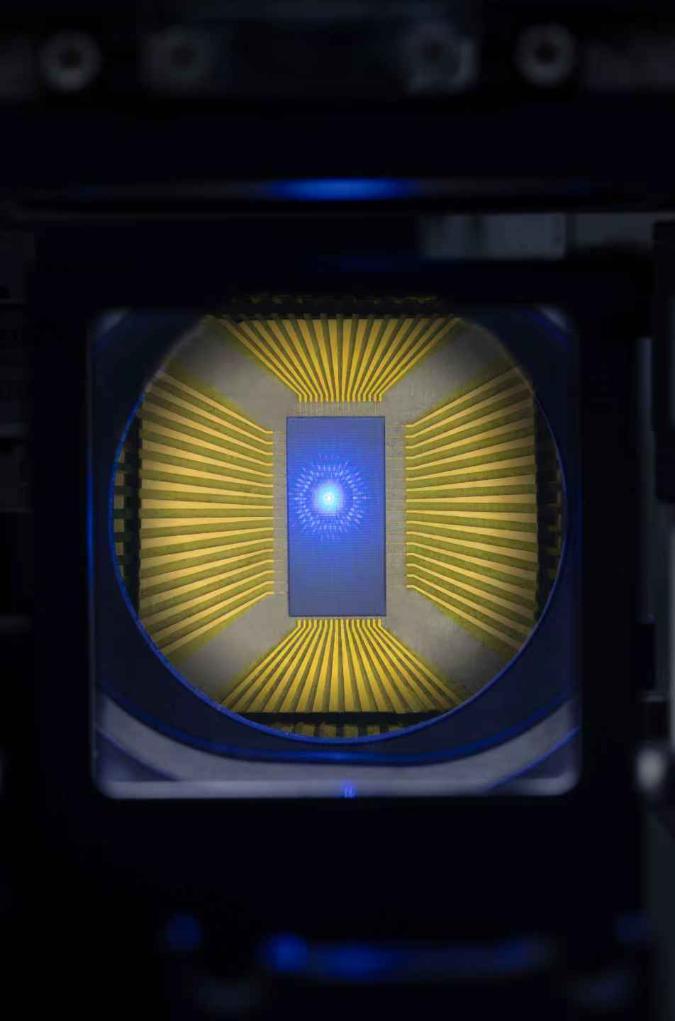
清华大学团队研发柔性AI芯片,可弯折4万次、填补领域空白
Xin Jing Bao· 2026-02-03 08:09
Core Insights - Tsinghua University has developed a fully flexible artificial intelligence chip, filling a gap in flexible electronics technology and providing dedicated, scalable, and low-power hardware support for AI applications [1][2] Group 1: Technology and Innovation - The flexible electronic devices are transforming applications in wearable medical technology, implantable neural recording, human-computer interaction, and the Internet of Things due to their ultra-thin, lightweight, customizable, and low-cost advantages [1] - The FLEXI chip, designed for edge intelligence acceleration, utilizes low-temperature polycrystalline silicon CMOS technology, combining lightweight, low-cost, and high energy efficiency [1] - FLEXI can integrate up to approximately 265,000 transistors and achieves stable, high-speed, and parallel dot product operations through a cross-layer collaborative optimization strategy [1] Group 2: Performance and Reliability - Experimental results indicate that the FLEXI chip can withstand over 40,000 bending cycles at a 1mm radius and 180° fold without significant performance degradation [2] - The chip demonstrates high reliability, excellent energy efficiency, high yield, and good scalability while maintaining stable, error-free operation under high-frequency computing, extreme mechanical stress, and accelerated aging conditions [2] - FLEXI exhibits over six months of long-term stability, laying a solid foundation for the application of flexible electronic devices in mobile healthcare, embedded intelligence, and other edge computing scenarios [2] Group 3: Academic Recognition - The research findings were published in the prestigious journal Nature on January 28, under the title "A Flexible Digital In-Memory Computing Chip for Edge Intelligence" [2]
全员中文属名,清华大学×北京大学合作最新Nature论文
生物世界· 2026-01-29 04:28
Core Viewpoint - The integration of flexible electronics technology with artificial intelligence (AI) is expected to revolutionize various fields, including robotics, wearable medical devices, and human-computer interaction interfaces. However, significant challenges remain in developing flexible computing hardware capable of efficiently executing neural network inference tasks [3]. Group 1 - A new flexible digital AI chip named FLEXI has been developed for edge intelligence, characterized by its lightweight, thin, and robust design, paving the way for ultra-low-cost AI systems in wearable medical devices [5]. - The FLEXI chip features a maximum operating clock frequency of 12.5 MHz, a power consumption as low as 2.52 mW, and a unit cost of less than 1 USD, with a circuit yield rate stable between 70% and 92% [5]. - The chip can perform 10^10 fixed-point and random multiplication operations with zero error, withstand over 40,000 bending cycles, and maintain stable performance over more than six months of continuous operation [5]. Group 2 - The chip achieves a detection accuracy of 99.2% for arrhythmia tasks on a single 1kb chip and over 97.4% accuracy for monitoring daily human activities based on multimodal physiological signals [5]. - An accompanying article in Nature highlights the collaborative optimization design and technology that enables the efficient operation of neural network tasks on affordable and flexible microchips, validated in wearable medical devices [5].

金属薄膜新结构让柔性器件更耐用
Xin Lang Cai Jing· 2026-01-27 03:21
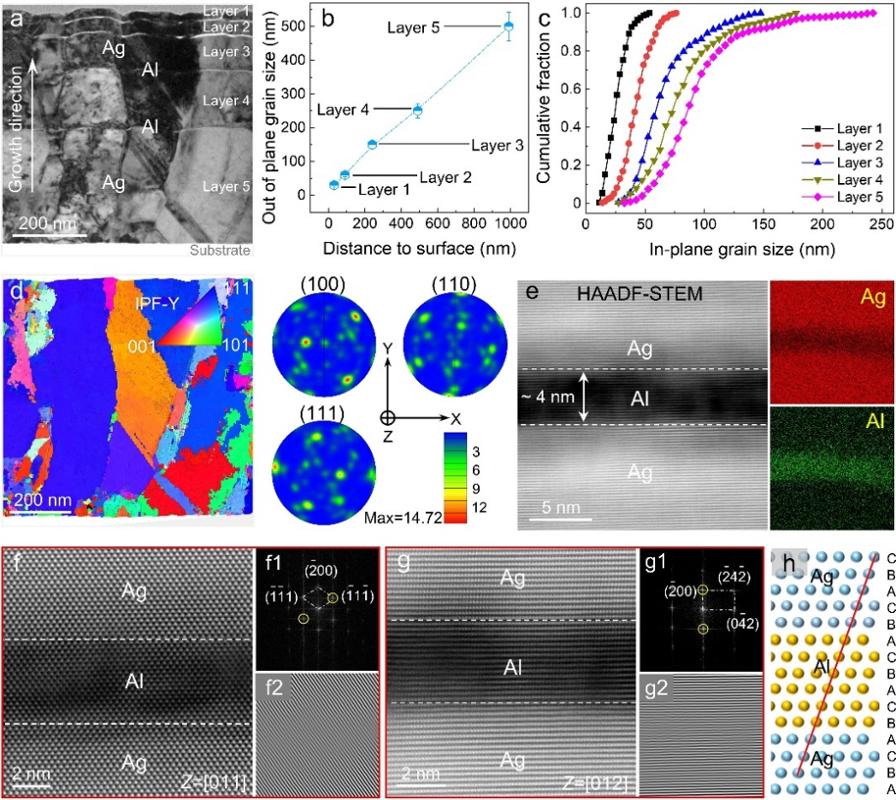
Core Insights - The research team led by academician Sun Jun from Xi'an Jiaotong University has proposed an innovative design strategy called "coherent gradient nanolayered structure" to enhance the fatigue resistance of metal multilayer films, providing a new solution for the long-term service of flexible conductors [3][4] - Flexible electronic technology has broad application prospects in aerospace, human-computer interaction, biomedical, and clean energy fields, with metal films being critical conductive materials [3] - Traditional nano-crystalline metal films face fatigue issues due to cyclic deformation, leading to premature crack initiation and rapid propagation, which ultimately results in a sharp increase in resistance and potential circuit failure [3] Summary by Sections - **Research Findings** - The coherent gradient nanolayered structure significantly improves the comprehensive fatigue resistance of metal films compared to previously reported materials, achieving a synergistic enhancement of both high-cycle and low-cycle fatigue performance [3] - The design maintains high conductivity and good electrical ductility, similar to pure silver films, and is compatible with existing microfabrication technologies, indicating strong industrial application potential [4] - **Applications** - The research team has developed prototype devices including implantable bioelectrodes, flexible light-emitting displays, and flexible interconnect circuits, validating the feasibility of the conductive material in various cutting-edge fields [4] - This advancement is expected to address the long-term reliability bottleneck of flexible electronics, promoting deeper applications and widespread adoption in medical health, human-computer interaction, and intelligent sensing [4]
穿戴设备市场研究报告!
Sou Hu Cai Jing· 2026-01-03 19:11
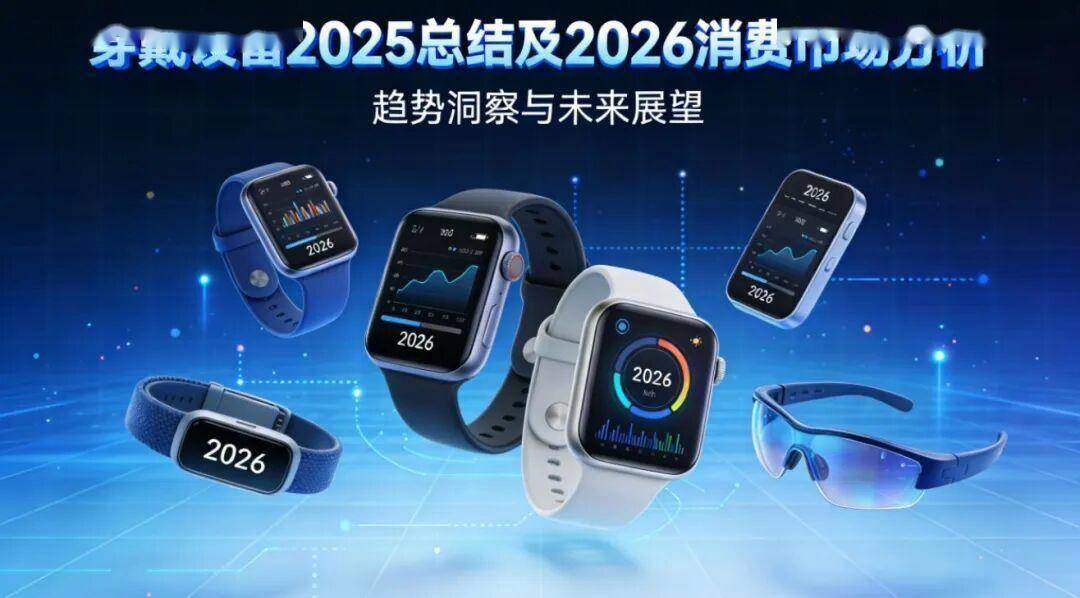
Group 1: Market Overview - The global wearable device market is expected to exceed $430 billion by 2025, with China leading the growth at over 20% [1][2] - The market is projected to reach a scale of over 600 billion yuan in China by 2026, with global shipments nearing 800 million units [1][2] - The growth is driven by health monitoring upgrades, 5G technology proliferation, and AI algorithm optimization [2] Group 2: Product Forms and Technological Innovations - Wearable devices are evolving from visible to "invisible" forms, with innovations in design and integration of health sensors [3] - The rise of smart rings, such as Samsung's Galaxy Ring, signifies a shift towards more discreet health monitoring solutions [3] - Flexible electronics technology is revolutionizing device forms, with companies like BOE producing ultra-thin flexible screens [6] Group 3: Application Scenarios and User Demands - The application scenarios for wearable devices are diversifying, expanding from health monitoring to medical intervention and smart home control [4] - Medical-grade features are becoming more prevalent, with a penetration rate exceeding 55% in health monitoring [16] - The demand for elderly care devices is increasing, with smart fall prevention products gaining traction in the market [17] Group 4: Competitive Landscape - The global wearable device market is characterized by a "three-legged" competition, with Chinese brands holding significant market shares [9] - Huawei leads the global market with a shipment of 28.6 million units, followed by Xiaomi and Apple [9][10] - In the Chinese market, Huawei, Xiaomi, and Little Genius dominate, with Huawei holding a 33.4% market share [10] Group 5: Future Market Trends - The global wearable device market is expected to continue growing, with shipments projected to exceed 850 million units by 2026 [12] - AI functionality penetration is anticipated to rise, with AI watches expected to exceed 25% market penetration by 2026 [12] - The Chinese wearable device market is forecasted to reach 600 billion yuan, with significant growth in medical-grade devices [13][14] Group 6: Key Brand Strategies - Huawei's strategy focuses on its HarmonyOS ecosystem and domestic chip breakthroughs, achieving significant market penetration [19] - Apple's differentiation lies in its high-end ecosystem and M-series chip advancements, maintaining a strong position in the premium market [20][21] - Xiaomi emphasizes high cost-performance and AIoT ecosystem integration, enhancing user experience through interconnected devices [23]


我国成功开展航天器柔性传感关键软硬件技术联合在轨试验
Ke Ji Ri Bao· 2025-12-13 13:14
Core Insights - The successful launch of the "Zhong-Ha Agile Remote Sensing Payload" and "Space Unmanned Intelligent Experiment Cabin" marks a significant breakthrough in the integration of flexible electronics technology with aerospace engineering [1][2] - The mission aims to enhance ecological monitoring capabilities in Central and West Asia, supporting the Belt and Road Initiative with more precise space-based monitoring services [2] Group 1: Technological Innovations - The "Zhong-Ha Agile Remote Sensing Payload" utilizes flexible electronics technology to achieve precise attitude perception and error compensation through lightweight conformal integration processes [1] - The "Space Unmanned Intelligent Experiment Cabin" features low-power lightweight AI information processing technology, enhancing key information transmission capabilities by over 10 times on low-computing platforms [2] Group 2: Collaborative Efforts - The project is a result of collaboration between the Flexible Electronics National Key Laboratory and the Aerospace Flight Dynamics Technology National Key Laboratory, establishing the "Flexible Electronics Intelligent Aerospace Joint Innovation Center" [2] - The successful implementation of the mission demonstrates China's capability to meet major national aerospace demands using flexible electronics technology [2]
30余年军工经验创始人带队,这家企业获国内唯一军工柔性互连资质,入围海底空间站项目 | 36氪首发
3 6 Ke· 2025-12-01 02:15
Financing Information - Xinhua Haitong recently completed a Series A financing round, raising 10 million RMB, with investments from Xiamen High-tech Venture Capital and Juke Qihang, each contributing 5 million RMB [1] - The funds will primarily be used for production line expansion and research and development [1] Company Overview - Founded in March 2017 and based in Xiamen, Xinhua Haitong specializes in military flexible interconnect technology and is the only domestic company with military qualifications for flexible interconnect circuits [1] - The company offers lightweight, high-integration, and high-reliability interconnect solutions, reducing weight and volume by over 40% and 50% respectively compared to traditional designs [1] - Xinhua Haitong focuses on differentiated products, avoiding direct competition with traditional standardized products by emphasizing special specifications and high-layer, large-size products [1] Market Potential - The flexible interconnect technology in the military sector is in its early stages, but it has significant growth potential, with the military market expected to grow at a compound annual growth rate of over 15%, reaching a market size of 10 billion RMB by 2030 [2] - The demand for flexible electronic devices in military applications, particularly in drones, unmanned combat platforms, stealth equipment, and aerospace, is projected to increase significantly [2] Company Performance - Xinhua Haitong's revenue has rapidly increased from 1 million RMB in 2021 to over 20 million RMB in 2024, with an expected growth of 10-20% in 2025 [3] - The company is currently in a micro-profit state, investing 15-20% of its revenue annually into R&D, and anticipates that the new production line will achieve an annual output value exceeding 300 million RMB [3] Team Background - The founder has over 30 years of industry experience, with educational credentials from the University of Electronic Science and Technology and the National University of Defense Technology, and has previously worked in key military units [4] - The core team members have over 15 years of industry experience, covering all aspects from product development to manufacturing testing [4] Future Business Strategy - The company aims to maintain its focus on the military sector while selectively entering specialized civilian markets, such as high-end industrial control and medical devices, after the new production capacity is released [7] - Xinhua Haitong plans to develop integrated module capabilities based on flexible circuits, enhancing product value and providing complete system-level solutions [8] Investor Insights - Xiamen High-tech Venture Capital emphasizes the potential of military-grade flexible FPC as an emerging direction within a mature industry, supported by a solid industrial chain and market prospects [9] - The core team’s experience from leading flexible circuit companies provides a strong foundation for Xinhua Haitong's development, with capabilities in high-layer, long-size flexible circuit design and production [9]

新闻速递|专家研讨柔性电子技术产业前景;超10万台“龙架构”计算机在中小学应用
Ren Min Ri Bao· 2025-11-09 21:55
Group 1: Flexible Electronics Technology Conference - The sixth International Flexible Electronics Technology Conference was held in Jiaxing, Zhejiang, attracting over 400 researchers and industry experts from China, the United States, Germany, and other regions to share cutting-edge results and discuss industry progress [1] - The conference was organized by Tsinghua University's National Key Laboratory of Flexible Electronics Technology and the Zhejiang Tsinghua Flexible Electronics Technology Research Institute [1] - The Zhejiang Tsinghua Flexible Electronics Technology Research Institute launched a pilot platform for the manufacturing of flexible integrated devices, which is open to global collaboration, providing process cooperation, pilot incubation, and solution services for enterprises, universities, and research institutions [1] Group 2: Longxin Architecture Computers in Education - Longxin Zhongke Co., Ltd. reported that over 100,000 fully autonomous computers based on the "Longxin architecture" have been applied in primary and secondary school information technology education [2] - Significant deployments have occurred in provinces such as Zhejiang, Henan, and Shanxi, with large-scale implementations reaching thousands of units and pilot programs covering nearly a thousand primary and secondary schools [2] - The "Longxin architecture," introduced in 2020, is China's first fully autonomous CPU instruction system, and its software ecosystem has been rapidly developing, supported by educational innovation collaboration plans and comprehensive training solutions [2]

我国科研人员“以柔克刚”填补微型LED晶圆无损测试技术空白
Xin Hua Wang· 2025-06-13 09:39
Core Viewpoint - Micro LED technology is identified as the core component of next-generation high-end display technology, with a critical need for 100% yield in wafer production to avoid significant repair costs for end products. Recent advancements in non-destructive testing methods have addressed this technological gap [1][7]. Group 1: Technological Breakthrough - Researchers from Tianjin University have developed a high-throughput non-destructive testing method for micro LED wafers, marking a significant breakthrough in the field [1][7]. - The new detection method utilizes a flexible electronic technology-based probe array that adapts to the surface morphology of the wafer, applying a minimal contact pressure of 0.9 MPa, which is one ten-thousandth of that used by traditional rigid probes [3][4]. Group 2: Impact on Industry - The innovative testing system, which works in conjunction with the flexible probes, provides essential tools for efficient process control and quality screening of micro LED products [4][6]. - This technology is expected to facilitate mass production, non-destructive testing, and cost-effective solutions for the domestic micro LED industry, thereby expanding the application of flexible electronic technology [7].