
都塔尔

Search documents
新春走基层|旧粮仓蝶变非遗工坊 千年龟兹文化新春焕彩
Ren Min Wang· 2026-02-25 08:20
Core Viewpoint - The transformation of an old grain warehouse into a cultural workshop in Kuqa City, Xinjiang, showcases the integration of traditional heritage and tourism, revitalizing local culture and enhancing community engagement through interactive experiences [1][2][3] Group 1: Cultural Heritage and Tourism Integration - The cultural workshop, established in a renovated old grain warehouse, offers various traditional craft experiences, including music, pottery, and mural painting, allowing visitors to engage with heritage in a hands-on manner [1][2] - The workshop features 25 independent exhibition areas dedicated to different intangible cultural heritage projects, promoting a comprehensive platform for cultural exchange and creative sales [2] - The introduction of mineral pigment Kuqa mud paintings has gained popularity among visitors, particularly youth, enhancing cultural identity and engagement with traditional arts [2] Group 2: Economic Impact and Community Engagement - Since its opening in February 2025, the workshop has received over 102,600 visitors, with an average daily reception exceeding 8,000 during peak seasons, contributing to local employment and economic growth [3] - The workshop has generated a stable daily sales revenue of 16,000 yuan, supporting around 200 jobs and fostering local tourism consumption [3] - Various cultural events during the Spring Festival, such as traditional markets and performances, further enrich the community's cultural landscape and promote heritage awareness among youth and returning students [3] Group 3: Future Development and Cultural Empowerment - Local authorities plan to continue leveraging the cultural workshop to enhance traditional culture transmission and strengthen cultural confidence, aiming to make it a key platform for sharing the stories of the Kuqa region [3] - The initiative reflects a broader strategy to integrate cultural preservation with tourism development, ensuring that the rich history of the Silk Road remains vibrant and accessible to future generations [3]
解码中华文化基因:维吾尔族弦乐,沙漠里会唱歌的木头
Zhong Guo Xin Wen Wang· 2025-12-04 13:41
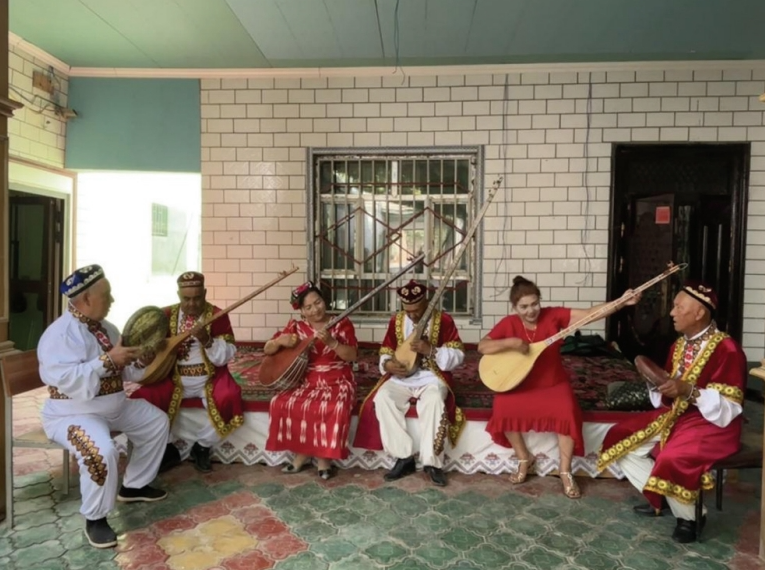
Core Viewpoint - General Secretary Xi Jinping emphasizes the importance of protecting and inheriting ethnic culture, highlighting the need to promote the excellent traditional culture of various ethnic groups [2] Group 1: Cultural Significance - In Xinjiang, known as the "hometown of song and dance," music is an integral part of daily life, showcasing the region's rich cultural heritage [2] - Traditional musical instruments such as Dutar, Karonqin, and Satar are diverse and play a significant role in the local culture, each instrument possessing its unique charm [2] Group 2: Artistic Expression - Skilled musicians bring these traditional instruments to life, creating beautiful melodies that tell captivating stories, reflecting the deep cultural narratives of the region [2]

琴韵漫村巷:“天籁加依”奏响乡村振兴新乐章
Xiao Fei Ri Bao Wang· 2025-08-19 03:00
Core Viewpoint - The article highlights the cultural and economic significance of the Kizil music and instrument-making tradition in the Aksu region of Xinjiang, emphasizing its role in cultural heritage preservation and rural revitalization through tourism and craftsmanship [4][17]. Group 1: Cultural Heritage - Xinjiang is a key area of the ancient Silk Road, serving as an important cultural exchange hub and a convergence point for Eastern and Western music [1]. - The Kizil music, originating from the Kizil region, is renowned for its diverse instrument system and has been a significant part of the royal court's music [1][4]. - The Kizil music tradition has evolved over a millennium, maintaining ethnic characteristics while innovating with the times [1]. Group 2: Instrument-Making Industry - The Kayi Village in Aksu is a representative site for the inheritance and promotion of Kizil culture, with over 400 residents engaged in instrument-making [4]. - The village produces around 40,000 instruments annually, generating a total sales revenue of 18 million yuan [4]. - The village has established a handcraft instrument industry park to standardize production and improve quality, which has led to increased income for local residents [12][15]. Group 3: Economic Impact and Tourism - The Kayi Village has transformed into a cultural tourism village, attracting over 200,000 visitors annually to experience local music and instrument-making [17]. - The establishment of the Tianlai Kayi scenic area has integrated instrument-making, music performances, and cultural experiences, enhancing the village's tourism appeal [17]. - The local cooperative has achieved an annual output value of 6 million yuan, employing around 150 workers with monthly incomes ranging from 3,500 to 5,500 yuan [15].
指尖绝活 世界回响
Xiao Fei Ri Bao Wang· 2025-08-19 02:58
Group 1 - Xinjiang musical instruments are an important part of traditional Chinese culture, showcasing both inheritance and innovation in their design and artistic forms [1] - The village of Jiayi, known as the "first village of handmade musical instrument production in Xinjiang," integrates musical instruments into the daily lives of its residents, attracting numerous tourists [1] - The musical instrument industry in Jiayi village is evolving from handmade production to standardized manufacturing, and from simple sales to a combination of cultural display and creative products, although it faces challenges such as a relatively fixed audience and insufficient innovation [1] Group 2 - The development and inheritance of traditional music require innovation, with creators needing to blend diverse musical cultures and styles to attract younger audiences [2] - The large-scale performance "Lift Your Veil - Xinjiang is a Good Place" exemplifies the integration of various art forms, showcasing Xinjiang's cultural diversity on international stages [2] - Xinjiang musical instruments, as cultural products, should be designed with contemporary consumer aesthetics in mind, promoting innovative products [2] - The historical exchanges along the Silk Road have allowed Xinjiang musical instruments to evolve, and under the "Belt and Road" initiative, they are becoming vital carriers of Chinese culture to the world [2]